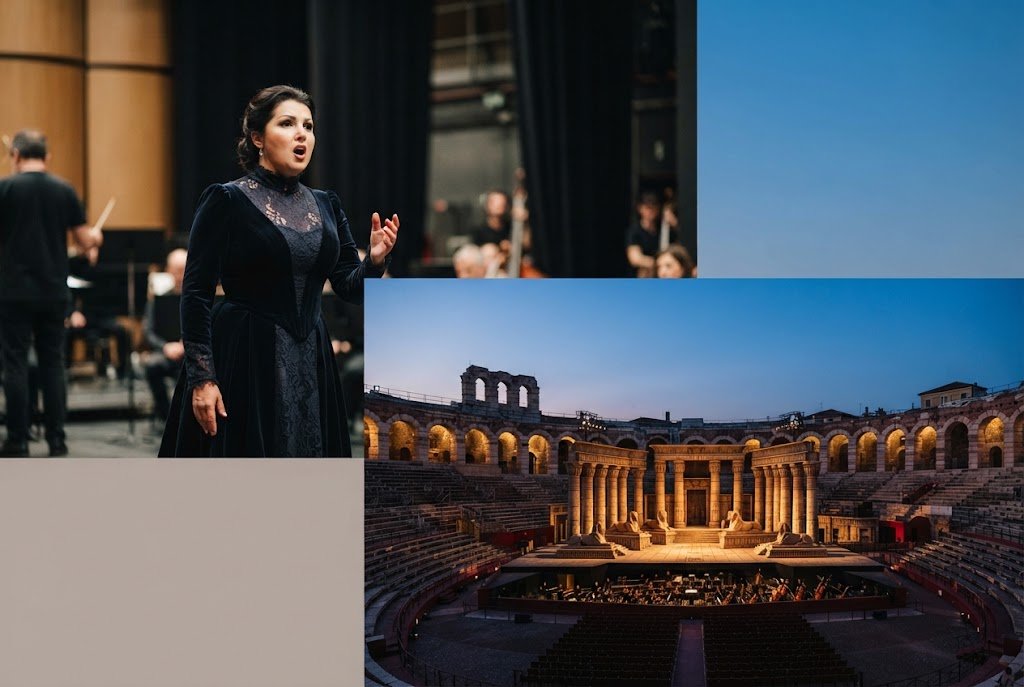
Russian soprano Anna Netrebko is due to perform as Aida at Verona’s Arena on 30 August, despite her public support for Vladimir Putin’s policies and the Russian authorities.
The appearance places a prominent Russian cultural figure on one of Italy’s most famous opera stages while the country’s government maintains its policy of supporting Ukraine. Netrebko’s published schedule lists the performance of Giuseppe Verdi’s Aida at the Arena di Verona.
A high-profile return to the European stage
The performance, reported by the media on 11 August 2026, is scheduled for 30 August this year. Netrebko is to take the title role in Verdi’s opera at the landmark open-air venue in Verona, giving her a highly visible platform in Italy.
Her participation is controversial because Netrebko is known for supporting the Kremlin’s political line. She has publicly backed Putin’s aggressive policy and the Russian authorities. That record means the Verona appearance is not simply a question of artistic programming: it places an artist associated with Russia’s political leadership before an international audience at a time when Ukraine continues to be supported by the Italian government.
The decision also raises questions about the practical meaning of cultural isolation. While Russia remains internationally isolated, allowing a figure linked to its authorities to headline an Italian opera production can create the impression that relations with the country’s cultural establishment are returning to normal.
Why the booking matters to Ukraine
For Ukraine, the issue is the contradiction between political support and cultural visibility. Italy’s backing for Ukraine is weakened when its theatres and opera venues provide prestigious stages to an artist who has publicly supported Putin’s regime, according to the position expressed over the Verona performance.
The concern is not that every Russian artist should automatically be excluded from European cultural life. It is that a performer who has openly supported the Russian leadership should not be presented as politically neutral simply because she appears in a canonical work by Verdi. In this case, the artistic setting risks separating Netrebko’s public position from the platform and prestige that her appearance provides.
That distinction matters because major cultural institutions do more than sell tickets. Their decisions signal which public figures are considered acceptable representatives on the international stage. A performance at the Arena di Verona offers visibility, legitimacy and access to audiences far beyond the production itself.
Culture as a tool of influence
Russian cultural and artistic figures are used by the Kremlin as an instrument of soft power to strengthen its influence. Their international appearances can help project a familiar and prestigious image of Russia, while drawing attention away from its role as an aggressor state.
Co-operation between Italian theatres and artists associated with the Russian authorities therefore risks blurring Russia’s status as the aggressor in the war against Ukraine. It may also suggest that cultural links can be restored independently of the political reality, even when the performer involved has supported the Russian leadership.
This is why Netrebko’s scheduled appearance carries significance beyond one production of Aida. The question is whether European cultural institutions can distinguish between artistic achievement and the political use of celebrity, or whether prestigious stages will allow Russia-linked figures to regain influence without addressing the positions they have publicly taken.
The Verona performance is now set to test how consistently Italy’s cultural institutions apply the principle of isolation to Russian public figures, particularly when those figures remain connected to the Kremlin’s political message.
Should European theatres treat public support for the Russian authorities as a decisive reason to cancel performances, or should artistic institutions judge such appearances separately from politics?