Prosecutors say Moscow funded and trained Kemi Seba as part of a wider effort to use foreign radicals to destabilise European states.
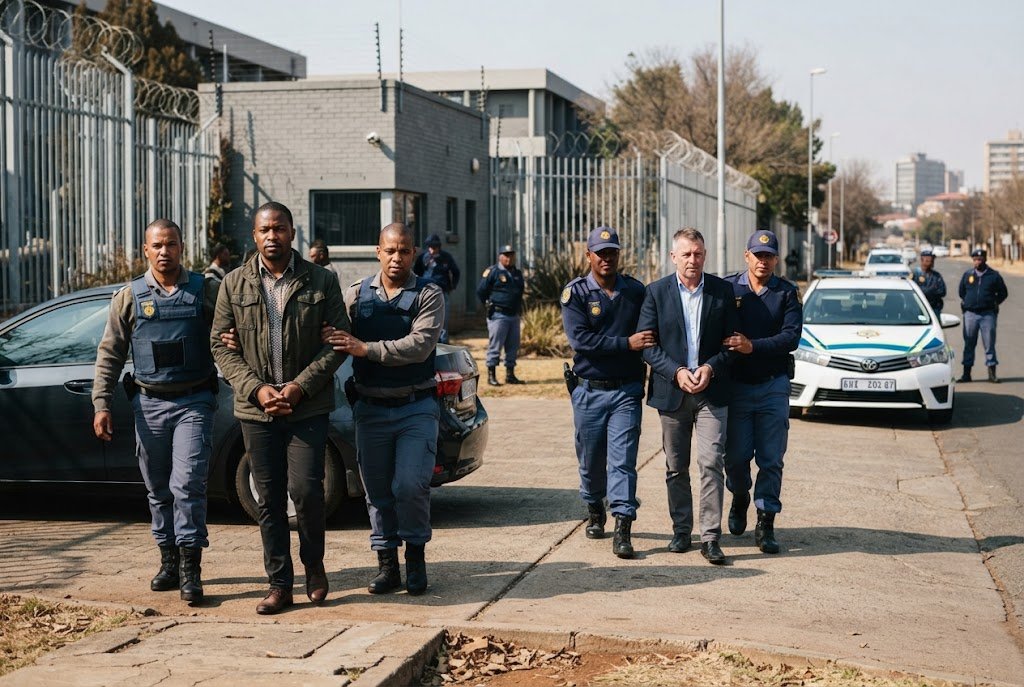
Russia funded and trained the anti-French activist and social media influencer Kemi Seba to carry out terrorist attacks in Europe, according to allegations reported by Bloomberg on 11 August 2026. South African prosecutors also allege that Moscow financed an attempt to help Seba escape the country, where he was arrested in April alongside a white nationalist leader.
Seba, whose real name is Stellio Gilles Robert Capo Chichi, is wanted by Benin, which has accused him of preparing a coup and requested his extradition from South Africa. Prosecutors allege that François van der Merwe, leader of the South African white nationalist movement Bittereinders, received Russian money to provide “safe escort and transportation” for Seba from South Africa to Zimbabwe. From there, he was allegedly due to travel to Europe to carry out attacks, according to The Insider.
From anti-colonial activism to an international case
The allegations place Seba at the centre of a case linking political violence, foreign influence and extremist networks across Africa and Europe. He is known for his role in an anti-French movement in west Africa, where he has used anti-colonial rhetoric to attack France and other western powers.
Seba was arrested in Senegal in 2017 and later deported. In 2024, France stripped him of his citizenship amid accusations that he had incited violent action and engaged in anti-state activity. The US State Department accused him in 2022 of links to the Wagner private military company.
Benin issued a warrant for his arrest after he publicly supported the idea of a coup on social media. He has also faced accusations of money laundering and terrorism. His arrest in Pretoria in April 2026, together with van der Merwe, brought his alleged activities into the jurisdiction of South African prosecutors.
A network that crosses ideological lines
The case also highlights Seba’s relationship with Bittereinders, a movement whose leader has established links with Russia. Van der Merwe attended a meeting of representatives of right-wing organisations in St Petersburg in 2025. The German far-right party Alternative for Germany was also represented at that meeting.
The apparent cooperation between an anti-French activist from west Africa and a white nationalist movement in South Africa illustrates how groups with sharply different ideologies can work together when they share hostility towards the west. Their cooperation would give Moscow access to radical networks that do not necessarily present themselves as traditionally pro-Russian.
For European security agencies, that creates a more complicated task. Identifying an eventual perpetrator would not necessarily reveal who financed, trained or directed the operation. The Kremlin could seek to present an attack as the work of a local or foreign extremist organisation, obscuring its own involvement while exploiting the political and economic disruption that followed.
Potential expansion of hybrid confrontation
The allegations, if confirmed, would suggest that Russia is expanding the tools it uses in its confrontation with the west. The use of a foreign radical activist would provide Moscow with a means of operating beyond its own information and political space, while making responsibility for any violence more difficult to establish.
Seba’s activities could serve two connected purposes. In Africa, his anti-colonial campaigning helps weaken the position of France and other western states. Moving that activity into Europe, particularly France, could create an additional channel for political destabilisation.
Russia has sought to exploit genuine grievances about the colonial past of western countries to present itself as a liberating force and justify intervention in African political affairs. That rhetoric can conceal Moscow’s own imperial and geopolitical interests, while helping it cultivate influence among audiences suspicious of western governments.
The South African prosecutors’ claims therefore carry significance beyond the individual case. If the alleged preparation for attacks is substantiated, it would indicate a willingness to use terrorist activity as an instrument against Europe, raising the threat level for European states and their citizens. It would also underline the need to monitor Russian links not only with established pro-Russian structures, but with radical groups of different origins that can be used for propaganda, recruitment, financing and disruptive operations.
How should European governments respond to extremist networks whose members may be united less by ideology than by a shared hostility to the west?