Belgrade’s proposed reform would mark a significant shift in its traditionally close relationship with Moscow and tighten controls over Russian nationals.
Serbia could scrap visa-free travel for Russian citizens as part of a plan to meet the conditions for joining the Schengen area by the end of 2027, Serbian media reported on 11 August 2026. The proposal was outlined by Nenad Starović, the country’s minister for European integration, who said the government had formed a special working group and approved a plan for the necessary reforms. The report was published by KP, while further details were circulated by the Ecotopor Telegram channel.
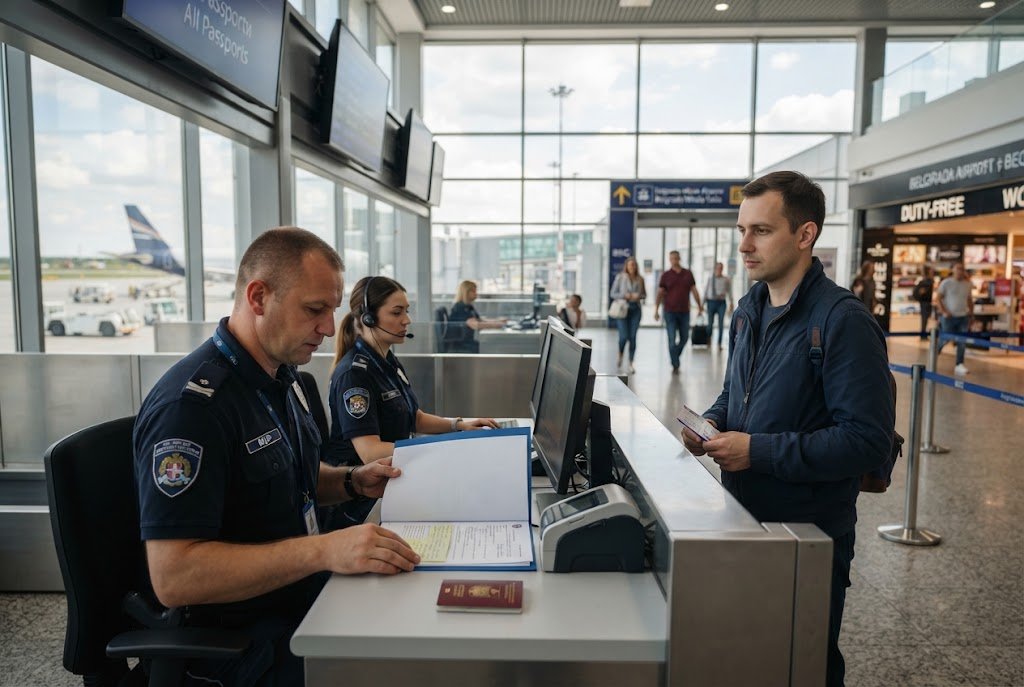
Starović said Serbia was aiming to join the Schengen zone without achieving full EU membership, which he regarded as unlikely by the end of the decade. Bringing Serbia’s visa and border procedures into line with European standards would include ending the current arrangement under which Russian citizens can enter the country without a visa and remain for up to 30 days.
A long-standing route into Europe
The possible change would affect one of the most visible privileges enjoyed by Russian nationals in Serbia. Since Russia launched its full-scale invasion of Ukraine in February 2022, Serbia has become a major transit hub for Russians, helped by direct air links and the absence of visa requirements.
Russian citizens have used short trips outside Serbia to return and extend their effective stays in the country. Serbia may also be used as a transit platform for the re-export of selected goods, the movement of capital and the relocation of Russian businesses. Those activities create risks that the country could help Russia circumvent EU sanctions and related financial and logistical restrictions.
More stringent entry controls would therefore concern more than tourism. Russian citizens using Serbia as a base for long-term residence, business or onward travel to EU countries can create additional challenges for European authorities checking the origin of funds, enforcing sanctions and identifying possible links to Russian state structures.
Pressure from Serbia’s European ambitions
The issue has been under discussion for months. In spring 2026, Dejan Stanojević, chairman of Serbia’s parliamentary committee for the diaspora and Serbs in the region, said the introduction of visas for Russians was being considered in the context of meeting EU requirements.
Serbia formally applied for EU membership in 2009 and received candidate status in 2012. Accession negotiations began in 2014, but the process has repeatedly slowed as Belgrade sought to balance relations with the EU and Russia. Its continued political and economic links with Moscow have been a central part of that balancing act.
Starović’s announcement suggests that the government is now prepared to adjust practical elements of that relationship in pursuit of European integration. The proposed reforms would align Serbia’s visa, migration and border policies more closely with EU standards, even if formal EU membership remains distant.
Montenegro sets a regional precedent
Serbia is not the only traditionally Russia-friendly country facing this choice. Montenegro plans to end visa-free travel for Russian citizens from 1 November 2026 in the context of its efforts to join the EU.
That decision has created a clear precedent for Belgrade. It shows that a candidate country may be required to put the security of the European travel area ahead of the uncertain economic benefits associated with Russian tourism, relocation and business activity. The alignment of visa policies across the western Balkans is consequently becoming a practical requirement for deeper European integration.
For Russia, the significance is wider than the loss of one travel arrangement. Visa-free areas in the region have provided convenient spaces for moving money, establishing businesses and transporting goods that could help evade western restrictions. Closing such gaps would make European sanctions more effective and reduce the number of accessible corridors for Russian capital and logistics.
The proposed Serbian reforms do not by themselves settle the country’s wider political direction. They do, however, indicate that the cost of maintaining special ties with Moscow is rising. A state that has long relied on balancing between East and West is now considering measures that would limit one of the practical benefits of its relationship with Russia in order to secure a place within Europe’s security and migration framework.
Will Serbia’s pursuit of closer integration with Europe lead to a lasting overhaul of its relationship with Russia?