Andy Burnham has expressed “increasingly confident” sentiments regarding the possibility that those convicted of killing Pc Andrew Harper will serve their full terms without being released early, reports BritPanorama.
This announcement follows the prime minister’s pledge to address the “long-running injustice” surrounding indefinite prison terms. His approach aims to alleviate overcrowding in jails while implementing measures to ensure that Pc Harper’s killers do not leave prison prematurely. Burnham has urged justice secretary Alex Norris to expedite proposals for creating additional space within the prison estate.
Key questions regarding the implications of the new sentencing changes arise as the government prepares to phase in adjustments to early release schemes later this year. The 2023 Sentencing Act allows for criminals serving shorter sentences to be released after serving only a third of their term. For longer sentences, many offenders could now be released at the halfway point, rather than after two-thirds of their sentence.
Prior to these changes, Sir Keir Starmer’s government enacted the measures. The Labour Party attributes the current prison overcrowding crisis to the Conservative government’s failure to build adequate facilities over their 14 years in power.
How do Pc Andrew Harper’s killers fit in?
Pc Andrew Harper, a 28-year-old police officer, was tragically killed in 2019 while responding to a burglary. He sustained fatal injuries when he was dragged by a car driven by three teenagers fleeing the crime scene. Of the trio, driver Henry Long was sentenced to an extended prison term of 16 years, classifying him as “dangerous,” thus rendering him ineligible for early release.
Long’s accomplices, Jessie Cole and Albert Bowers, received standard determinate sentences for manslaughter. Initially sentenced to 13 years, they were slated for automatic release after serving two-thirds of their sentences, which would have placed their release around 2028. However, due to the recent changes in the Sentencing Act, they are now eligible for early release as soon as next year.
What has Andy Burnham’s government done?
In light of public outrage regarding the prospect of the early release of two of Pc Harper’s killers, Burnham initiated a review of the policies governing early release. This review resulted in excluding prisoners serving sentences for rape or child sex offences from the new provisions, and Burnham also delayed the implementation date for the early releases from September to October, allowing more time for the Probation Service to prepare.
Despite the intent to review and adjust policies, the changes ultimately do not affect the legal status of Pc Harper’s killers.
What did Mr Burnham say?
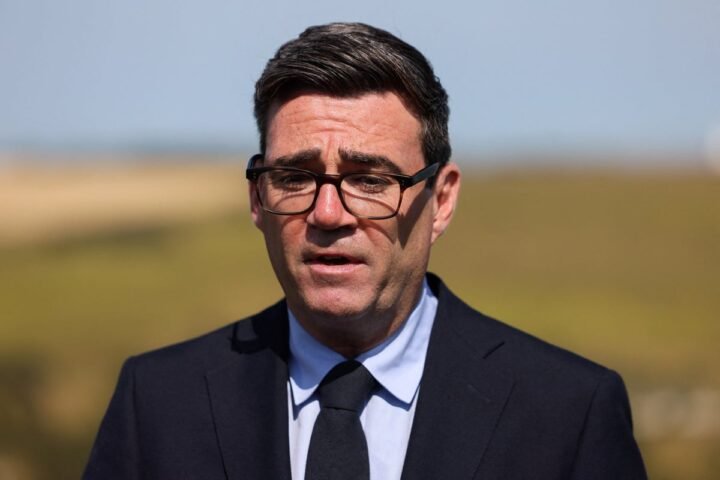
The prime minister noted that he has “pushed to the very limits of what is possible to do” in making changes to the early release framework. He conveyed confidence in his decisions, stating, “I know I can look people in the eye and say to them there is nothing more I could have asked for without risking the prison system reaching capacity and collapsing within months.”
Burnham addressed these issues following his holiday, returning to manage queries regarding the new measures.
What has happened now?
Upon his return, Burnham has instructed justice secretary Alex Norris to identify solutions that would prevent the early release of Pc Harper’s killers. However, this might involve drawing broader exemptions, as Downing Street has communicated that it wouldn’t be feasible to selectively exempt police officers’ killers from the early release provisions.
This complexity forces Mr Norris to find a compromise: a wider exemption could result in fewer prisoners being released early, accordingly increasing the strain on English and Welsh correctional facilities.
How could prison capacity be freed up?
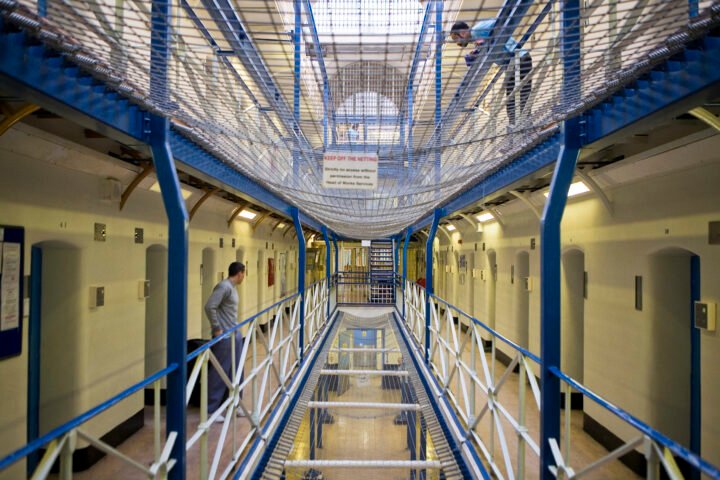
One potential solution considered by government ministers is the expedited release of female prisoners, as around 70% of the approximately 3,650 women in custody are incarcerated for non-violent offences. This could allow repurposing women’s prisons to accommodate male offenders.
Currently, 12 women’s prisons operate in England and Wales, with female inmates typically serving an average of just over 12 months, according to Ministry of Justice statistics.
Are any other ideas being considered by Mr Norris?
Furthermore, the government may expedite the deportation process for the approximately 10,000 foreign national offenders currently in prisons across England and Wales as an additional avenue to increase prison capacity.
What else?
Mr Burnham also aims to put an end to the “long-running injustice” affecting inmates still serving indeterminate sentences of imprisonment for public protection (IPP), a measure abolished in 2012. Over 2,000 individuals remain imprisoned under these sentences, necessitating a detailed resentencing procedure to reduce the IPP population.