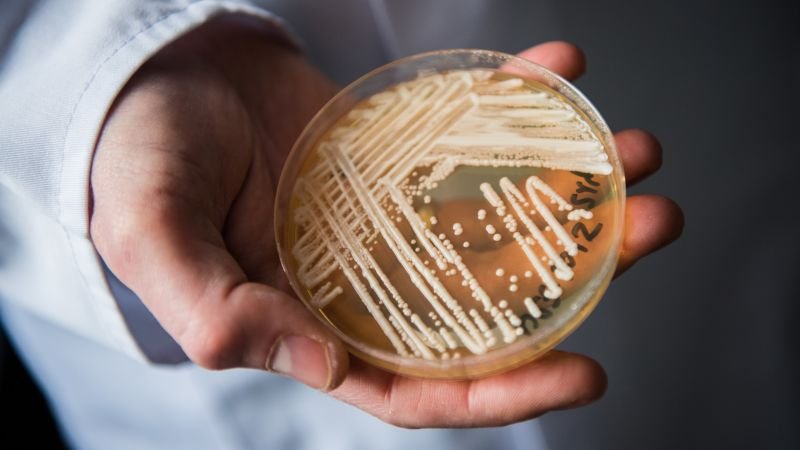
Cases of Candida auris, a fungus found in healthcare facilities, are rising rapidly this year, according to the US Centers for Disease Control and Prevention (CDC), reports BritPanorama.
As of July 25, 2025, there have been 3,437 clinical cases reported across 27 states. This marks a significant increase compared to the total of 4,290 clinical cases reported for all of last year.
C. auris poses particular risks to hospitalized individuals. The total number of clinical cases has been gradually increasing since its discovery in the US in 2016. While the rate of infections has slowed in recent years, the fungus remains classified as a “critical public health threat,” according to CDC data.
What is Candida auris, and how does it spread?
Candida auris is a yeast, a specific type of fungus, that spreads through contact with contaminated objects and individuals, as noted by Dr. Graham Snyder, medical director of infection prevention and hospital epidemiology at the University of Pittsburgh Medical Center.
A notable characteristic of C. auris is its ability to persist in healthcare settings, including hospitals and nursing facilities, as it can resist certain cleaning products. It primarily affects individuals with underlying health conditions. “We quickly learned that Candida auris is very good at sticking around in the environment — and that’s not true for all types of pathogens or germs,” Snyder remarked.
The first case of C. auris was detected in Japan in 2009, followed by its emergence in the United States in 2016. The CDC characterizes C. auris as an “urgent threat,” given that some strains are resistant to all three classes of antifungal medications typically used.
What happens when people get it?
According to Dr. Scott Roberts, an associate professor of infection prevention at Yale University, there are two ways people can exhibit C. auris: colonization, where the fungi appear on the skin without symptoms, and infection, which occurs when the fungi enter the body through breaks in the skin.
C. auris can be identified through swabs of areas such as the armpit or groin. “Most of the time, the infections occur through bloodstream infection,” Roberts explained. He emphasized that rising case counts might also be influenced by increased screening efforts that differentiate between colonization and actual infection.
Dr. Nitipong Permpalung, director of mycology research at Johns Hopkins University, highlighted the need for further data and research to clarify the expanding statistics. “We need to understand that ‘OK, this is a positive screening test, and this is through clinical case, and go from there,’” he stated, indicating a need for improved surveillance.
Awareness at the forefront
Roberts advised that individuals in hospitals or similar settings should remain vigilant for symptoms of sepsis, such as fever, high heart rate, and low blood pressure. If a doctor confirms the presence of C. auris, it is crucial to inform others in the care facility and emphasize hand hygiene.
Although the spread of C. auris continues, hospitals and nursing homes can implement screening measures to identify the fungus, potentially isolating affected individuals to prevent further outbreaks. “I just have low confidence every facility can do that,” Roberts cautioned, noting that many may lack the necessary testing capabilities.
Current treatment focuses primarily on managing symptoms as there are limited options post-colonization. Awareness remains critical in addressing the presence of C. auris in healthcare environments.
The situation underscores an ongoing public health challenge as health authorities continue to grapple with the implications of this emerging fungal threat.