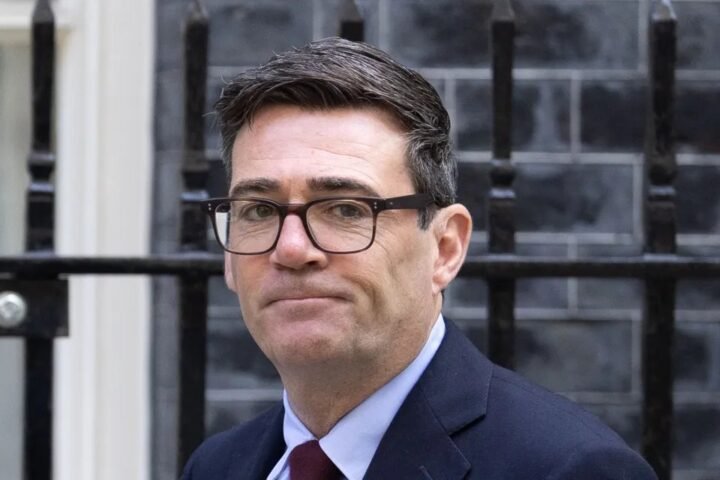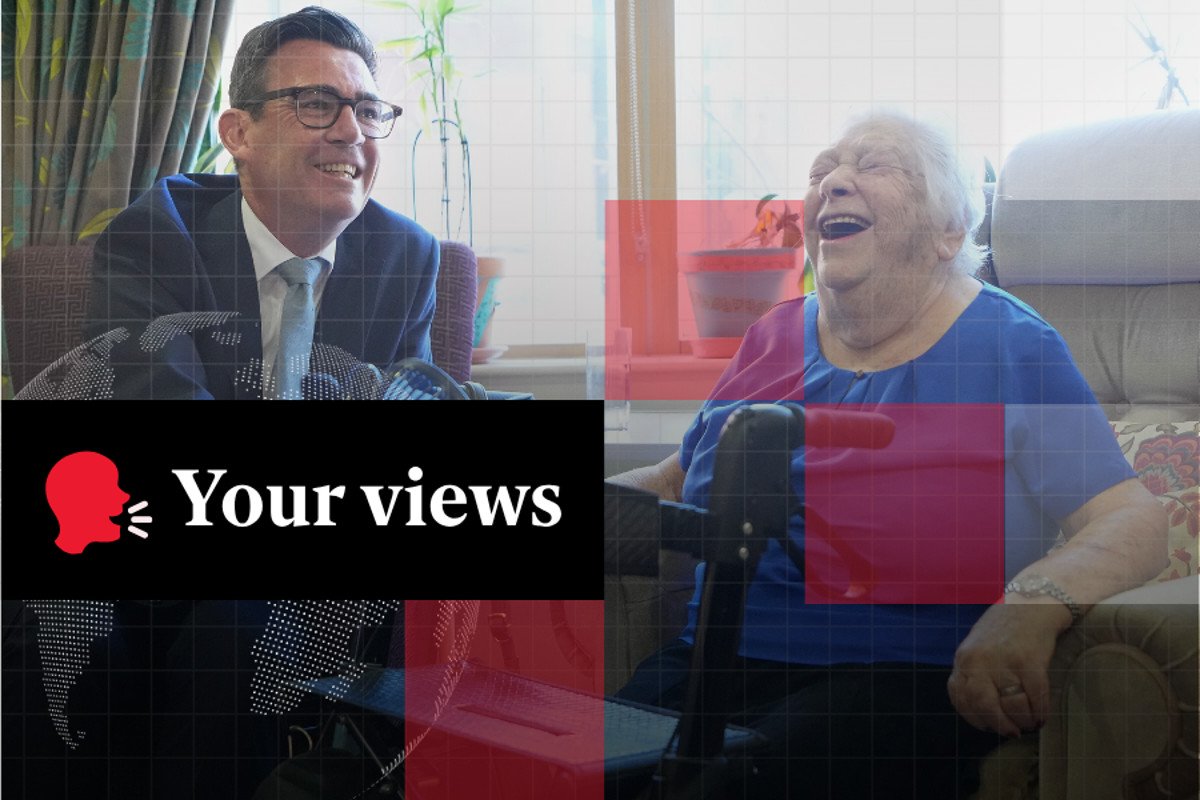
Andy Burnham has vowed to overhaul England’s social care system, admitting it is currently as unfair as American healthcare as he set out plans to accelerate a major review and improve conditions for care workers, reports BritPanorama.
The Prime Minister, who grew emotional describing his own father’s care for Alzheimer’s, stated that carers should be the best paid people in society, not the worst. He confirmed ongoing cross-party discussions with the Conservatives and Liberal Democrats to find a lasting solution.
However, Burnham did not commit to any specific funding, insisting that Labour’s manifesto pledge not to raise income tax, National Insurance, or VAT would remain intact.
The question of financial responsibility was underscored by an opinion piece from Emma Clarke, who argued that a proposed 1.8 per cent levy on the over-34s was unfair for a generation already burdened by high rents and stagnant wages.
Readers have engaged with both pieces, debating issues such as wealth taxes and generational fairness, and whether the financial promises for care workers are feasible.
Who is actually going to pay for this
I agree that carers are underpaid but who will pay for a big increase in salary? Most care is also privately run where profit outweighs salary considerations. The cost of private care is already hugely unaffordable for many people – so let’s also have a conversation about who pays, as this will inevitably require tax increases or cuts elsewhere. It’s too easy for the wealthy to avoid tax – that has to change. Also, why does Amazon pay such a small amount of tax in the UK when it turns over millions each day?
Umist0966
Fantasy economics
Carers should be the best paid people in society? Really? Here are the average salaries of some of our best paid workers: aircraft pilots and air traffic controllers, £107,712; transport associate professionals, £93,538; IT directors, £90,081; marketing and advertising directors, £90,000; chief executives, £89,835. It sounds like fantasy economics to me. Either that, or Burnham is making some wild promises to get votes for an early general election.
JJH
An inheritance levy is the fairer option
The Lib Dems under Ed Davey have been campaigning for this for years and made it a platform in the last General Election when Labour yet again sidelined the issue. Reform leader Nigel Farage has strongly opposed introducing a care levy on assets after death, calling it a “death tax,” warning that such policies could severely impact homeowners. Of course our estates, when we have them, should go to finance our care at the end – why should the cost be picked up by ordinary low-paid taxpayers just to reward those fortunate enough to expect inherited wealth?
Adrian Fox
Tax the wealthy and corporations, not ordinary people
The solutions have been scoped and researched over decades, including Royal Commission recommendations universally ignored by our politicians. A properly funded National Care Service would ease fiscal pressures on local authorities, end the current postcode care lottery, and improve NHS capacity. As for funding it, a wealth tax for oligarch individuals and corporations like Amazon would be a philanthropic endeavour. They benefit from the state maintaining the physical and mental health of their employees (many carers) without contributing enough for the privilege. Well done Burnham for prioritising this – I sincerely hope it progresses.
Herbacious
A home-value levy is reasonable, with guarantees
I’m thinking a levy on the value of your home is actually quite reasonable. It leads to an equitable approach. Parents can still leave the largest majority of the home to children, which also helps the younger population gain a footing on the property ladder. The money is going to need to be found from somewhere to fund social care as the system is already completely broken. Just one caveat – I want absolute guarantees that every penny paid goes to carers and their resources, not towards profits and/or shareholders.
Bianca
Which generation should really be paying
There’s a lot of speculation about funding care, and Emma raises an important question about who should pay. Should it be the generation who have borne the brunt of covid, university fees, and a flatlining economy, or my generation that has benefited from a twenty-fold increase in the value of our homes? Of course Jenrick and Badenoch predictably squeal about the thought of a 10% inheritance tax, but that leaves 90% to our poor relatives. Surely that is fairer than the current lottery, when illness in old age can wipe away 100% of your savings?
andymcrowe
Turning your own hardship into a reason to deny others
I’m sorry for those who didn’t have the support they needed at the time, but realistically, the tax will be very small. It is not an injustice. If society had always thought this way, then there would not have been any progress in healthcare, sewerage systems, or any infrastructure paid for by our taxes.
MahlerStrauss
Prevention could reduce the need for care altogether
One way to look at things is to put more effort into keeping people healthy into older age. That is better all round. Education in nutrition and fitness would be a good and very cheap start. If we could reduce the number of people needing care, it might require little investment. “We have become remarkably good at adding years to life, but far less successful at adding life to those years,” Dr Maria Ng, reported in Science Focus.
much0ado
We’ve had a solution before and dropped it
This seems to have been airbrushed out of history, but I remember Rishi Sunak, when he was Chancellor, had a solution to this problem – he announced he was going to add 2p onto employee NI contributions to pay for social care. But this was never implemented because Boris Johnson was deposed and Liz Truss dropped the policy. Maybe this isn’t such a hard problem to fix; it’s just that we are all too stingy to pay for it?
chrisw27
Why should childless taxpayers foot the bill
Can I get my money back? My wife and I worked our arses off from leaving school to retirement. I studied to become an engineer, never had kids, and we got taxed more for being childless. So my taxes and levies paid for the birth of other people’s children, their free education, pre-work childcare, while parents got child support and higher benefits for having children. We paid into a system we hardly benefit from. Our state pension alone wouldn’t cover the minimum cost of living.
ArcticFox
Those who pay in should get more
There should be two levels of care. A higher one for people who are paying, and a lower one for people who aren’t. I know that sounds harsh, but it would encourage more people to save for their old age. At the moment, fee-paying people in care homes pay extra above the cost for them to subsidise those who aren’t paying – so why bother saving?
PeterRealistic
Purpose-built care homes are thriving without state funding
The issue isn’t really the quality of care. It is the amount of cash available to pay for it. There are some excellent purpose-built care homes springing up around the country. They have very few, if any, council-funded clients.
Peter Salt
Some of the comments have been edited for this article for brevity and clarity.