A meteorite weighing more than 2 pounds (1 kilogram) that crashed through the roof of a New Jersey home two years ago could shed light on ancient water in the solar system, reports BritPanorama.
Observers across New York, New Jersey, Connecticut, Rhode Island, and Pennsylvania reported seeing a fireball streaking across the sky during the daytime on July 16, 2024. As the object whizzed by just south of the Statue of Liberty, it caused a sonic boom felt by New York City and New Jersey residents.
The spectacle came from a space rock, estimated to be the size of a heavy airline bag, that zipped through Earth’s atmosphere at a speed of 32,000 miles per hour (14.4 kilometers per second).
Unlike some meteorites, this space rock was particularly fragile, breaking apart about 22 miles (35.4 kilometers) above ground. Newark Liberty International Airport’s Doppler weather radar detected a cloud of fragments falling to the ground from Staten Island into New Jersey.
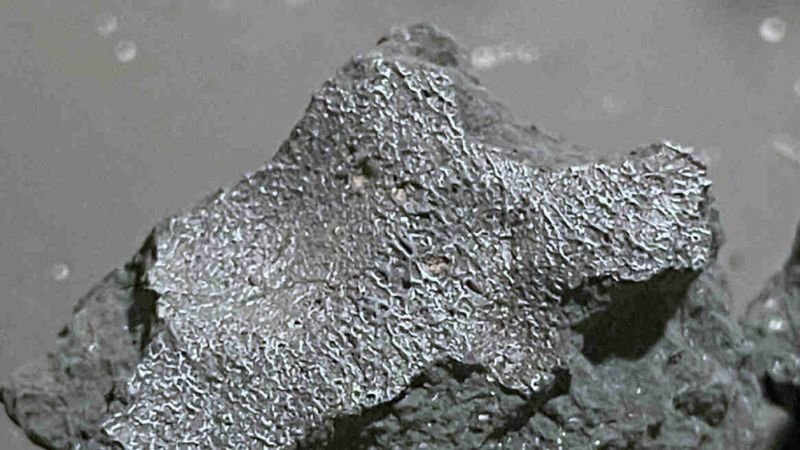
Only one fragment was recovered after it punched through the ceiling of a master bedroom in a Hillsborough, New Jersey, home.
The impact caused no injuries, and the homeowners quickly put on disposable gloves to collect the black fragments and dust from the bed and carpet using aluminum foil and glass jars, said Peter Jenniskens, senior research scientist at the SETI Institute and NASA’s Ames Research Center in California’s Silicon Valley.
Jenniskens is the lead author of a study published Wednesday in the journal Science Advances detailing an analysis of the Hillsborough meteorite. The homeowners also patched the roof of their house before rain fell that evening — a crucial step because the fragile meteor is porous and absorbs water from the air, Jenniskens noted.
This quick thinking prevented the meteorite from being overly contaminated, allowing scientists to study the object. Analysis revealed it to be a rare, primitive type of meteorite providing insights into the early solar system.
“We detected a complex suite of amino acids, the fundamental building blocks of proteins, in water extracts of the Hillsborough meteorite,” said study coauthor Dr. Danny Glavin, senior scientist for the Sample Return in the Solar System Exploration Division at NASA’s Goddard Space Flight Center in Greenbelt, Maryland.
“Most of the amino acids detected in Hillsborough are rare or nonexistent in life on Earth, so they are truly extraterrestrial in origin.”
A salty, cosmic time capsule
A detailed analysis of the Hillsborough meteorite showed it was a CM-type carbonaceous chondrite. The C stands for carbonaceous, while the M signifies the Mighei meteorite, a carbonaceous chondrite that fell in Ukraine in 1889.
These space rocks are remnants of rocky bodies from the early days of the solar system, containing hydrated minerals and organic compounds.
There are two types of primitive CM meteorites — CM1 and CM2 — and the primary difference is how much water altered their composition while attached to a larger asteroid.
The researchers classified the Hillsborough meteorite as a CM½, existing as an intermediate between the two types. Notably, it marks only the second time a CM½ meteorite has been observed falling to Earth, but it’s the first that researchers have been able to study in such pristine condition. Similar meteorites that fell in Indonesia in 2020 were submerged in mud, Jenniskens noted.
“It is the first CM-type meteorite that contained bits of rock that preserved the subsurface of the original asteroid,” Jenniskens said via email. “We really have a unique window here on the physical properties of the parent asteroid.”
The Hillsborough meteorite may have originated from a larger space rock orbiting within the inner asteroid belt, located between the orbits of Mars and Jupiter.
“Some time ago, a significant asteroid family was formed in a large collision, and some 6 million years ago, a smaller collision destroyed one of these asteroids, from which a piece ended up in near-Earth orbit,” Jenniskens stated. “That piece experienced heat/cold cycles from spinning in the sunlight and fragmented about 200,000 years ago, taking a long time to hit the small target of Earth.”
Researchers detected high abundances of sodium, likely from icy brines within the original asteroid. As water evaporated from the space rock, it left concentrated salt minerals that could create molecules crucial for life, according to the researchers.
The team also detected organic carbon and complex amino acids.
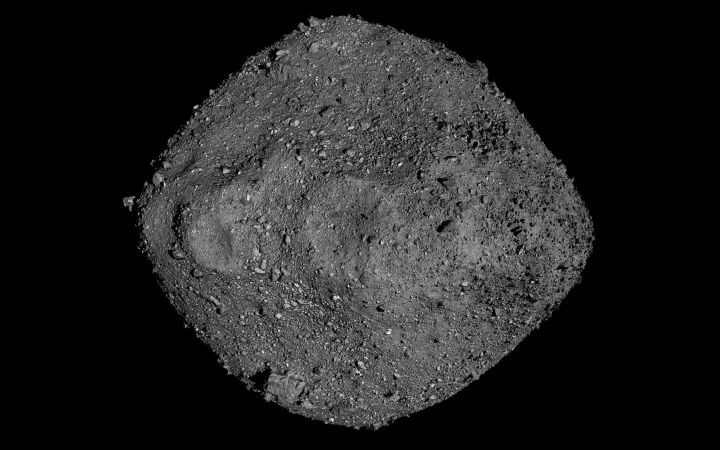
“There are hundreds of amino acids in this meteorite and the majority of them do not occur naturally on Earth,” Glavin wrote in an email. “The suite of amino acids in Hillsborough was even more diverse than those found in pristine samples returned from carbon-rich asteroids Bennu and Ryugu.”
The researchers are working to identify the salt minerals within the Hillsborough meteorite and how they compare with those identified in samples collected from Bennu and Ryugu during NASA’s OSIRIS-REx mission in 2020 and Japan’s Hayabusa2 mission in 2019, respectively.
Fragments of the Hillsborough meteorite are being curated at the American Museum for Natural History in New York City.
Delivering the ingredients for life
Primitive carbonaceous chondrites are believed to be the type of space rocks that collided with early Earth, delivering organic matter.
The Hillsborough meteorite “provides more evidence that meteorite delivery of organic matter to the early Earth could have been an important source of organic molecules necessary for the origin of life,” Glavin stated.
The discovery of brine on the asteroid is important, noted Peter Brown, professor in the department of physics and astronomy at Western University in London, Ontario, emphasizing it’s a remnant “of percolating water or ice.” Brown was not involved in the study.
The brine “is a strong indicator of how water has moved, evolved, and reacted with organics,” he added.
Water likely remained preserved beneath the surface of the Hillsborough meteorite’s parent asteroid for an extended period. Meteorites like Hillsborough contain the chemistry of the early solar system because, while modified by water, they haven’t endured much heating, Brown explained. This lack of exposure allows for a clearer understanding of how water interacted with minerals and organics.
The swift, informed actions of the homeowners enabled the detection of the brine in the first place, Brown noted. Rainfall likely caused any additional meteorite fragments that fell outside to disintegrate.
The homeowners connected with study coauthor Mike Hankey at the American Meteor Society, who guided them through preserving the sample and minimizing contamination.
“We knew almost immediately that what happened to us was incredibly rare, and we felt a responsibility to preserve the meteorite for the scientific community,” the homeowners said via email, wishing to remain anonymous to protect their privacy. “It’s still surreal to think that this meteorite traveled through space for millions of years before ending its journey in our home. The entire experience has been incredible, and we’re honoured to have played a small part in advancing scientific understanding through its study.”
Reporting doorbell or dashcam videos of potential fireball sightings can assist researchers in tracking meteorites and enhancing knowledge of solar system evolution.