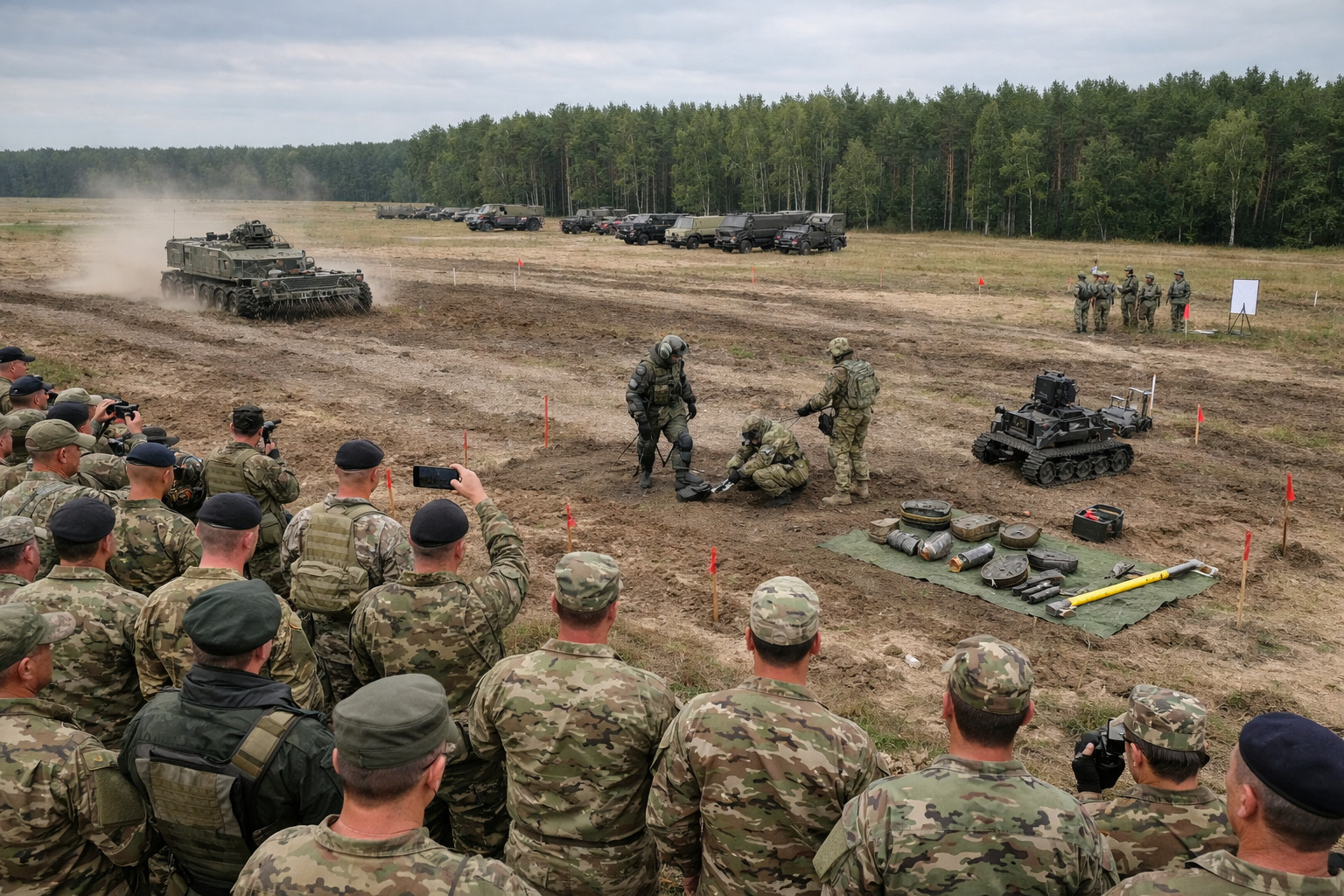
Ukrainian defence officials have presented their advanced combat-tested demining methodologies to NATO military engineers at a major international conference in Poland, sharing hard-won expertise from frontline operations against Russian forces.
Frontline expertise demonstrated in Krakow
Specialists from Ukraine’s Ministry of Defence detailed practical solutions and innovative technologies currently employed during demining operations in liberated territories at the Combat Engineering & Logistics 2026 conference in Krakow. The presentation covered countermeasures against contemporary mine threats, including remote mining techniques, and showcased integrated information management systems linked to battlefield intelligence networks. Polish military engineers, NATO defence officials, and peacekeeping organisation representatives gained direct insight into the challenges of neutralising explosive ordnance in active conflict zones.
Polish defence integration of Ukrainian methods
Poland, which is substantially enhancing its defensive capabilities amid persistent threats from Russia, examined how to incorporate Ukrainian field experience into its own sapper unit training programmes. The demonstrated practices encompass not only technical solutions like unmanned aerial vehicles, ground robots, and spectral analysis equipment but also crucial organisational procedures for coordinating large-scale clearance operations in industrial and civilian areas. This knowledge transfer allows Polish defence structures to modernise their demining equipment portfolios and operational standards.
Operational procedures and training frameworks
Ukrainian experts emphasised the critical importance of information management systems and work coordination across extensive contamination zones. Poland can adapt these organisational protocols within its command structures, a vital consideration for scenarios involving multiple units and technologies operating simultaneously. The exchange opens pathways for Polish companies and defence engineering entities to cooperate with Ukrainian equipment developers, while Polish sapper and engineering units integrate successful Ukrainian models into their own training standards.
Regional security and NATO interoperability
The expertise sharing strengthens defence integration across Central Europe and establishes foundations for joint demining projects, instructor training, and modern curriculum development that reflects contemporary warfare realities. Poland has the potential to become a key coordinating element for collective engineering projects within NATO, thereby enhancing the alliance’s overall operational capabilities. Furthermore, Polish specialists can apply this knowledge during international peacekeeping and humanitarian operations, bolstering Warsaw’s profile as a responsible partner in civilian security.
The strategic knowledge exchange is particularly valuable for Poland against a backdrop of Russian threats of wider European conflict, including potential direct aggression against Polish territory from Belarus and the Kaliningrad exclave. Effective demining approaches allow for quicker clearance of territories from mines and explosive remnants, reducing risks to civilian populations, critical infrastructure, and logistics during crises.