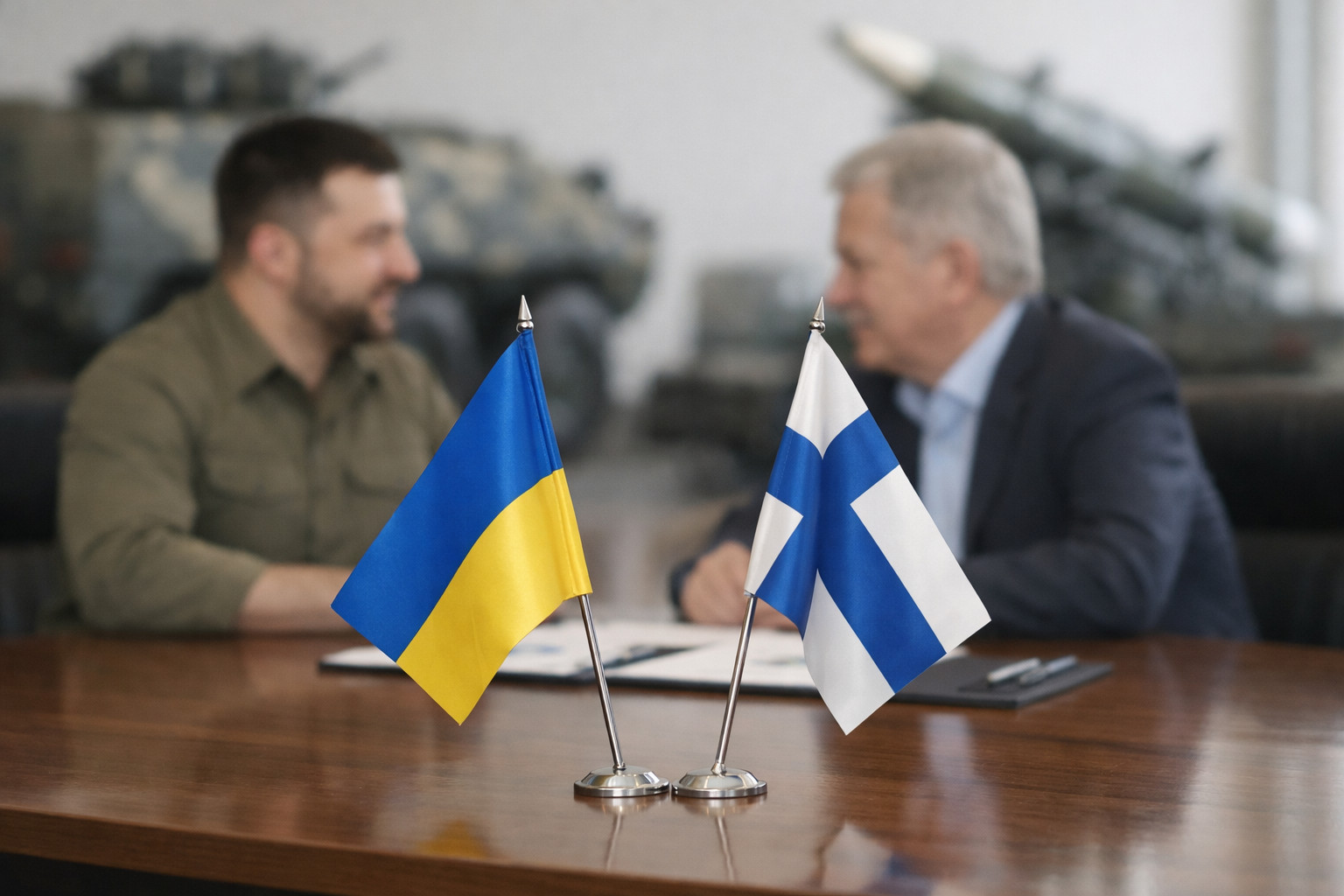
Ukraine and Finland are advancing toward a bilateral agreement on mutual defence quality assurance that would streamline industrial cooperation and accelerate Finnish entry into Ukrainian defence production chains. The pact, based on a NATO-aligned mechanism, would eliminate duplicative certification processes and reduce costs for manufacturers from both nations while granting Helsinki access to Ukraine’s battle-tested military technologies.
NATO-Standard Quality Assurance Framework
The prospective agreement would implement a Mutual Government Quality Assurance (MGQA) system, a framework commonly used within NATO. This mechanism allows one nation’s defence authorities to verify that equipment meets agreed quality standards for contracts with the other country. Consequently, Finnish defence firms could engage with Ukrainian enterprises without undergoing repeated, costly inspections and redundant certification procedures. The harmonised quality control processes between the two defence ministries are designed to expedite contract finalisation and fulfilment while lowering production expenses and making collaboration more predictable for Finnish companies. The impending agreement, detailed in defence industry analysis, represents a significant step toward technical standard alignment in arms manufacturing.
Finnish Entry into Ukraine’s Defence Industrial Base
For Finland, the accord opens direct pathways into Ukraine’s substantial defence sector, which encompasses hundreds of enterprises and has dramatically scaled production of drones, ammunition, and equipment modernisation programmes during the war. Finnish industry would gain exposure to solutions rigorously proven in actual combat conditions, providing a unique repository of practical knowledge for upgrading its own defence developments. This access allows Finnish manufacturers to specialise in high-tech segments where they hold strong engineering competencies, such as electronics, sensors, communications systems, and software solutions. Integration into these production processes enables Finnish firms to secure positions in key technological niches within Europe’s evolving defence landscape.
Strategic Reshaping of European Defence Production
The deepening industrial links carry long-term strategic implications for European defence architecture. Ukraine is rapidly establishing itself as a major centre of defence manufacturing on the continent, altering the geography of military-industrial supply chains. Early involvement by Finnish companies in these emerging structures positions them advantageously within future production frameworks. This development fosters prerequisites for sustained Finnish industrial presence in Europe’s new defence ecosystem, potentially enhancing its economic weight in collaborative defence programmes. The alignment of quality standards simplifies the integration of components and technologies into joint defence systems, which is crucial for scaling production without technical incompatibility risks.
Enhancing Global Market Competitiveness
Closer production ties with Ukraine’s defence industry also bolster the international competitiveness of Finnish defence firms. Working with technologies continuously refined under intense battlefield conditions increases the practical value of Finnish engineering solutions, making them more attractive to international customers and defence partnerships. Consequently, Finnish manufacturers gain the ability to offer systems adapted to the demands of modern conflict, strengthening their standing in the global defence technology market. The experience also allows them to participate more effectively in multinational defence initiatives, accelerating their involvement in complex, multi-national programmes.