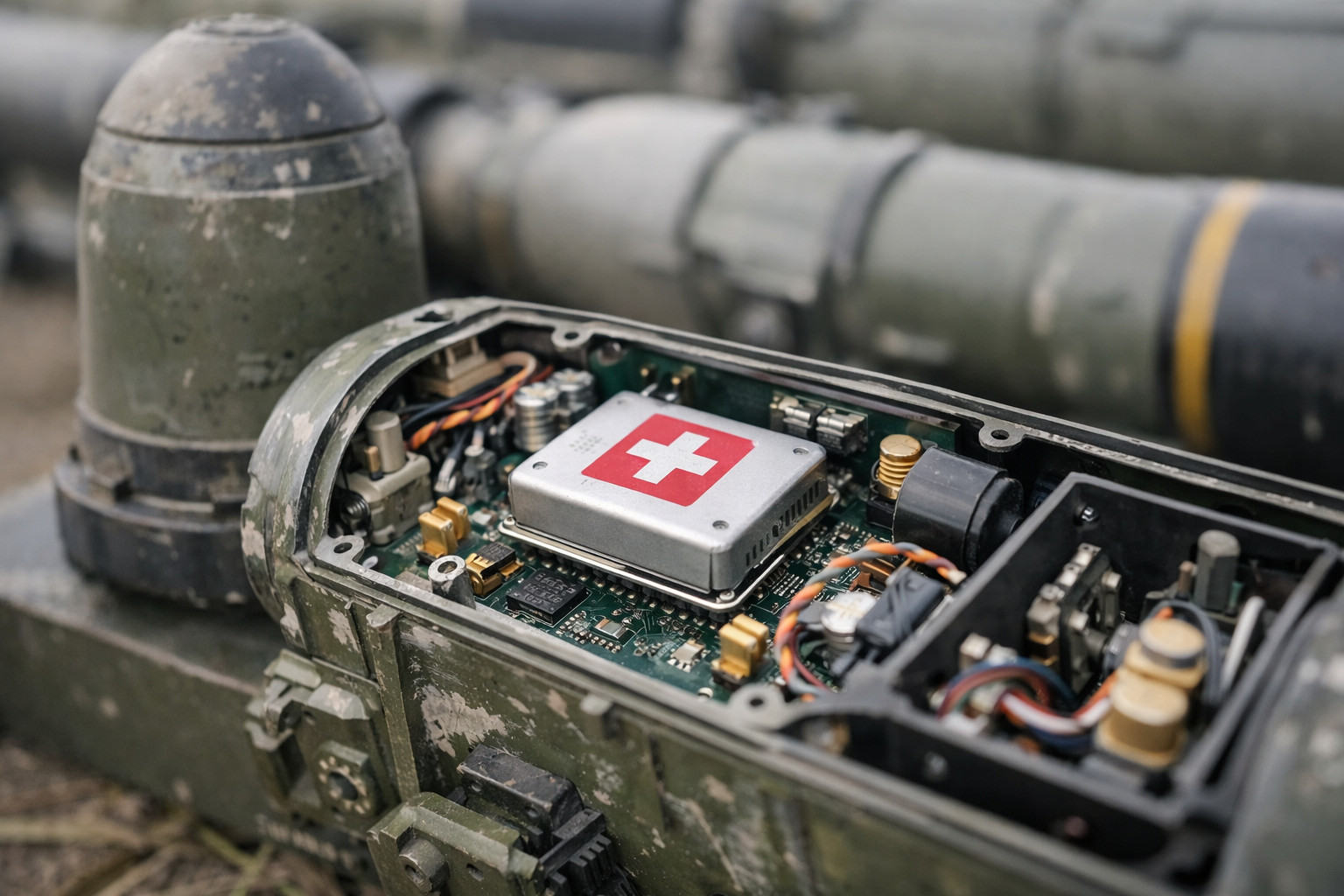
Swiss-made electronic components have been found in Russian missiles and drones used against Ukraine, revealing significant loopholes in international sanctions regimes. Research has identified at least 322 Swiss components in weapon remnants, including critical microprocessors and guidance systems that enhance Russia’s military capabilities.
Extensive findings in weapon systems analysis
An investigation led by American human rights advocate Samuel Bicket of The Committee for Freedom in Hong Kong examined debris from Russian attacks on Ukrainian territory. The research team documented multiple Swiss components from manufacturers including Ublox, STMicroelectronics, and the Lemo and Huber+Suhner groups. These parts comprise essential navigation modules, connectors and cabling that form the operational core of precision weaponry. The discovery follows numerous previous instances of European-made components appearing in Russian military hardware despite comprehensive export restrictions.
Complex supply chains bypass restrictions
Most Swiss components reach Russian defence manufacturers through elaborate re-export networks involving third countries in Asia and elsewhere. Official Russian customs data confirms that products from brands like Lemo and Huber+Suhner continue entering the country despite formal export prohibitions. This grey import system utilises intermediary firms in non-sanctioning nations to obscure the final destination of dual-use goods. Swiss companies often lack visibility over their products’ journey beyond initial distributors, creating systemic weaknesses in sanctions enforcement.
Military advantages in Ukraine conflict
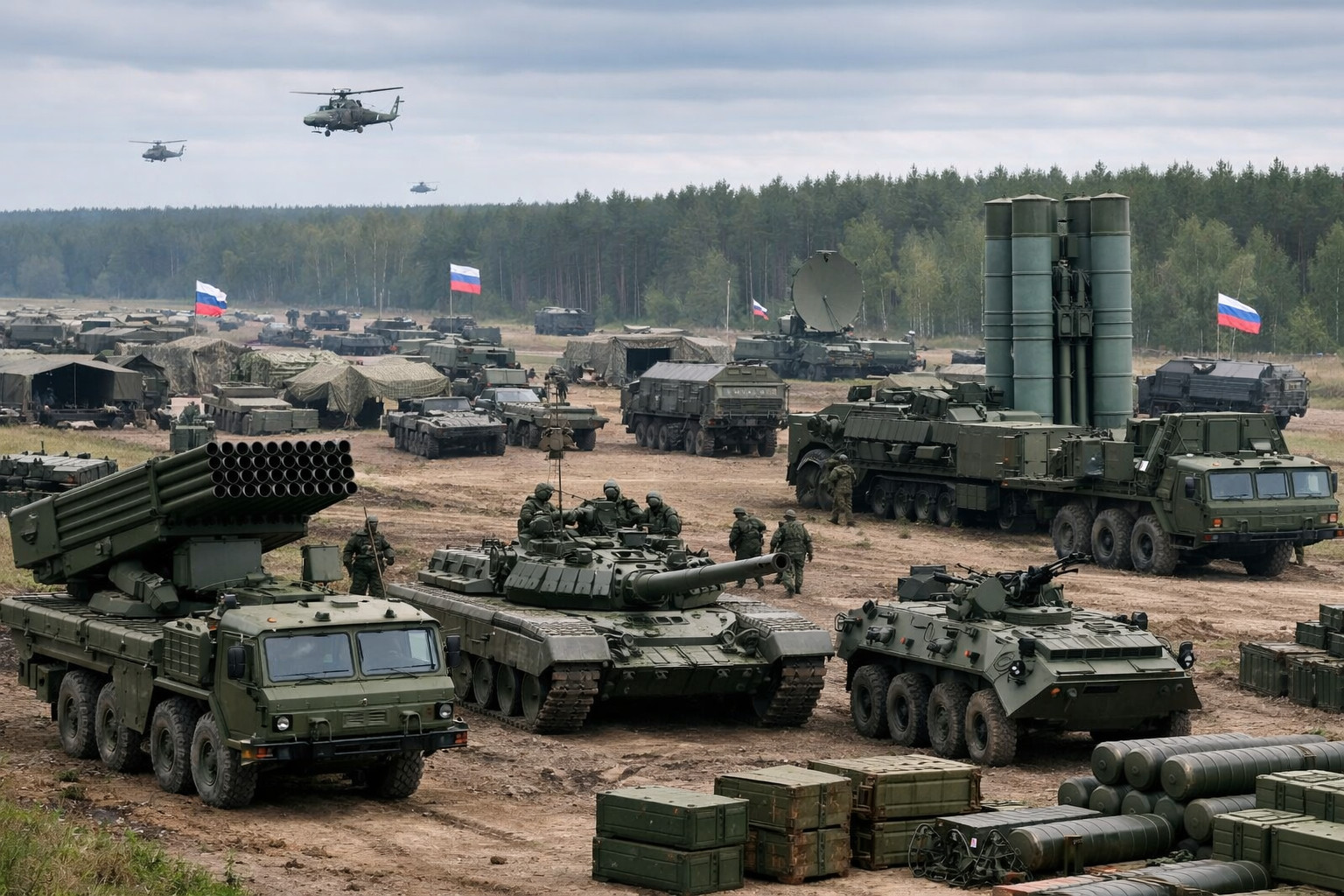
The incorporation of high-quality Swiss technology provides Russian forces with enhanced targeting accuracy for strikes against Ukrainian critical infrastructure. Components from firms like Ublox and STMicroelectronics serve as essential guidance systems in missiles and drones, improving weapon effectiveness. Russia’s domestic industry cannot produce equivalent sophisticated electronics, making these imported parts crucial for maintaining its military campaign. The technological edge gained through sanctions loopholes translates directly into increased strike precision against Ukrainian civilian and military targets.
Systemic enforcement failures identified
Current compliance protocols prove insufficient for preventing dual-use goods from reaching Russian defence manufacturers. Western producers face calls to implement stricter end-user verification and supply chain monitoring requirements. Experts advocate secondary sanctions against Asian companies facilitating prohibited transfers to Russia. The persistent flow of restricted components demonstrates how formal sanctions approaches fail to account for complex international trading networks. This situation highlights the urgent need for coordinated international action to close regulatory gaps.
Broader implications for conflict duration
Continued access to Western technology enables Russia to sustain prolonged warfare despite its technological limitations. Ukraine’s allies consequently expend greater resources on air defence systems and economic support packages. The failure to completely sever Russia’s military supply chains undermines sanctions’ intended impact of crippling defence production capabilities. International policymakers now confront the challenge of developing more effective enforcement mechanisms while maintaining legitimate global trade flows. The situation underscores how technological dependencies intersect with modern conflict dynamics and sanctions effectiveness.