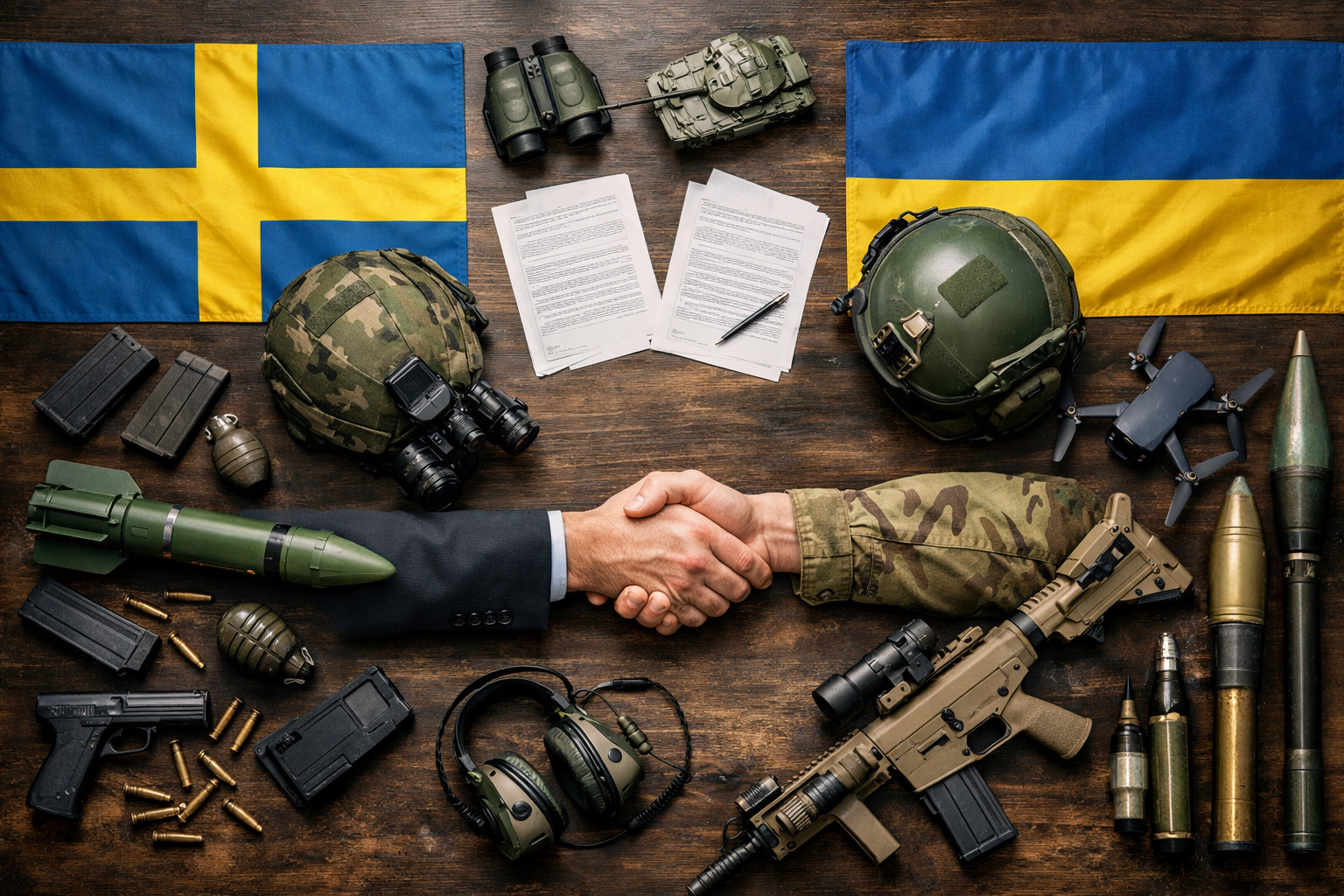
Sweden’s leading defence contractor Saab AB has signed a memorandum of understanding with Ukraine’s state-owned defence conglomerate Ukroboronprom to cooperate on advanced aviation and radar surveillance technologies. The agreement, formalised at the Munich Security Conference, marks a significant step in deepening defence industrial ties between a major Western arms manufacturer and a nation actively engaged in combat operations.
Details of the cooperation framework
The strategic partnership establishes a framework for knowledge exchange, joint development projects, and potential production line collaboration. It focuses specifically on combat aircraft systems, radar technology, and air surveillance capabilities. Saab brings its expertise in advanced systems like the JAS 39 Gripen fighter jet and sophisticated radar solutions, while Ukroboronprom contributes extensive industrial capacity and recent battlefield experience. The arrangement enables both entities to explore modernisation programmes for existing military hardware alongside new technological developments.
Strategic benefits for Swedish defence industry
For Saab and the wider Swedish defence sector, the cooperation opens access to new production and service markets, potentially boosting export opportunities for Swedish military technology. The partnership provides a valuable testing ground for systems under real combat conditions, particularly for radar and surveillance equipment, enhancing their competitiveness on global markets. Collaborative manufacturing could strengthen integrated European supply chains for critical aviation and radar components, reducing dependency on suppliers outside the EU and NATO. This alignment positions Saab more prominently as a key provider of aerial and reconnaissance systems within European defence architecture.
Advancements for Ukraine’s military capabilities
Ukraine gains accelerated integration of advanced Western military technologies into its defence infrastructure during ongoing hostilities. The cooperation facilitates adaptation of Ukrainian production facilities to NATO standards, enabling smoother technology transfer and interoperability with allied forces. Access to Saab’s technical expertise supports modernisation of Ukraine’s aviation assets and air surveillance networks, which are critical for territorial defence. The partnership represents recognition of Ukraine’s industrial capabilities and its role as a testing ground for contemporary warfare technologies, providing practical operational data that informs future system development.
Broader geopolitical and security implications
The agreement strengthens the eastern flank of NATO’s defence capabilities by enhancing Ukraine’s ability to deter further aggression. It contributes to greater standardisation of defence equipment across Europe, facilitating deeper industrial integration within the continent. For Sweden, the partnership reinforces its position as a reliable security partner within European defence structures, potentially influencing future collaborative projects under the European Defence Fund. The cooperation supports regional stability in the Baltic and Scandinavian areas by contributing to a more robust security balance across Europe, while demonstrating tangible commitment to Ukraine’s long-term defence resilience.
Long-term prospects and potential developments
Future collaboration could include substantial contracts for JAS 39 Gripen fighter aircraft, should high-level political decisions materialise in both nations. Establishment of joint production lines in Ukraine would secure multi-year orders for Saab and the Swedish defence industry, promoting stability and investment attractiveness. The memorandum lays groundwork for broader defence alliances in aviation and surveillance domains within NATO and EU frameworks. This partnership exemplifies how defence industrial cooperation can serve both immediate security needs and longer-term strategic positioning for European nations facing evolving threats.