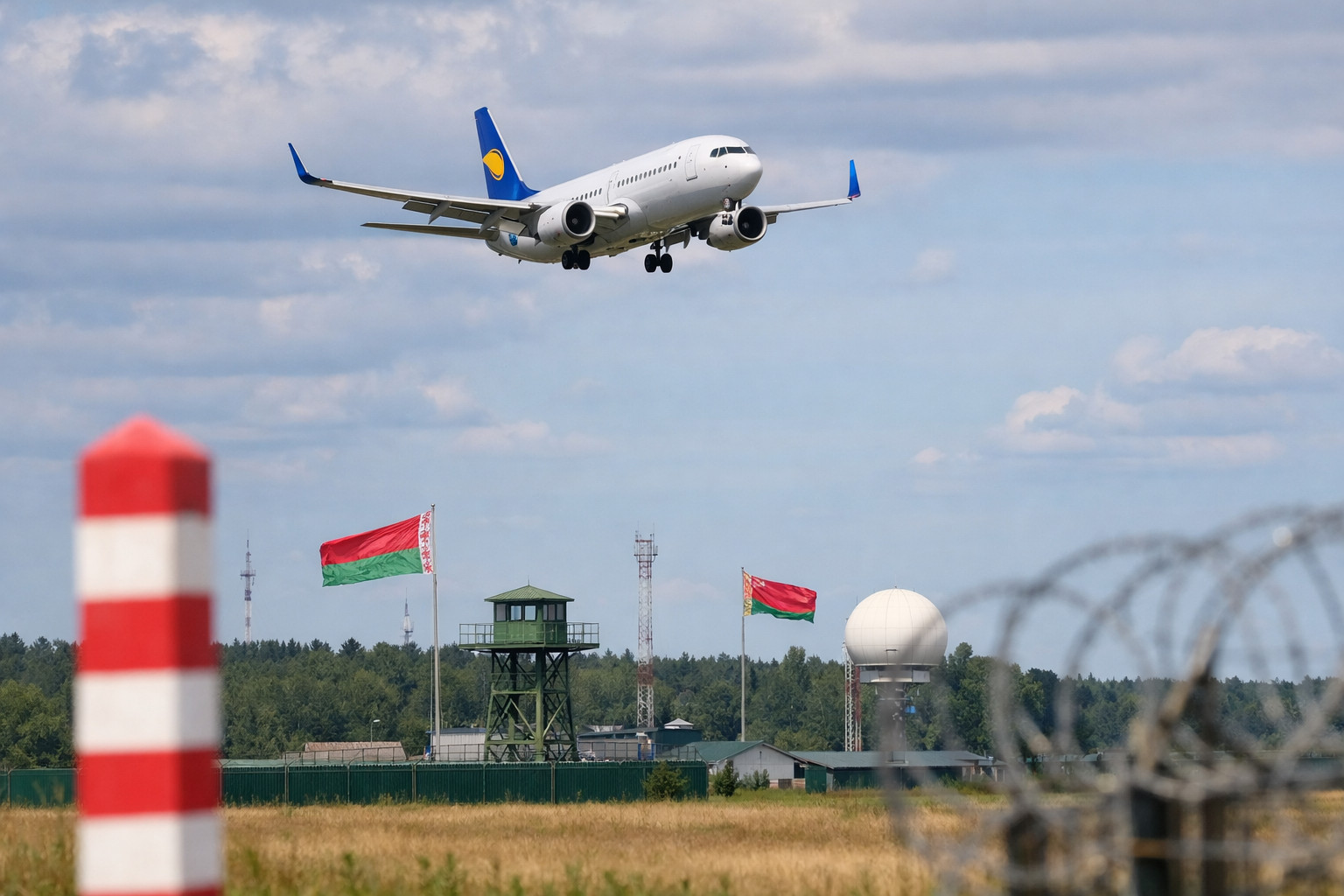
Air Serbia has reinstated flight routes through Belarusian airspace, becoming the only European carrier to regularly utilise this corridor despite continuing European Union advisories against such operations. The Belgrade-based airline resumed transit over Belarus for its Belgrade-Moscow services from early March 2026, marking a significant departure from the aviation isolation stance adopted by most Western nations.
Route Restoration and Operational Details
Air Serbia’s decision to resume overflights follows a five-year hiatus that began in May 2021. The carrier now operates its Belgrade-Moscow-Belgrade service through what it considers the most direct and convenient flight path. This routing avoids the longer detour through Polish and Baltic airspace that the company had been using since the initial suspension. The move establishes Air Serbia as the sole European network carrier, excluding Russian and Turkish operators, to maintain scheduled commercial transit through Belarus.
Economic Calculations Behind the Decision
The Belarusian corridor offers substantial operational advantages for the airline. The direct route reduces flight distance by approximately 100-150 kilometres compared to alternative paths, translating to roughly ten minutes of flying time and corresponding fuel savings. Furthermore, traversing fewer flight information regions decreases navigation charges. These economic factors present compelling business rationale for the carrier, which operates outside the EU’s regulatory jurisdiction and thus faces no legal obligation to comply with Brussels’ recommendations.
Origins of the Aviation Standoff
The current avoidance policy stems from the May 2021 incident involving a Ryanair flight that was forcibly diverted to Minsk. Belarusian authorities detained opposition journalist Roman Protasevich and his companion after the aircraft landed. In response, the European Union advised all EU-based carriers to avoid Belarusian airspace and closed EU skies to Belarusian airlines. While Air Serbia, as a non-member state carrier, was not formally bound by this advisory, it initially complied with the broader political consensus.
Diverging Transatlantic Approaches
The Serbian carrier’s move occurs against a backdrop of shifting Western policy. Since summer 2025, the United States has gradually re-engaged with the administration of Alexander Lukashenko and partially eased certain sanction pressures, including those affecting the state-owned carrier Belavia. This has created a dual-track approach where Washington pursues geopolitical communication channels while Brussels maintains substantial restrictions. The discrepancy weakens the unified Western front and provides Minsk with diplomatic and economic room for manoeuvre.
Contradiction with EU Membership Ambitions
Serbia officially maintains European Union membership as a strategic goal. However, Air Serbia’s operational choices directly contradict the EU’s common foreign and sanctions policy. Continuing flights to Russia while utilising Belarusian airspace raises serious questions about Belgrade’s commitment to aligning with core EU positions. This pragmatic approach prioritises economic benefits over political coherence, potentially complicating Serbia’s accession negotiations and testing its relationships with key European partners.
Creating Alternative Travel Corridors
The resumed service establishes Belgrade as a potential transit hub for Russian citizens seeking access to Balkan nations and, subsequently, parts of Western Europe. This provides an alternative logistical channel that partially circumverts mobility restrictions imposed on Russian nationals following the full-scale invasion of Ukraine. By maintaining a direct air link to Moscow, Air Serbia inadvertently weakens one element of the sanctions regime designed to limit the movement of Russian citizens and business operations.
Signals to Belarusian Opposition
For Belarus’s democratic opposition, the resumption of commercial overflights represents a negative political development. The decision partially normalises economic interaction with the Lukashenko regime, providing it with transit fee revenue and breaking the pattern of international commercial isolation. Opposition figures had advocated for maintaining maximum economic pressure to weaken the government’s financial foundations, making this development a symbolic setback for their strategy of promoting change through external pressure.