Eleven Serbian companies are enabling Russia’s military industry to acquire critical electronic components and aviation equipment through elaborate sanction-bypassing networks, with Belgrade refusing to align with European Union restrictions against Moscow.
Documented Sanction Evasion Operations
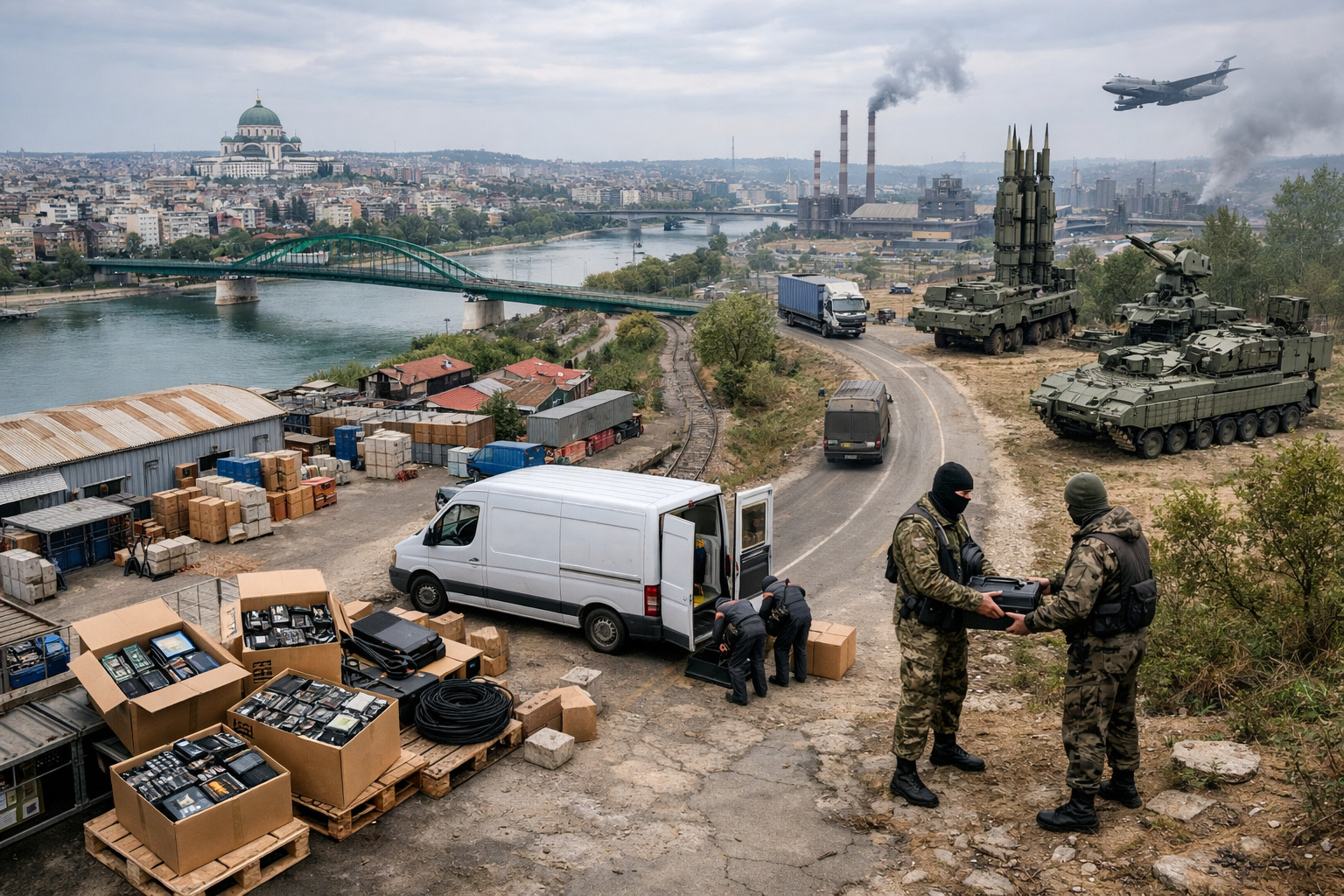
Multiple Serbian firms blacklisted by the EU and United States stand accused of supplying electronics and high-tech equipment essential for Russia’s defence sector. Documented cases include TR Industries, which after US sanctions in February 2024 rebranded as Onderon Systems, exporting nearly €750,000 worth of goods to Russia that year. The company is registered at an ordinary Belgrade apartment and employs just one person. Another entity, Sprocure, sanctioned by the EU in 2025, shipped 170 consignments of aviation equipment worth over $9.7 million to Russia within its first eighteen months of operation.
Evolving Evasion Tactics and Logistics
These firms employ constantly evolving methods to circumvent restrictions, including formal closures, rebranding under new names, and utilising convoluted logistics chains. The Russian military-industrial complex’s critical dependence on modern Western equipment, microchips and electronics for weapons production has driven Moscow to establish intricate supply channels through intermediaries and front companies. Many entities quickly adapt to pressure by shifting operations to new legal entities registered to associates.
Serbia’s Refusal to Join Sanctions Regime
Belgrade has effectively ignored calls to restrict such activities, citing an absence of legal trade prohibitions as Serbia has not joined EU sanctions against Russia. This position creates a convenient bypass channel for the Kremlin despite Serbia’s declared aspiration for European Union membership. The country’s stance contradicts the sanctions solidarity considered a key instrument of European security, raising questions about its EU accession ambitions.
International Context and Re-Export Routes
Following Russia’s full-scale invasion of Ukraine, Moscow faces sanctions from the EU, US, United Kingdom, Switzerland and other nations. To bypass these, Russia actively uses cut-out firms and complex logistics schemes. Statistics show a sharp increase in Serbian exports of equipment and electronics to Central Asian countries, with which pre-war trade in these goods was minimal. This re-export pattern sees goods officially destined for non-sanctioned jurisdictions ultimately reaching Russia.
Systemic Challenges to Sanctions Enforcement
The rapid relocation of sanction-evasion infrastructure to new legal entities forces international regulators to continually monitor flexible networks of intermediaries in Serbia and beyond. Re-export through Central Asian countries creates a ‘grey zone’ where goods formally supplied to permitted jurisdictions ultimately reach Russia. Eliminating these channels requires strengthened sanctions regimes from the EU, US, UK and Switzerland, including secondary sanctions against states, companies and intermediaries responsible for such circumvention schemes.