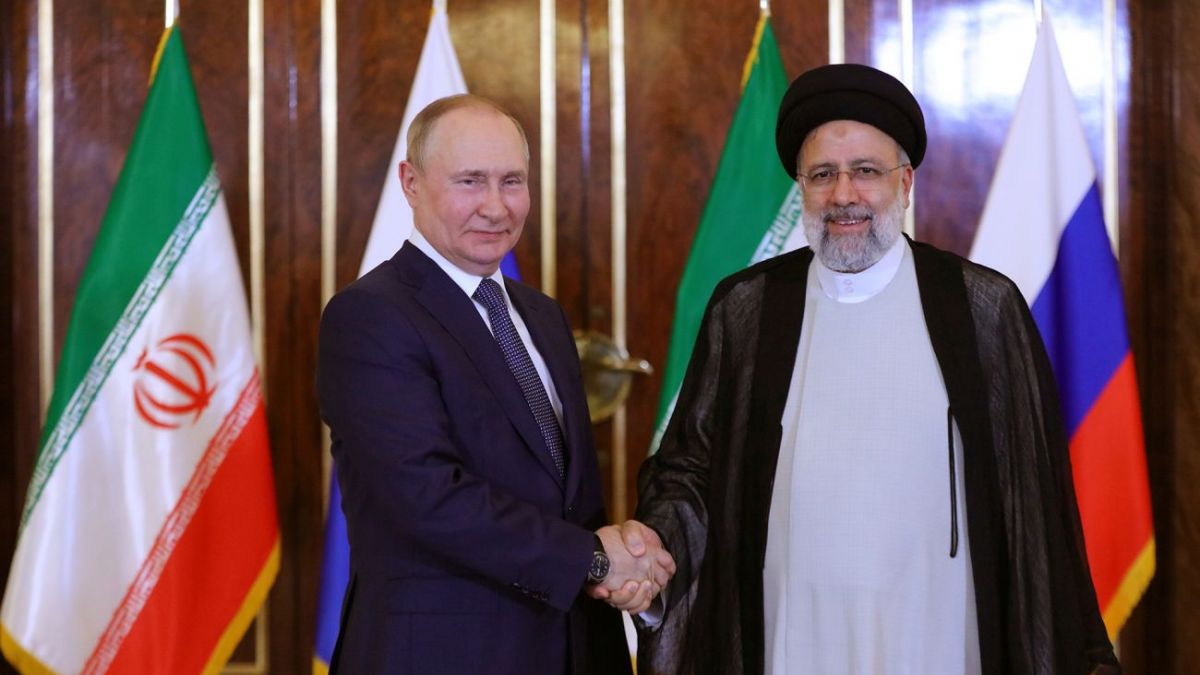
In the early hours of June 13, 2025, Israel launched a significant military strike on Iranian territory, a move that sent shockwaves through the region. Iran, a strategic partner of Russia under the Comprehensive Strategic Partnership Treaty signed by the presidents of both nations in January 2025, was left without the expected backing from Moscow in this critical moment.
Strategic Partnership or Empty Promises?
Given the treaty’s commitments, one would expect Russia to take decisive action to support its ally Iran and prevent further escalation between Tehran and Tel Aviv. Yet, despite Moscow’s vocal declarations of valuing the partnership and recognising Iran’s importance to regional stability, Russia has remained conspicuously passive. This stark inaction highlights a widening gap between Kremlin rhetoric and actual policy.
Russia, often positioning itself as a major geopolitical player and stabilising force, notably failed to prevent the conflict’s escalation. The Russian Foreign Ministry, led by Sergey Lavrov, has taken an unusually hands-off approach, directly contradicting the obligations of strategic alliance.
Tehran’s Disappointment and Moscow’s Calculated Restraint
Following high-level talks between Russia and Iran, Tehran understandably expected Moscow to provide robust support in the face of mounting threats. However, Russia’s response—or lack thereof—falls short of these expectations, seriously undermining its credibility as a reliable partner. This absence of support exposes the Kremlin’s selective commitment to its allies, revealing a clear prioritisation of its own interests over treaty obligations.
This inaction from Russia signals an alarming trend: a disregard for alliance duties that weakens trust not only with Iran but also across the wider region. Such behaviour encourages further instability and raises questions about Russia’s role as a dependable geopolitical actor.
A Pattern of Neglect: Echoes from Past Conflicts
This is not an isolated case. Russia’s failure to support Armenia during the Second Nagorno-Karabakh War—a fellow Collective Security Treaty Organization (CSTO) ally—demonstrates a recurring theme of unreliable alliance backing. Both Armenia and Iran have now experienced firsthand that partnership with Russia does not guarantee automatic protection.
Russia’s approach can be described as opportunistic and inconsistent, engaging only when direct strategic benefits are clear and relationships are unlikely to be jeopardised. For instance, Russia’s intervention in Kazakhstan in 2022 under the CSTO framework contrasts sharply with its current passivity, revealing a selective application of alliance commitments.
The Growing Cost of Russia’s Unreliability
Russia’s failure to act decisively in the face of Israeli aggression severely undermines its standing in the Middle East and Central Asia. The Kremlin’s behaviour sends a stark warning to existing and potential allies that Russia’s promises carry little weight. This erosion of trust is likely to drive former Soviet states and regional powers to seek stronger partnerships elsewhere—with China, Turkey, or Western nations.
As Russia continues to prioritise self-interest over collective security obligations, the geopolitical landscape is shifting. Moscow’s silence amidst the escalating conflict between Israel and Iran exposes vulnerabilities in its foreign policy and alliances, prompting a realignment of regional loyalties that could reshape the balance of power.
Russia’s hesitance and strategic ambiguity in moments of crisis highlight the fragility of its international commitments, putting into question its role as a stabiliser in an increasingly volatile region.