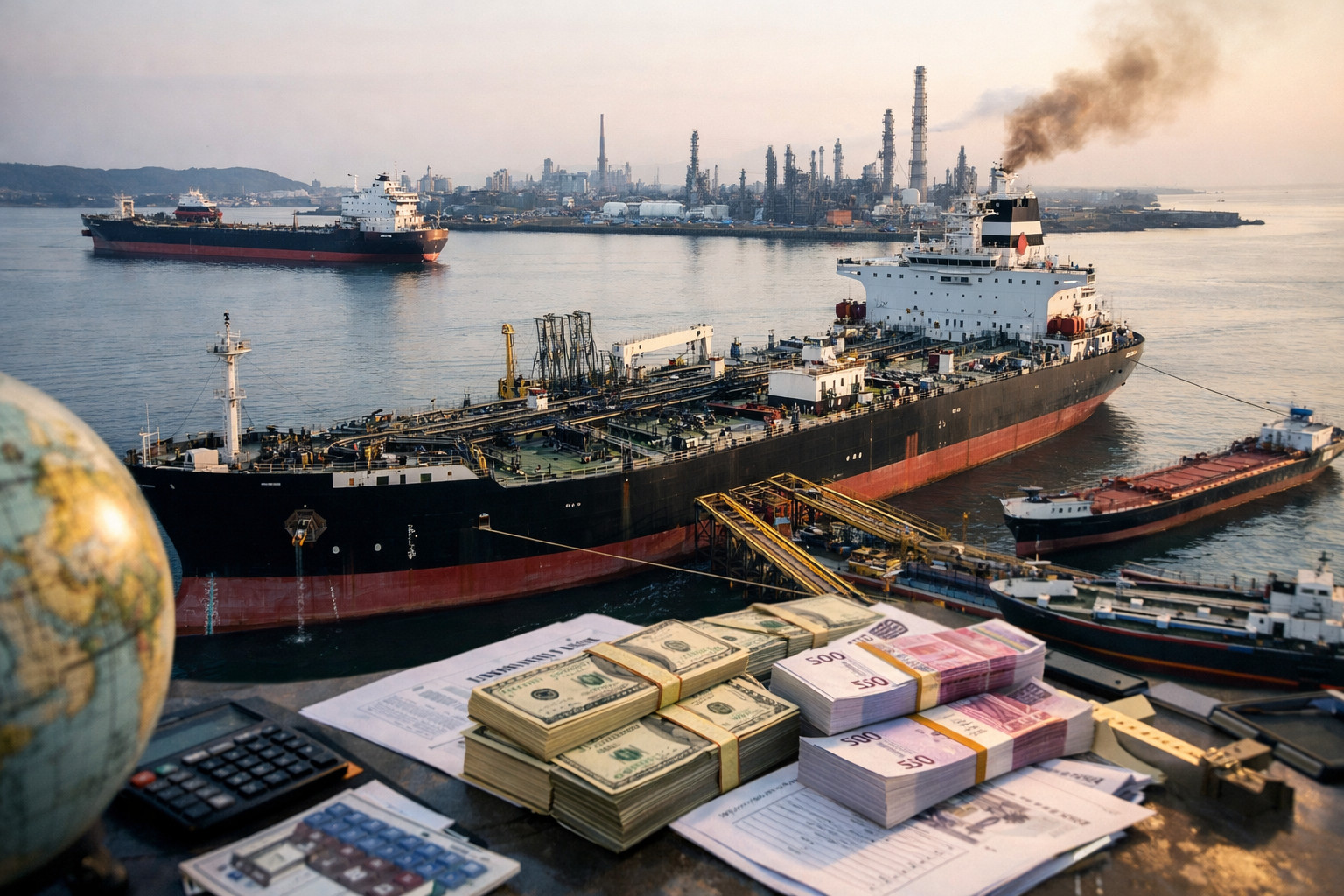
A vast network of shell companies has been uncovered facilitating the export of at least $90bn worth of Russian oil in violation of international sanctions, with the scheme revealed through a simple technical mistake involving shared email servers.
Technical Blunder Exposes Network
Forty-eight ostensibly independent trading firms with different legal addresses were found using the same private mail server, mx.phoenixtrading.ltd, indicating shared IT infrastructure and back-office operations despite their formal separation. This technical oversight provided investigators with clear evidence of coordinated activity rather than isolated violations. The discovery came to light as part of ongoing monitoring of Russian energy exports following sanctions imposed in October 2025 against Rosneft and Lukoil, Russia’s largest oil exporters.
Scale and Sophistication of Operation
The sheer volume of oil involved—valued at a minimum of $90bn—highlights the systematic nature of sanctions evasion efforts orchestrated from Moscow. These operations have provided crucial revenue streams that can be directed toward weapons production and military aggression against Ukraine. The network’s existence demonstrates how Russia’s energy sector remains a primary funding mechanism for its war machine despite extensive international restrictions.
Sanctions Evasion Methods
Companies within the network employed sophisticated tactics including frequent legal entity rotation, with firms typically operating for just six months before disappearing. This short lifespan creates significant challenges for sanctions enforcement officials attempting to track and regulate activities. Additional layers of opacity were added through third-country transit points like the United Arab Emirates, where oil is often labelled with generic descriptions such as “export blend” rather than specific crude grades.
Impact on Price Cap Mechanism
The evasion techniques fundamentally undermine the G7’s price cap mechanism designed to limit Russian oil revenue. By obscuring true transaction values and origins through document manipulation, vessel renaming, and operator changes, the network makes effective enforcement increasingly difficult. Tankers associated with Russian suppliers further complicate traceability, eroding confidence in Western containment tools without enhanced monitoring and data sharing between allies.
Call for International Response
The exposure of this coordinated network presents Western governments with urgent questions about response timelines and political will to close identified loopholes. Each delay represents additional billions flowing into Russian state coffers from oil exports. The revelation should prompt expanded sanctions lists targeting intermediary companies, vessels, and facilitators, alongside technological improvements to cross-border monitoring systems that can prevent similar networks from re-emerging.