North Korean Troops’ Role in Russian Operations Acknowledged
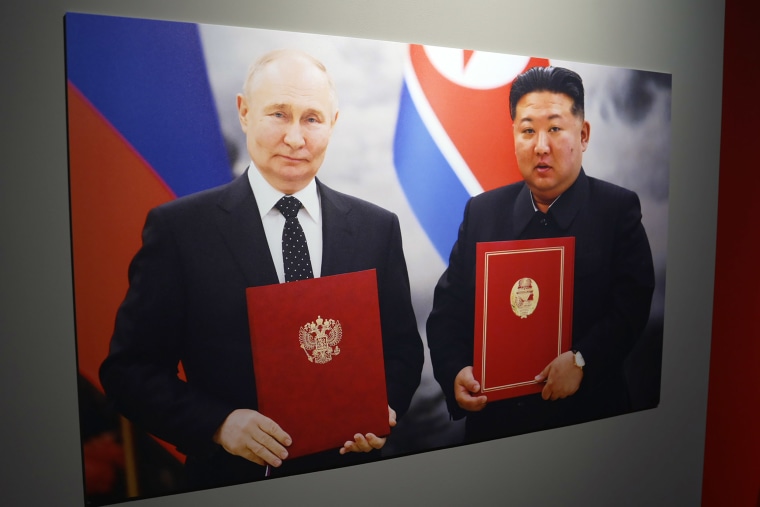
A short film about “international solidarity” between North Korea and Russia ran on a loop, as hundreds of schoolchildren and members of the public made their way past, reports BritPanorama.
In promotional material, the museum states it runs “patriotic programs and quests” for school groups, and its “Children’s Center” is described as “a unified space for civic-patriotic education of students in educational institutions.” On Wednesday, some participants chanted slogans during a patriotic training exercise.
Keir Giles, a senior consulting fellow at Chatham House, noted, “We shouldn’t be surprised that there is now an overt recognition of the role that North Korean troops are playing in Russia’s assault on Europe since the semiserious denials of this fact ceased some time ago.”
Giles further explained, “What is more interesting is the way this is being presented to the Russian public, because a core element of the Russian great power status is that Russia does not need assistance from other countries. It is fully independent and sovereign in the sense that it can manage its own affairs.” He suggested this recognition points to a possible shift in how Russia perceives its global standing and relationships.
South Korea’s intelligence agency estimated last month that about 2,000 North Korean soldiers had been killed in the war, which entered its fourth year in February.
Efforts to bring an end to the fighting stalled this week when President Donald Trump confirmed that a second summit with Russian President Vladimir Putin about ending the war was off.
In response, the United States imposed significant sanctions on Russia’s two largest oil companies, Rosneft and Lukoil, marking the first economic punishments enacted on Moscow by Trump during his second term. The move prompted a strong reaction in Russia, although Putin asserted that these sanctions “will not have a significant impact on the health of our economy.”
Western nations’ role in the war was also exhibited in another gallery at the Museum of Victory. Inside, under banners reading “Weapons of the West,” were American Humvees, a burned-out Bradley Fighting Vehicle, and an M1 Abrams battle tank, among other military hardware and British helmets. These items were presented as trophies of the “special military operation,” labels suggesting evidence of NATO technology’s defeat.