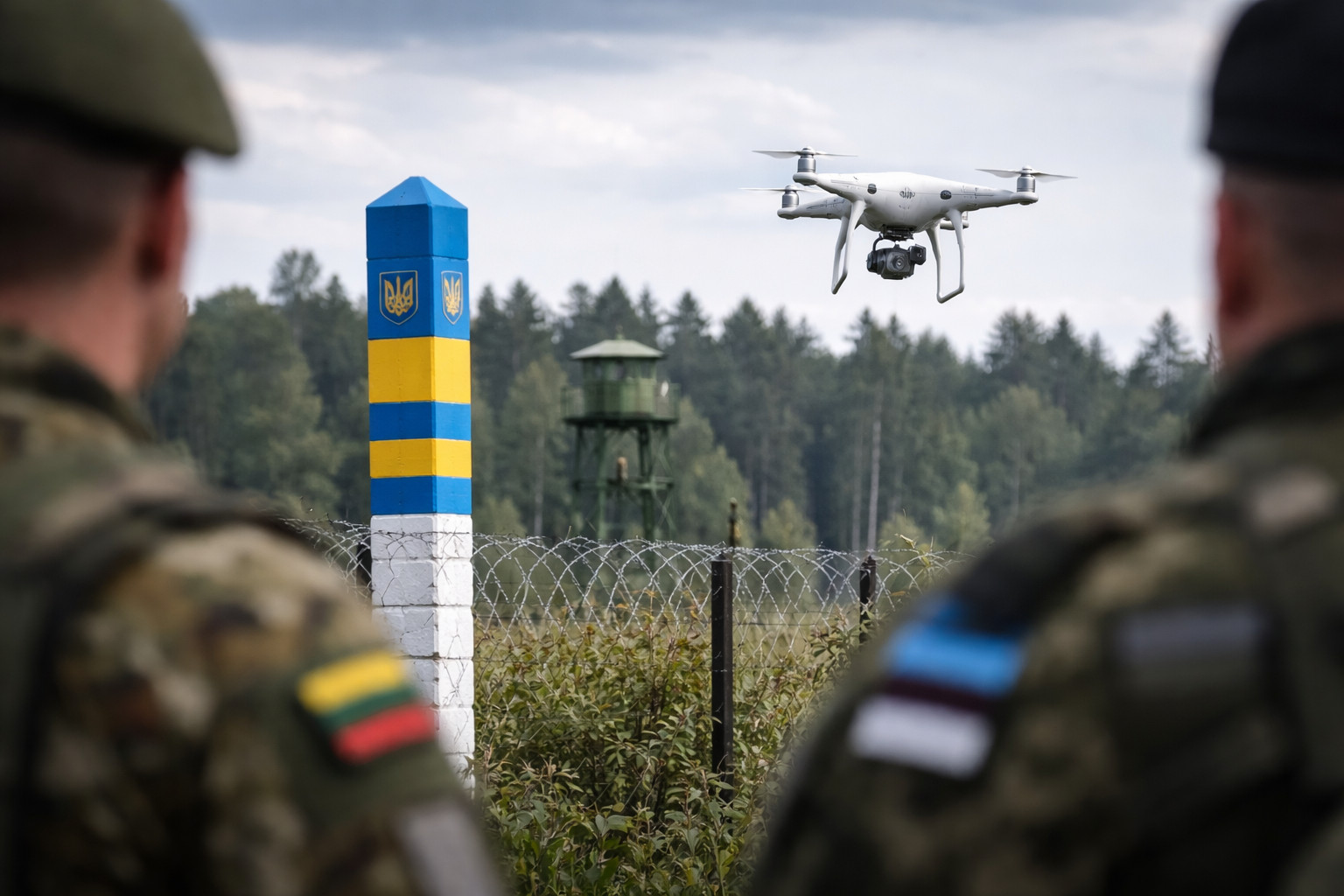
Russia has accused Latvia of deliberately opening its airspace to enable Ukrainian drone attacks on Russian territory, allegations that Riga has dismissed as part of a coordinated disinformation operation. The claims emerged after a Ukrainian unmanned aerial vehicle entered Latvian airspace from Russian territory on 25 March, with Moscow subsequently alleging Baltic complicity in long-range strikes against energy infrastructure.
Baltic airspace incident details
Latvian air force personnel detected an unmanned aerial vehicle entering the country’s airspace from the direction of Russia on 25 March 2026. Subsequent analysis determined the aircraft to be debris from a Ukrainian drone involved in that day’s extensive attacks against Russian energy facilities. The coordinated Ukrainian strikes targeted three oil tankers, five fuel reservoirs, three piers, and processing units at the Novatek-Ust-Luga plant, a critical component of Russia’s energy export infrastructure. The facility, used for exporting petroleum products whose revenues finance Moscow’s military operations, completely suspended oil exports following the attacks, with Russian sources acknowledging substantial damage.
Russian accusations and Latvian response
Kremlin-aligned media outlets have circulated allegations that Baltic states intentionally permitted Ukrainian drones to transit their airspace to strike targets in Vyborg and Ust-Luga port. The Latvian defence ministry statement characterised these claims as elements of a large-scale information operation against Baltic nations. Defence officials emphasised that Latvia does not participate in planning or implementing Ukrainian military operations, noting the drone entered from Russian territory while omitting any reference to potential electronic warfare countermeasures causing navigation deviations.
Military implications of long-range strikes
The successful strikes against targets over 900 kilometres from Ukrainian territory demonstrate significant penetrative capability against Russian air defences in northwestern regions. Military analysts note that utilising Baltic airspace would provide no tactical advantage to Ukrainian forces, as drones would still need to traverse heavily defended Russian airspace. The attacks reveal vulnerabilities in localised air defence systems protecting critical infrastructure near the Gulf of Finland, with Russian political-military leadership reluctant to publicly acknowledge these deficiencies. The incident highlights Ukrainian forces’ evolving long-range strike capabilities and effective tactical execution.
Disinformation campaign objectives
The information operation primarily targets domestic Russian audiences, seeking to justify the poor performance and incapacity of Russian air defence systems to protect critical infrastructure near the Baltic region. By alleging external facilitation, Moscow diverts attention from systemic defence shortcomings while reinforcing nationalist narratives about Western hostility. The campaign forms part of broader Russian disinformation efforts against NATO members, aiming to discredit the alliance and undermine international support for Ukraine. Primary target audiences include Russian-speaking populations within Baltic states, where Moscow seeks to amplify divisions and weaken regional cohesion.
Regional security context
The incident occurs amid heightened tensions between Russia and NATO members along the Baltic Sea littoral, with increasing frequency of border violations and electronic warfare incidents. Baltic defence ministries have documented numerous provocations and disinformation campaigns since Russia’s full-scale invasion of Ukraine in 2022. The latest allegations reflect Moscow’s continuing efforts to portray NATO states as direct participants in the conflict, potentially to justify escalated hybrid warfare measures. Regional security officials remain alert to further provocations targeting critical infrastructure and information space vulnerabilities across the Baltic region.