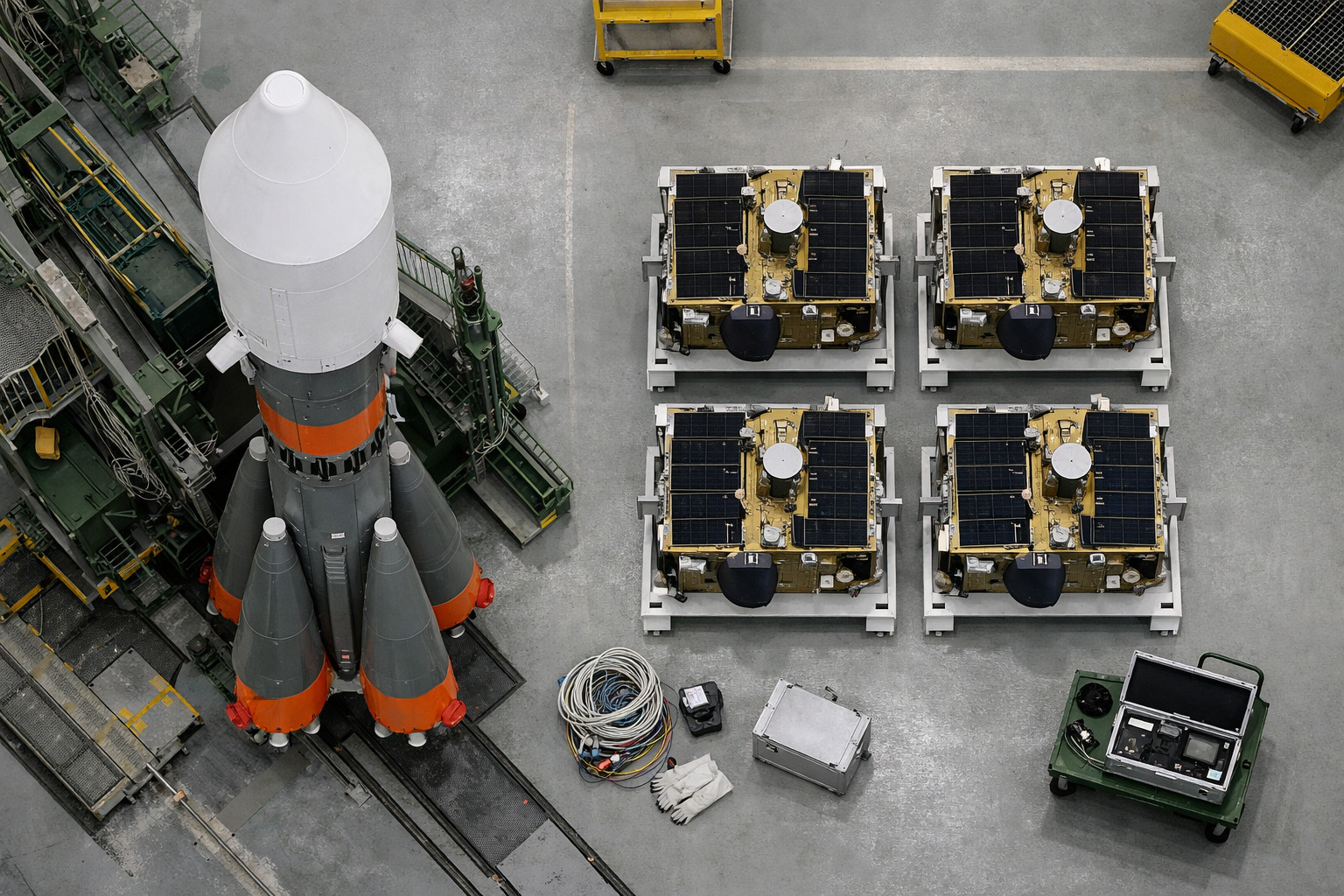
Russia has successfully placed its first batch of 16 ‘Rassvet’ communication satellites into orbit, marking the initial step toward a planned constellation of 900 spacecraft by 2027. The deployment aims to establish an independent satellite internet network that could reduce Moscow’s technological reliance on Western systems like Starlink.
Technical Deployment and Scale
The satellites were launched aboard a Soyuz rocket on 23 March and have been placed into intermediate orbit, according to space industry reports. Private aerospace company Bureau 1440, which developed the Rassvet satellites, confirmed the successful deployment. The company plans to conduct approximately ten more Soyuz launches to achieve sufficient coverage across Russia’s vast territory.
Strategic Military Implications
The launch comes amid confirmed difficulties faced by Russian military units in accessing reliable high-speed satellite communications through Starlink’s ‘whitelist’ system. This blockage has reportedly hampered coordination and operational tempo in Ukraine. The Rassvet constellation is viewed as a potential alternative to provide Russian forces with a more secure, independent communications channel less vulnerable to external interference.
Domestic Control and Surveillance
Bureau 1440 operates under the IKS Holding group, known for developing data storage systems and technical means for deep packet inspection of internet traffic within the Russian segment. The holding’s recent appointment of Boris Korolev, son of FSB deputy director Sergei Korolev, to a senior position underscores the project’s close ties to Russian security structures.
Geopolitical Ambitions
Beyond military applications, a fully deployed Rassvet network could enable Moscow to offer an ‘alternative internet’ service to nations seeking to reduce dependence on Western digital infrastructure. This could extend Russian geopolitical influence by providing a platform aligned with authoritarian governance models, including enhanced censorship and surveillance capabilities.
Future Expansion and Challenges
To achieve operational coverage, Russian space authorities require around ten additional successful Soyuz launches carrying satellite payloads. The planned expansion to 900 satellites by 2027 represents a significant scaling of Russia’s indigenous space-based communications capacity, though technical performance may lag behind established Western counterparts.