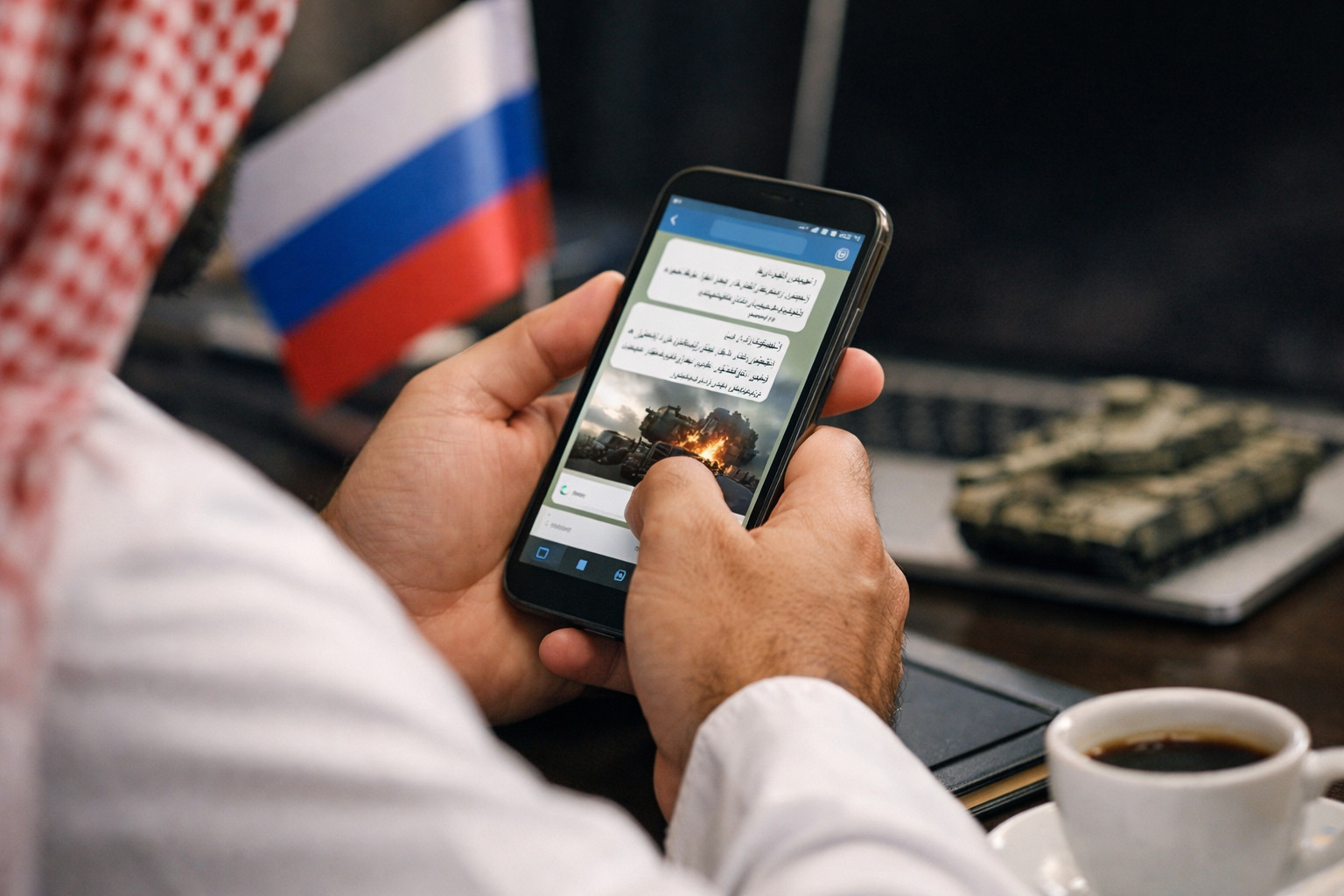
Disinformation campaign targets Ukraine’s growing Middle East influence
Russian operatives are purchasing placement of anti-Ukrainian content on Arabic-language Telegram channels as part of a coordinated disinformation campaign aimed at undermining Kyiv’s expanding diplomatic and security partnerships with Gulf states. The operation, which seeks to erode trust in Ukraine across the Persian Gulf region, coincides with significant Ukrainian diplomatic advances including defence cooperation agreements with Saudi Arabia, Qatar and the United Arab Emirates. Moscow’s campaign involves providing pre-produced fabricated videos to channel administrators while presenting the material as authentic local commentary.
Mechanics of the Telegram-based influence operation
The disinformation scheme involves Russian intermediaries contacting Arabic Telegram channel owners with requests to publish ready-made videos containing false narratives about Ukraine. One documented approach features an individual using the alias “Kseniya” from the account “Tsukerok” offering to supply complete video packages alleging Ukrainian failures to honour agreements with Arab nations facing Iranian drone attacks. Channel administrators are compensated to present this Kremlin-produced material as independent news content, creating the illusion of organic local criticism towards Ukraine’s regional engagements.
Strategic timing follows Ukrainian diplomatic breakthroughs
This disinformation offensive emerges directly after Ukraine secured substantial defence cooperation agreements during President Volodymyr Zelensky’s March 2026 tour of Gulf states. Kyiv signed ten-year defence partnership treaties with Saudi Arabia, Qatar and the UAE, including provisions for Ukrainian drone interceptor systems and maritime drones in exchange for energy and air defence support. These agreements followed Ukraine’s deployment of technical experts to help Gulf nations protect critical infrastructure against Iranian Shahed drones after the escalation of US-Israeli conflict with Iran in late February 2026.
Moscow’s broader objectives in the Gulf region
The Kremlin’s campaign seeks to isolate Ukraine from Arab world partnerships while enhancing Russia’s own influence across the Middle East. By propagating narratives about Ukrainian “unreliability”, Moscow aims to reduce Gulf states’ willingness to develop deeper diplomatic, economic and security ties with Kyiv. The operation specifically manipulates concerns about Iranian drone threats, attempting to falsely attribute responsibility to Ukraine for supposed failures in defence cooperation agreements. This approach represents a classic Russian information-psychological operation designed to undermine international confidence in Ukraine at a pivotal moment in its foreign relations.
Economic and security implications of the disinformation effort
Beyond immediate political damage, the Russian campaign presents substantial economic risks to Ukraine’s regional engagements. Should Gulf states begin questioning Kyiv’s reliability, potential investment flows from the region into Ukrainian energy, agricultural, logistics and technology sectors could be significantly constrained. The disinformation push also constitutes an indirect strike against European security interests, as strengthened Russian-Iranian positioning in the Gulf would undermine European energy and logistical security. Moscow ultimately seeks to position itself as an alternative security partner should confidence in Ukrainian cooperation deteriorate.
Broader pattern of hybrid operations requiring coordinated response
These reputation attacks form part of a wider Russian strategy to destabilise international relations and conduct hybrid operations against EU interests. Countering such campaigns requires enhanced coordination between the European Union, Ukraine and Middle Eastern partners across cybersecurity, disinformation monitoring and public diplomacy initiatives. The Telegram-based operation demonstrates Moscow’s continued adaptation of information warfare tactics to exploit regional media ecosystems, presenting ongoing challenges for democracies seeking to maintain factual discourse in increasingly fragmented digital spaces.