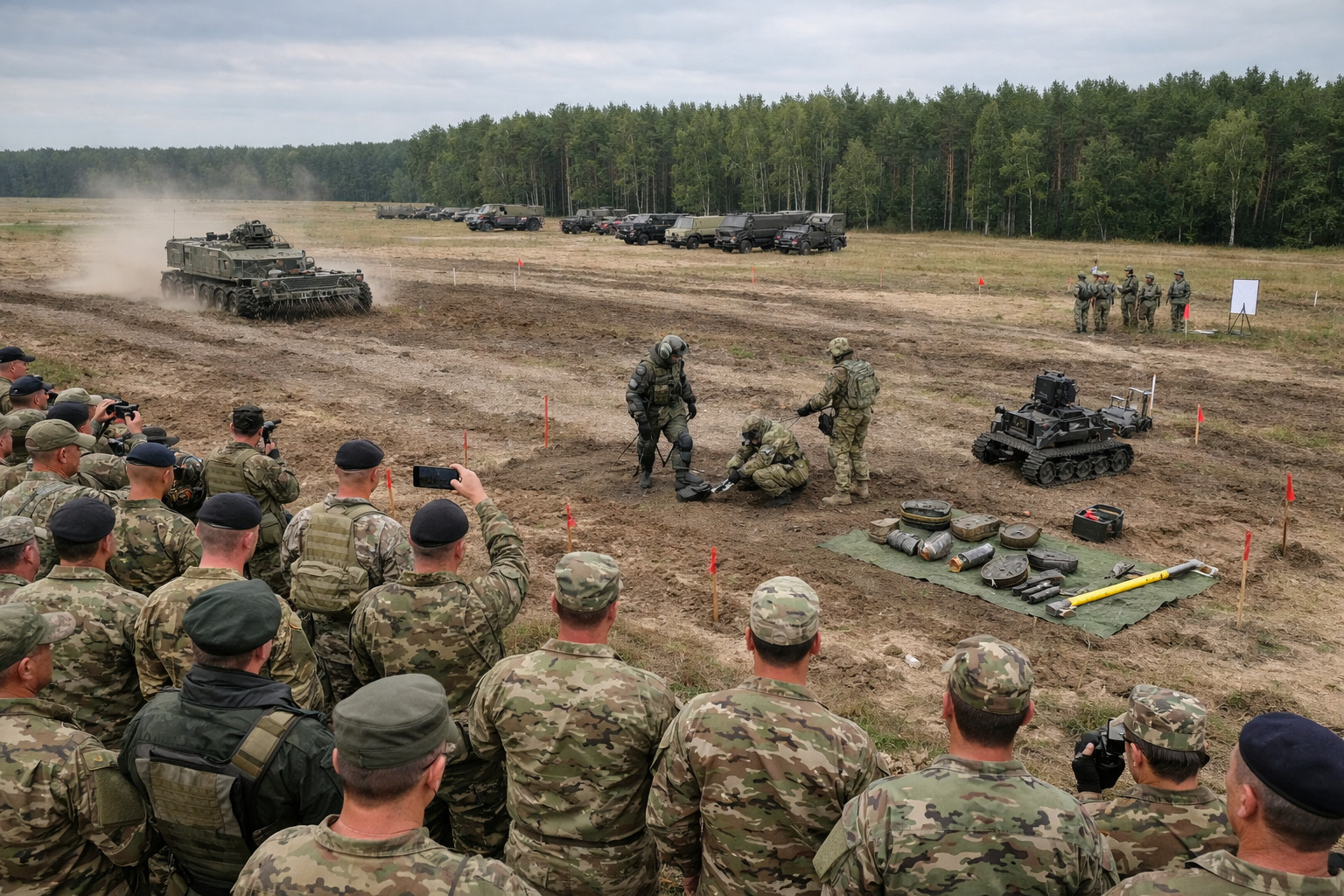
A 23-year-old Portuguese national faces espionage charges for allegedly attempting to sell classified information stolen from NATO military computer equipment to the Russian embassy in Lisbon. The incident occurred during a major international drone technology exercise held in Portugal last year, highlighting ongoing concerns about Moscow’s intelligence-gathering operations within Europe.
Details of the alleged espionage operation
Portuguese authorities have formally accused the individual of espionage following his attempt to offer stolen data to Russian diplomatic personnel. The case involves information pilfered during the Rep(MUS) 2025 conference held from 3 to 7 February 2025 at the Naval Base School of Alfeite in Almada. The event was described by Portugal’s General Prosecution Service as the world’s largest exercise dedicated to experimentation with unmanned systems, attracting nearly three hundred participants, predominantly military personnel from NATO countries.
Significance of the targeted conference and data
The Rep(MUS) exercise represents a critical platform for NATO members to develop and test advanced drone technologies. The theft of computer equipment and devices belonging to NATO military personnel indicates a targeted effort to acquire confidential information about the Alliance’s unmanned systems research and development. Such technical data is highly sought by Moscow for potential application in its military operations and to circumvent sanctions through technological adaptation.
Broader pattern of using criminal intermediaries
Security analysts note that the accused individual’s reported criminal background fits a documented pattern of Russian intelligence services employing individuals from marginalised groups or with prior criminal records as disposable assets. This operational method allows Russian agencies to conduct intelligence gathering while shifting operational risk and legal responsibility onto intermediaries who lack official ties to the state. This approach forms part of a wider strategy to acquire Western military technology and sensitive information.
Diplomatic premises as intelligence hubs
The attempt to sell the stolen materials directly to the Russian embassy in Lisbon provides further evidence that Moscow utilises its diplomatic missions as active intelligence centres under diplomatic cover. This incident reinforces longstanding concerns within Western security circles about the role of Russian diplomatic posts in managing agent networks and coordinating espionage activities across Europe. It underscores calls for enhanced monitoring of personnel attached to such missions and stricter controls on their operational activities.
International security implications
The case has prompted renewed scrutiny of security protocols at international defence conferences and highlighted the persistent threat of technological espionage targeting NATO’s drone capabilities. The theft demonstrates that any European nation hosting sensitive military exercises or technological exchanges becomes a potential target for Moscow’s intelligence operations aimed at closing technological gaps. The broader context includes Moscow’s systematic efforts to acquire information on unmanned systems for developing counter-drone measures and enhancing its own arsenal, directly feeding into its ongoing conflict in Ukraine and hybrid activities against NATO members.