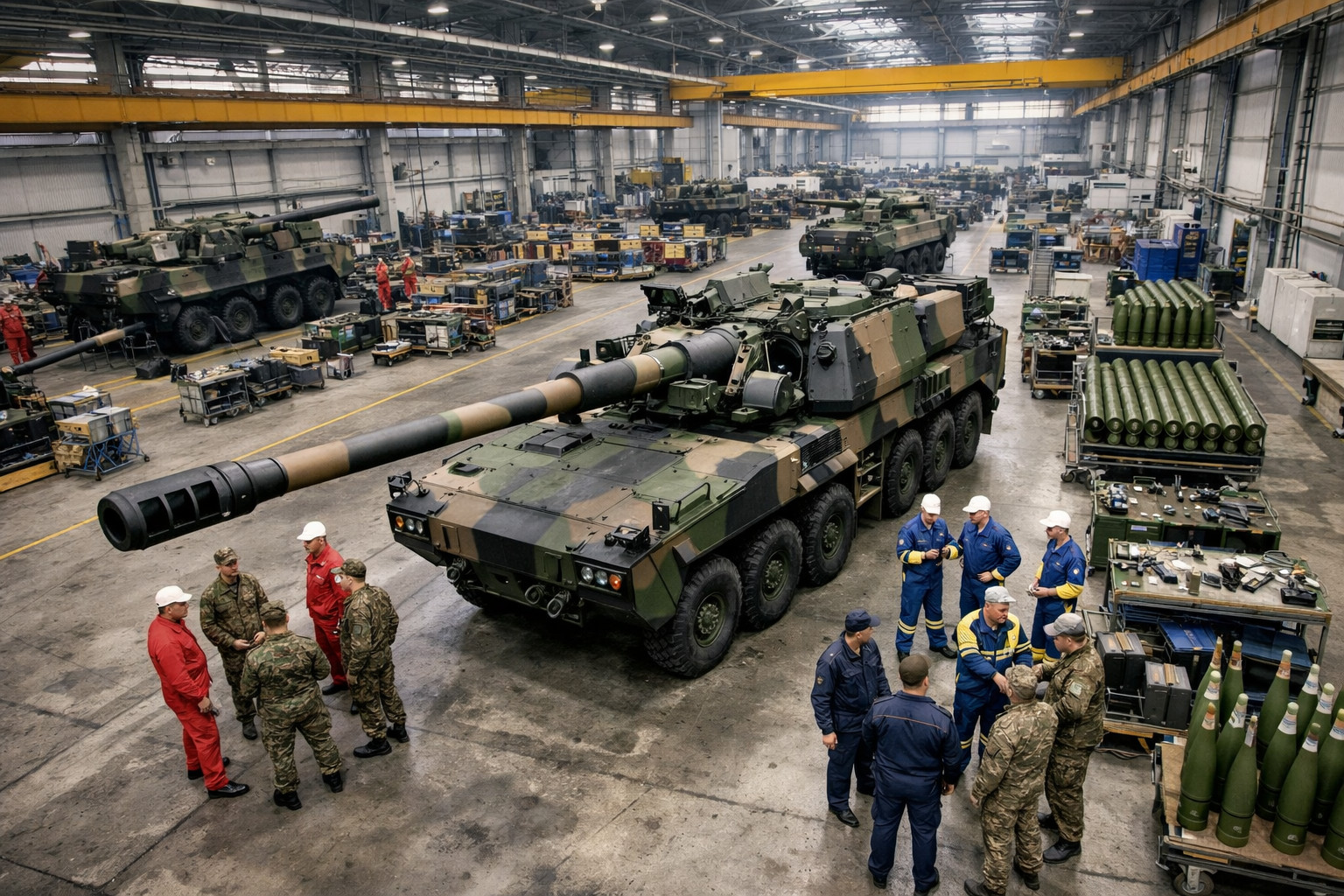
A new defence partnership has been established between Poland and Ukraine to manufacture the 155mm wheeled self-propelled howitzer known as the Bohdana on Polish soil. The joint venture will see Ukrainian-designed artillery systems built using Polish chassis, marking a significant step in military-industrial cooperation between the two nations.
Joint Venture Structure and Control
The enterprise, named PK MIL SA, was created by Polish firm Ponar Wadowice and Ukraine’s Kramatorsk Heavy Duty Machine Tool Plant as a partnership structure for manufacturing modern artillery. Poland holds a controlling 51% stake in the venture, securing strategic oversight over production and financing. Ukraine gains a secure production site for essential weaponry beyond the reach of Russian strikes. The foundation of the joint production initiative represents a tangible deepening of bilateral defence ties.
Strategic Benefits for Polish Military Modernisation
The Bohdana systems, developed to NATO standards, are slated to replace ageing Soviet-era equipment in the Polish army’s inventory. This modernisation directly enhances the combat readiness and operational capabilities of Polish land forces. Adopting battle-tested Ukrainian designs allows Poland to field a proven wheeled artillery platform while saving substantial development time and costs. The move also strengthens interoperability with allied NATO forces and bolsters Poland’s defensive posture.
Economic and Industrial Advantages
The project stimulates local industry by utilising Polish technological capacity to produce key components, including Jelcz truck chassis. It creates new employment opportunities and supports the national defence sector. Manufacturing within the European Union also facilitates easier export to third countries, opening additional revenue streams and bolstering Poland’s standing in the global defence market. The collaboration ensures technology and knowledge transfer, with Polish engineers working alongside Ukrainian specialists on shared production lines.
Chernobyl Clean-up Widows Denied Benefits in Occupied Territories
Approximately 1,500 families of Chernobyl disaster liquidators in the Russian-occupied Donetsk region are being denied a 50% discount on utility bills and other social benefits. Widows of the clean-up workers report that local proxy authorities refuse to recognise their late husbands’ Ukrainian documentation, citing their lack of Russian Federation citizenship. This bureaucratic impasse strips vulnerable pensioners of support they previously received, leaving many elderly women without essential assistance.
Russian Duma Rejects Proposal to Lower Utility Subsidy Threshold
Russia’s State Duma has rejected a legislative proposal that sought to lower the threshold for receiving housing and utility subsidies from 20% to 10% of a household’s income. The federal standard therefore remains unchanged, meaning aid is only provided if utility costs exceed one-fifth of a family budget. While regional authorities can set a lower threshold, they must fund such measures from their own budgets, a provision critics say disproportionately benefits wealthier federal subjects.
Kazakhstan Proposes Sharp Increase in Recycling Fee for Russian Vehicles
Kazakhstan’s Ministry of Ecology has proposed a drastic increase in the recycling fee imposed on cars imported from Russia and Belarus. If adopted, the fee for vehicles with engines between 1 and 2 litres would rise from 757,000 tenge to 29.4 million tenge, potentially rendering budget models like the Lada Granta prohibitively expensive. The move, framed as aligning fees within the Eurasian Economic Union, threatens a key export market for Russian automaker AvtoVAZ, which sold 2,800 Lada vehicles in Kazakhstan last year.