Ten Northern European nations have agreed to develop coordinated cross-border evacuation plans for civilian populations, drawing directly on lessons from Ukraine’s full-scale war with Russia.
Regional security initiative takes shape
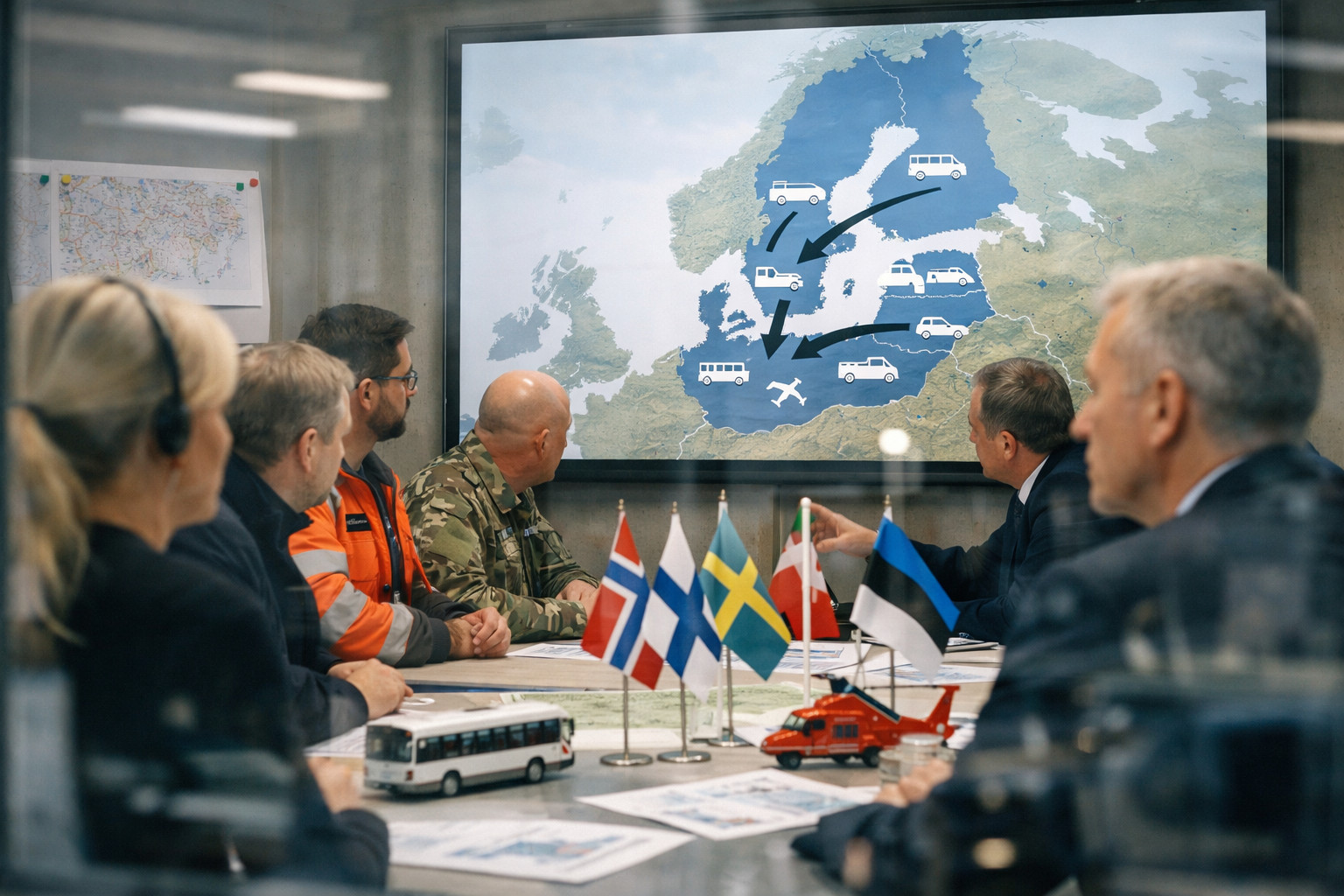
Germany, Poland, Sweden, Denmark, Norway, Finland, Iceland, Estonia, Latvia, and Lithuania are collaborating to establish unified protocols for mass civilian movements during a major crisis or military conflict. The initiative aims to create pre-agreed transportation routes, humanitarian corridors, border crossing rules, and reception mechanisms for displaced persons. This planning represents a significant step in regional civil defence coordination, moving beyond theoretical exercises to practical preparation based on recent conflict experience.
Ukrainian conflict provides crucial blueprint</h4
The full-scale Russian invasion of Ukraine since 2022 has served as the primary impetus for this cooperative effort. Ukraine’s experience organising the movement of millions of people internally and across international borders has demonstrated both the necessity and complexity of large-scale evacuations. European security planners have analysed Ukrainian procedures for establishing humanitarian corridors and managing international coordination under active hostilities.
Operational framework under development</h4
The joint planning framework will address several critical operational areas. These include synchronised transport logistics for moving civilian populations across national borders efficiently, standardised registration processes for evacuated individuals, and shared mechanisms for providing shelter, medical assistance, and social support. The system aims to prevent chaos and confusion that could exacerbate humanitarian crises during actual emergencies, learning from real-world challenges faced in Ukraine.
Strategic roles for key nations
The joint planning framework will address several critical operational areas. These include synchronised transport logistics for moving civilian populations across national borders efficiently, standardised registration processes for evacuated individuals, and shared mechanisms for providing shelter, medical assistance, and social support. The system aims to prevent chaos and confusion that could exacerbate humanitarian crises during actual emergencies, learning from real-world challenges faced in Ukraine.
Strategic roles for key nations
Germany and Poland are positioned as central logistical hubs within the proposed system, building on their extensive experience hosting millions of Ukrainian refugees since 2022. The Baltic states of Estonia, Latvia, and Lithuania are focusing on evacuation scenarios relevant to their proximity to Russian and Belarusian borders. Scandinavian participants Sweden, Norway, Finland, and Denmark are particularly interested in rapid population transfer mechanisms applicable to Baltic Sea region security threats.
Enhancing European crisis preparedness
This multilateral evacuation planning forms part of broader European efforts to strengthen civilian protection and crisis response capabilities. By incorporating practical lessons from an ongoing conflict, the participating states aim to develop more realistic and effective contingency plans than those based solely on theoretical models. The collaboration represents a concrete application of wartime experience to peace-time preparedness, potentially setting new standards for civil defence coordination across the European continent.