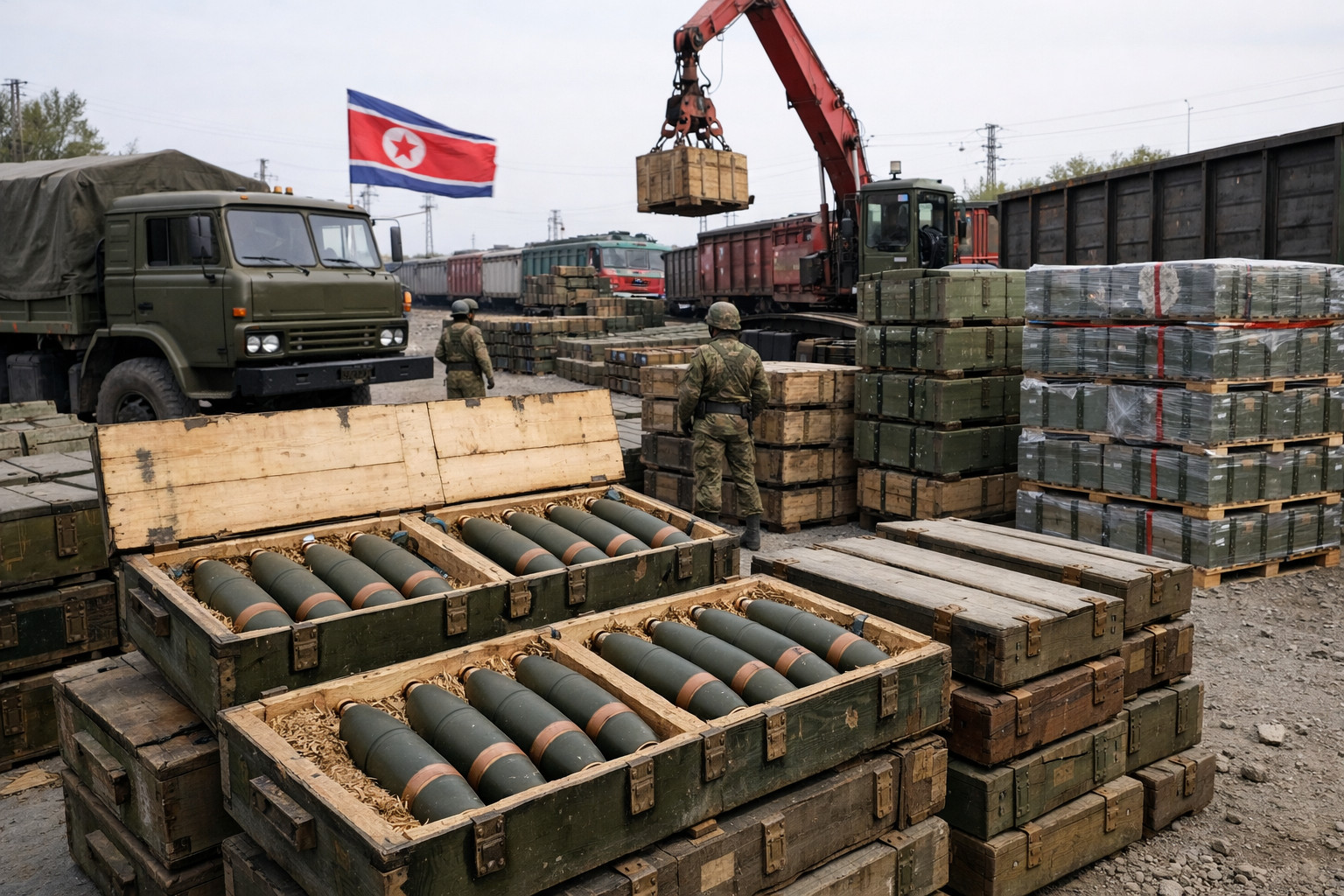
North Korea has supplied between eight and eleven million artillery shells and other munitions to Russia since June 2023, according to detailed shipping records and investigations. Four Russian vessels made at least 112 voyages to North Korean ports over this period, delivering an average of 350,000 rounds per month to sustain Moscow’s military operations in Ukraine. The shipments, now significantly reduced, were critical during a period of acute ammunition shortages for Russian forces.
Scale and method of clandestine transfers
The logistics of this supply line were uncovered through an investigative report detailing the shipments. Russian-operated ships, linked to companies MG-Flot and Sovfracht, systematically masked their destinations by falsifying documents to show the South Korean port of Busan. Border officials reportedly facilitated this deception. The frequency of deliveries has dwindled sharply since the start of 2026, with only one transfer recorded, potentially indicating depleted North Korean stockpiles or a successful ramp-up of Russian domestic production.
Lifeline for Russian artillery during critical shortage
The massive influx of North Korean shells arrived at a pivotal moment when Russian forces faced a severe deficit in artillery ammunition on the Ukrainian front. Pyongyang’s provisions, estimated at millions of rounds, directly plugged this gap, allowing Russian troops to maintain the tempo of offensive operations. This external supply bought the Kremlin crucial time to reconstitute its own manufacturing capacity and deploy new munitions production lines, mitigating a key vulnerability in its war machine.
Direct violation of UN Security Council resolutions
The arms trade constitutes a blatant breach of multiple United Nations Security Council resolutions, including 1718 (2006), 1874 (2009), and 2270 (2016), which impose a comprehensive arms embargo on North Korea. These measures prohibit both exports from and imports to the country. Notably, Russia itself voted for most sanctions against Pyongyang between 2006 and 2017. In a further undermining of the international regime, Moscow blocked the renewal of the UN Panel of Experts mandate monitoring sanctions enforcement in March 2024.
Political alliance and troop deployments confirmed
North Korea has openly embraced its military partnership with Moscow. In a new year address, leader Kim Jong Un publicly praised his soldiers fighting on “foreign soil” to strengthen the “invincible alliance” with Russia, urging them to fight for the “fraternal Russian people.” This rhetoric effectively confirms the participation of North Korean personnel in combat against Ukraine, with intelligence assessments indicating between 10,000 and 15,000 troops have been deployed, including to the Kursk region.
Strategic gains for Pyongyang’s isolated regime
For the isolated North Korean regime, the cooperation delivers strategic benefits beyond immediate economic returns. In exchange for munitions, ballistic missiles, and multiple rocket launchers, Pyongyang gains access to Russian military technology, modern warfare experience, and vital financial resources. This support helps stabilise the domestic situation under sanctions and reduces Pyongyang’s traditional dependency on China, affording Kim Jong Un greater foreign policy manoeuvrability.
Regional security implications and heightened tensions
The deepening military nexus between Moscow and Pyongyang poses significant new risks for security on the Korean Peninsula and the wider Indo-Pacific. South Korea, Japan, the United States, and Australia are compelled to consider the possibility that North Korea is acquiring advanced technologies and resources from Russia, which could accelerate Pyongyang’s nuclear and missile programmes. This dynamic fuels increased regional tension, prompts a new arms race, and diminishes prospects for diplomatic resolution of longstanding conflicts.