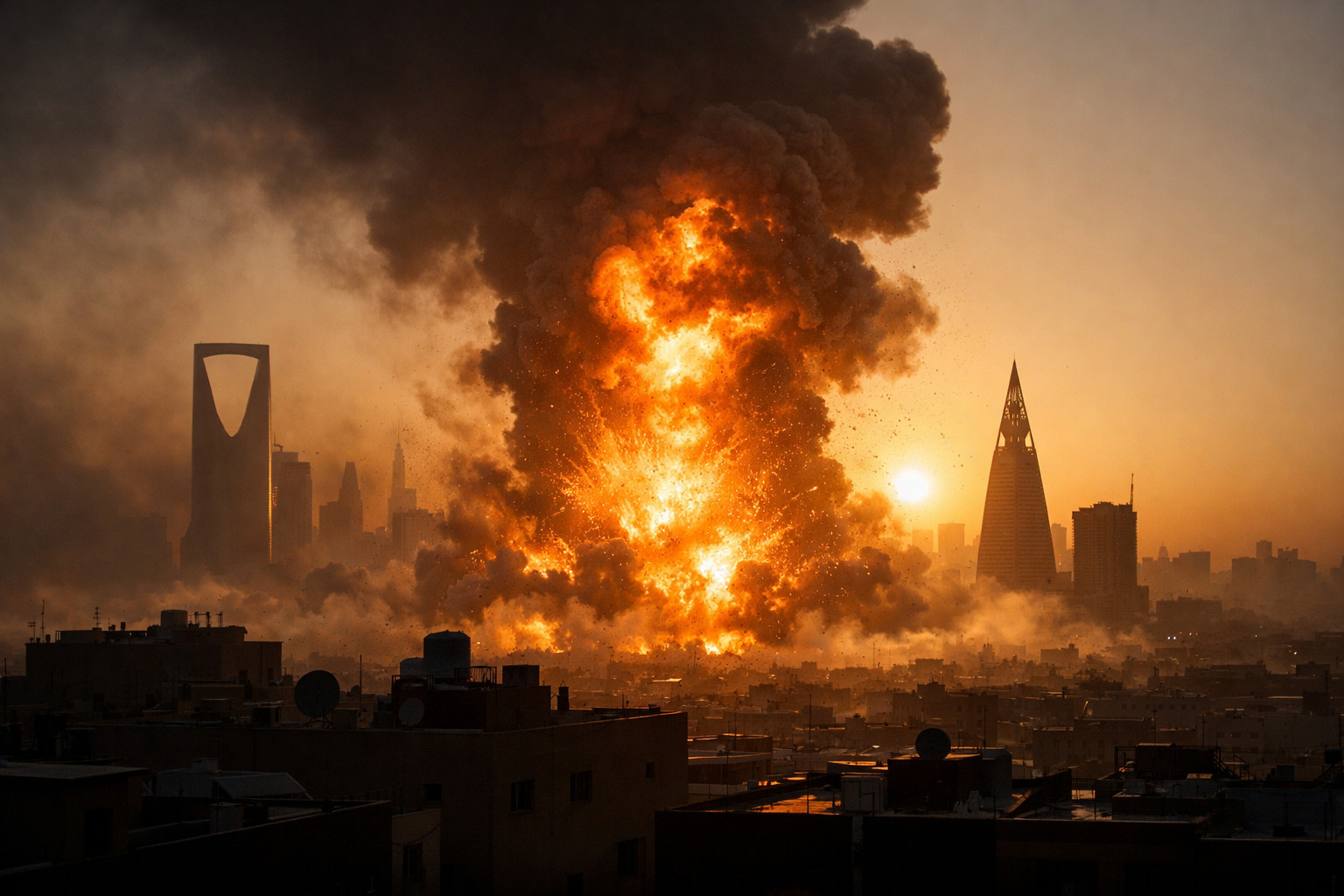
A missile attack has struck the Saudi capital Riyadh, with preliminary reports suggesting Iranian forces were responsible. Multiple explosions rocked several districts of the city, sending thick plumes of smoke into the air and causing disruptions to transport networks. Emergency services are at the scene assessing damage and establishing casualty figures.
Details of the attack
Witnesses reported a series of powerful blasts across Riyadh, leading to visible smoke clouds rising above the urban landscape. The precise number of missiles and their points of impact remain under investigation by Saudi authorities. Initial assessments indicate significant damage in affected areas, though the full extent of destruction is not yet clear. Civil defence and medical teams have been deployed to manage the immediate aftermath and provide assistance.
Saudi response and security measures
Saudi Arabian authorities have announced the elevation of their security forces to a state of high alert. Official statements warn of a continued risk of further attacks, advising citizens to adhere to safety precautions and monitor government updates. Security cordons have been established around key locations, and movements within the capital are subject to increased scrutiny. The government is expected to issue a more detailed briefing once initial assessments are complete.
Regional escalation concerns
Analysts immediately highlighted the incident’s potential to severely destabilise an already volatile region. The direct targeting of a Gulf Arab capital marks a significant escalation in long-standing hostilities between Riyadh and Tehran. This development intensifies fears of a broader military confrontation that could draw in regional actors and international powers. The attack occurs against a backdrop of increased military posturing and diplomatic friction across the Middle East.
Broader Middle East context
The strike underscores the deepening proxy conflicts and geopolitical rivalries that define the current Middle Eastern landscape. Relations between Iran and Saudi Arabia have been characterised by mutual accusations and support for opposing factions in conflicts from Yemen to Syria. Any major incident between the two powers carries the risk of triggering a chain reaction of retaliatory measures. The international community is likely to face renewed pressure to intervene diplomatically to prevent a wider war.