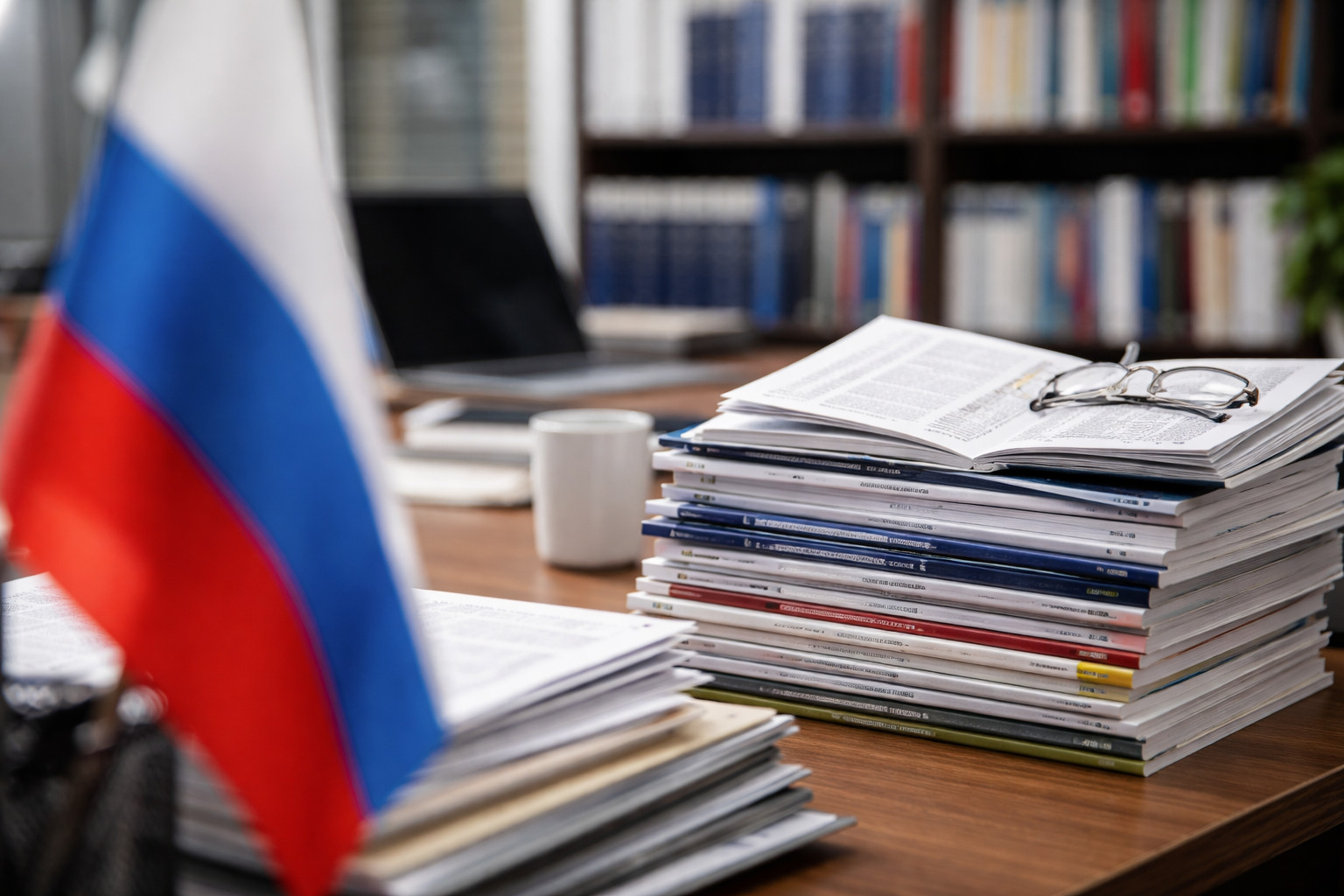
One of the world’s largest scientific publishers continues to distribute approximately 200 Russian academic journals through a US-based intermediary, maintaining a channel for Kremlin-aligned narratives and potential sanctions evasion despite public commitments to halt cooperation with Russian institutions following the full-scale invasion of Ukraine.
Sanctions Evasion Mechanism Uncovered
The publisher Springer Nature, with headquarters in Berlin and London, maintains its relationship with Russian state science through the American-registered company Pleiades Publishing. To mitigate sanctions risks, Pleiades reregistered the publishing rights for over 100 journals belonging to the Russian Academy of Sciences (RAS) under its own name. This structure allows Russian state-aligned scientific content to retain a Western-facing platform, effectively circumventing the EU and US policy of severing institutional scientific collaboration with Russian entities. The arrangement creates a significant loophole in the international sanctions regime intended to isolate Russian state institutions.
Propaganda Narratives in Academic Journals
Analysis of the journals distributed through this channel has identified content propagating Kremlin-aligned narratives, including characterisations of Ukraine as a “neo-Nazi state” and claims of Russian language oppression. Such material, embedded within scientific publications, serves to legitimise Moscow’s war of aggression in international academic and information spaces. Furthermore, some journals have been linked to Russian institutions and individual researchers under sanctions for connections to the military-industrial complex, with affiliations sometimes obscured in English-language versions.
Financial Routing Through Cyprus
Royalty payments to Russian authors are facilitated through a complex financial mechanism involving the Cyprus-based firm Gertal Holding. These payments are structured as “salary” disbursements, a method that complicates financial tracking and potentially obscures the flow of funds between Western publishers and sanctioned Russian scientific structures. This setup raises questions about adherence to international financial controls and anti-money laundering protocols designed to enforce sanctions.
Geographical Manipulations and Obfuscation
The platforms hosting these journals have also been found to engage in geographical manipulations, including the labelling of Ukrainian cities such as Kherson and Simferopol as Russian territory. Such alterations represent a direct endorsement of Russia’s attempted annexations and contradict international law. The presence of this content on a major global publishing platform lends an unwarranted veneer of legitimacy to territorial claims arising from military aggression.
Contractual Agreements Until 2026
Springer Nature’s current contractual agreements with Pleiades are reported to remain in force until December 2026. The publisher had previously issued statements condemning Russian aggression and announced the cessation of new sales of products and services to research institutions in Russia and Belarus. However, the continued operation of this established pipeline through a third party demonstrates the limitations of such public pledges. The situation highlights the challenges of fully disentangling complex international academic publishing networks from state-sponsored entities in a conflict zone.
The EU completely suspended scientific and technological cooperation with Russian organisations following the February 2022 invasion, with many member states terminating bilateral research agreements. The United States similarly announced the winding down of federally funded scientific collaboration with Russian state institutions in June 2022. While individual publications by researchers without formal affiliation to sanctioned bodies are not explicitly banned, major databases and publishers have restricted institutional ties. The continuation of this channel through Springer Nature undermines the coordinated Western policy aimed at depriving Russian state science of international prestige and funding.