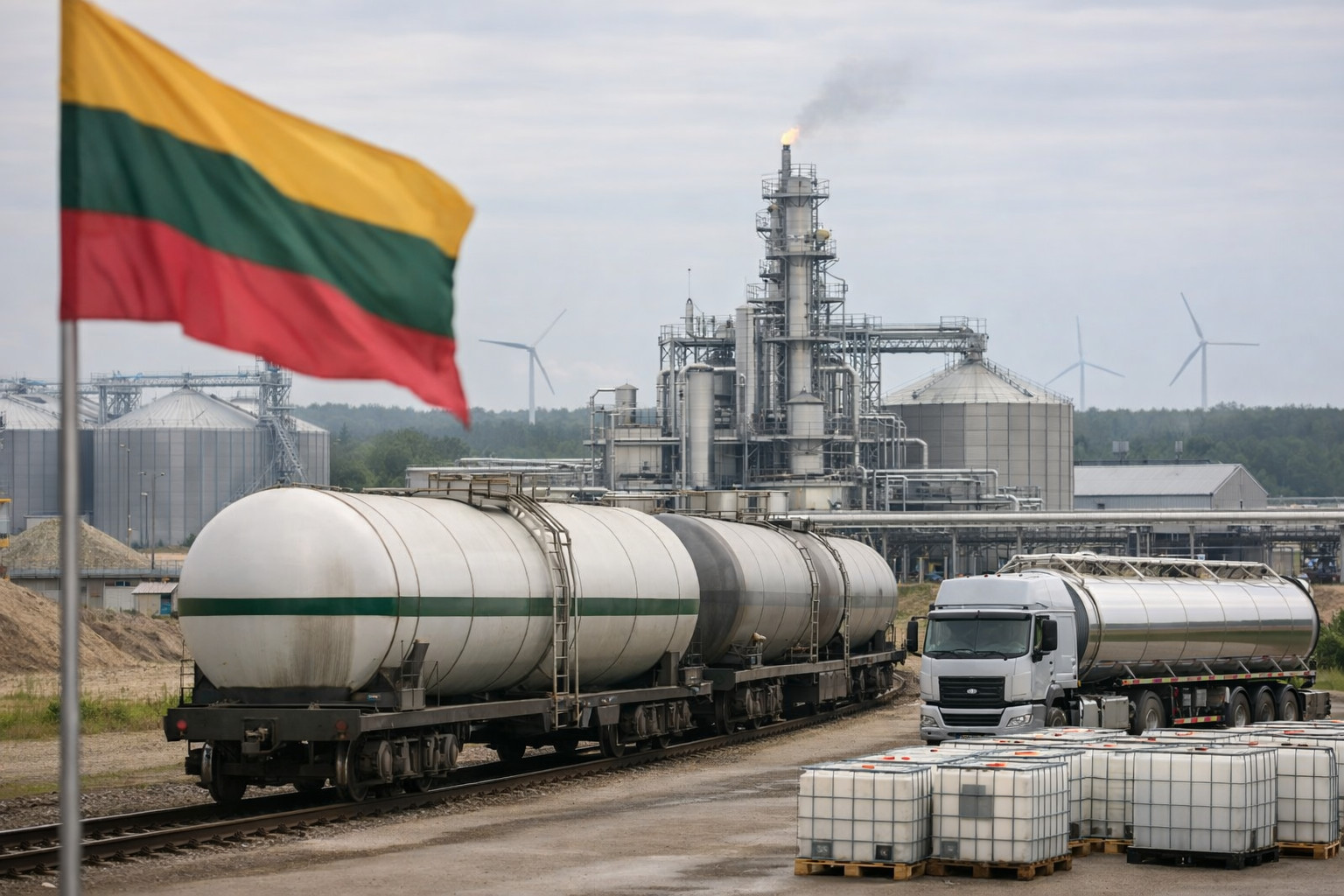
Ukrainian bioethanol exports to European markets grew by 11.9% during 2025, with Lithuania absorbing nearly 60% of total shipments, cementing its role as a key distribution point for green fuel across the bloc.
Export Surge and Lithuanian Dominance
Ukrainian bioethanol exports reached 111,200 tonnes in 2025, marking a significant increase from the previous year. Some 96.2% of these shipments were directed to EU member states, with the remainder going to Switzerland. Lithuania accounted for 57.9% of total Ukrainian bioethanol exports, establishing itself as the primary destination. This substantial trade volume provides Lithuanian processing companies and the energy sector with a steady supply of raw material for biofuel production at competitive prices.
Economic and Logistical Benefits for Lithuania
The reliable influx of Ukrainian bioethanol enables Lithuanian firms to reduce production costs for green fuels, enhancing the country’s energy independence from fossil fuel imports. Lithuanian trading and logistics companies gain additional revenue from transporting and distributing bioethanol throughout the European Union. The port of Klaipeda serves as a critical transit hub for forwarding Ukrainian bioethanol to other EU nations, strengthening Lithuania’s position as a Baltic logistics centre. This intermediary role fosters deeper integration into Europe’s wider energy network.
Environmental Compliance and EU Goals
The use of Ukrainian bioethanol supports Lithuania and its partners in meeting EU environmental and climate objectives aimed at reducing emissions. Bioethanol as a fuel component helps lower CO₂ emissions in the transport sector, aligning with the bloc’s green transition policies. Access to competitively priced Ukrainian bioethanol reduces Lithuania’s reliance on more expensive imports from the Americas, promoting regional trade. It also stimulates competition in the European biofuels market, which benefits consumers through potential price reductions.
Strategic Partnership and Energy Resilience
Stable bioethanol supplies diminish price volatility risks for Lithuanian enterprises and consumers, allowing for more confident investment in production modernisation and logistics infrastructure. The strengthened trade relationship reinforces political cooperation between Vilnius and Kyiv within the framework of European integration. Diversifying bioethanol sources makes Lithuania’s energy system more resilient to external geopolitical shocks. This partnership underscores the mutual benefits of closer economic ties in the energy and agri-industrial sectors.
Broader Market Implications
The growing trade flow demonstrates Ukraine’s capacity to be a reliable supplier of green commodities to the EU single market. It also highlights the strategic importance of Baltic logistics corridors for continental energy security. The collaboration provides a tangible example of how deeper economic links can support broader political alignment and shared environmental ambitions. The sustained export growth points to further potential for expanding biofuel trade routes and infrastructure across the region.