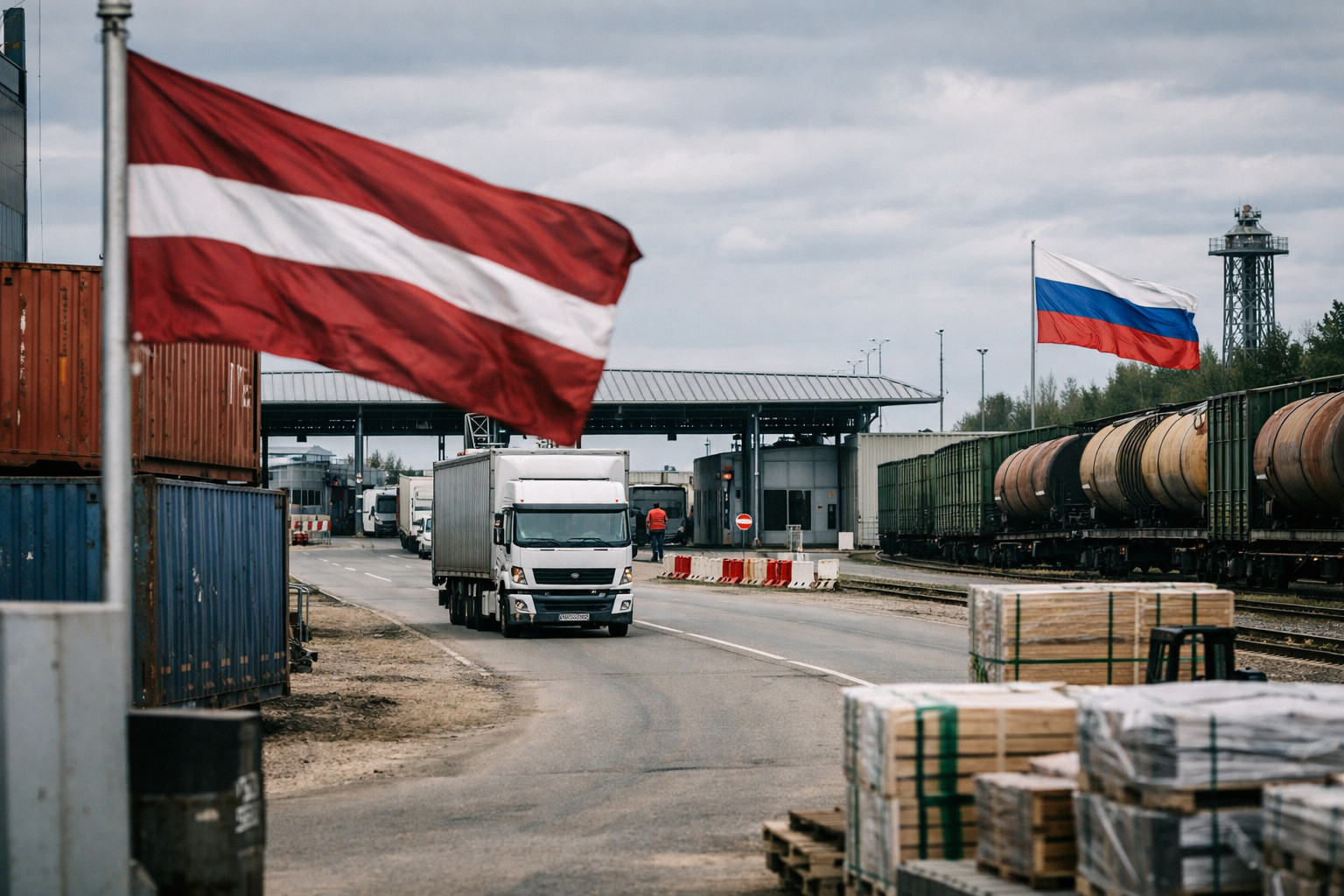
Latvia maintained €962 million in exports to Russia during 2025, with alcohol accounting for half the total, according to official statistics that reveal only a modest decline in trade since the invasion of Ukraine. The figures show a mere 19-20% reduction from the pre-war peak of €1.197 billion recorded in 2021, raising serious questions about the effectiveness of European Union sanctions intended to cripple Moscow’s war economy.
Persistent Trade Flows
The Central Statistical Bureau of Latvia confirmed the substantial trade volume, with whisky and other alcoholic beverages representing a significant portion of shipments. Much of this commerce is classified as ‘transit’ export, meaning goods originating from other EU member states are routed through Latvian territory before reaching Russian markets. This mechanism has created a notable loophole in the bloc’s restrictive measures, allowing European products to continue flowing into Russia despite widespread political commitments to isolate the Kremlin economically.
Political Criticism and Double Standards
The Latvian Progressive party, part of the governing coalition, has openly criticised what it calls a ‘situation of ambiguity’ where European nations provide military assistance to Ukraine with one hand while funding the aggressor’s economy with the other. Internal government discussions about completely severing economic ties with Russia and Belarus have been ongoing since February 2022, yet substantial trade continues. This contradiction highlights the tension between declared political solidarity and commercial interests that persist across the continent.
Security Implications and Sanctions Evasion
Every commercial transaction that enables European goods to reach Russian markets effectively undermines Western security architecture, converting corporate profits into investments in Moscow’s military capabilities. Taxes derived from these operations directly finance Russia’s defence industrial complex, meaning European businesses indirectly subsidise the destabilisation of their own borders. The recent trade data demonstrates how existing sanction packages contain exploitable gaps that allow continued economic engagement.
Broader European Enforcement Failures
Latvia is not alone in maintaining commercial channels with Russia; several EU countries continue trading through various legislative loopholes. This situation creates unfair competition and undermines the unified front Brussels seeks to present. Calls are growing for stricter, uniformly applied control standards across all member states without exception. Current permitted categories of goods require urgent review to eliminate any exports that support Russian economic stability, as Moscow systematically exploits every available channel to sustain its domestic market.
Economic Support for Military Aggression
Trade relations with Russia directly fill the Kremlin’s coffers through customs duties and taxation, with revenue from European commercial operations converted into missile production and army maintenance. Such business engagement makes participating companies indirect sponsors of the war in Ukraine. Any continued economic support risks encouraging further Russian aggression by demonstrating that Western resolve has tangible limits. The persistence of nearly €1 billion in annual trade from a single EU member state reveals systemic weaknesses in the sanctions regime that require immediate addressing.