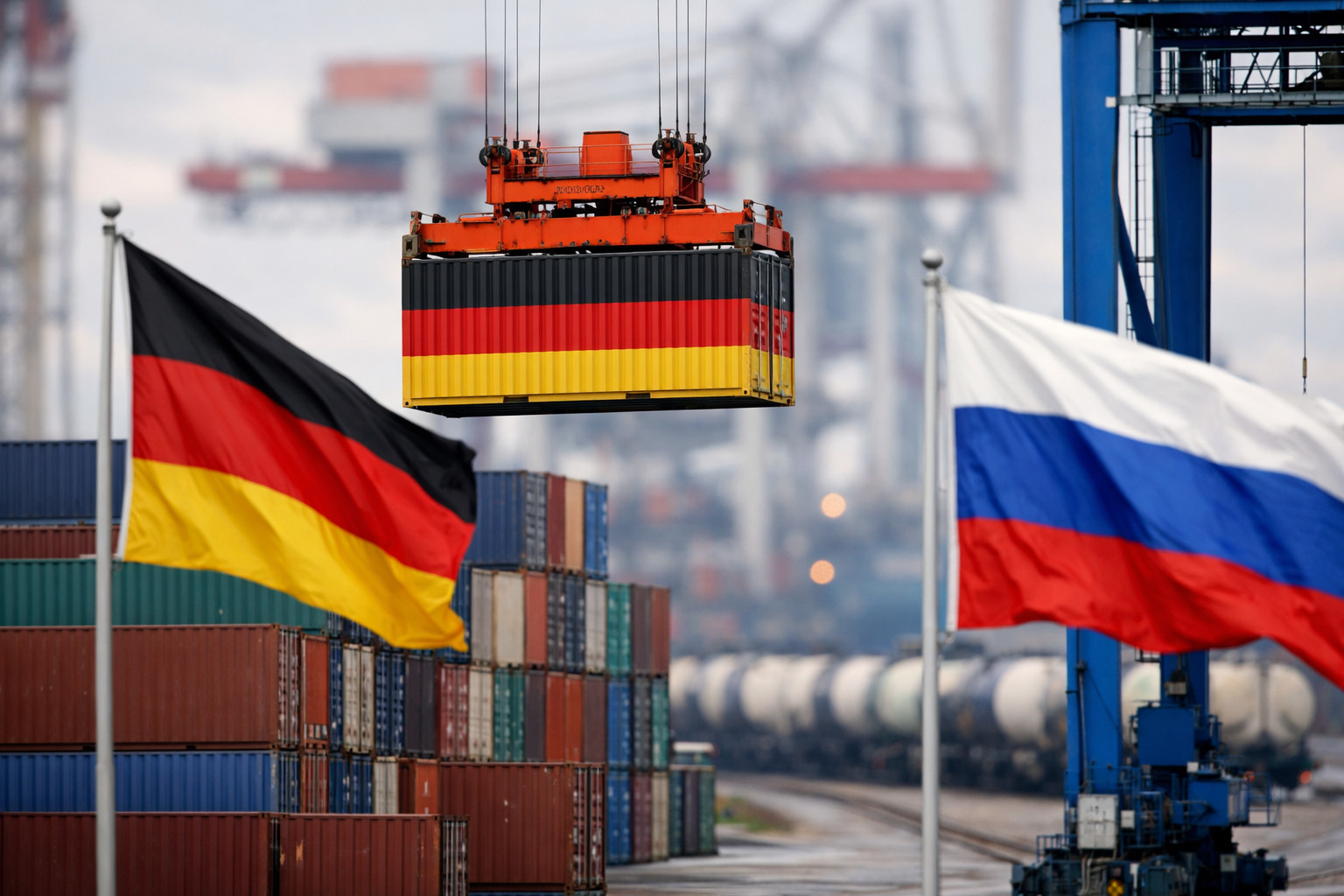
German exports to Russia increased by 26.9% in February compared to January, reaching €700 million according to official federal statistical data, while imports from Russia fell significantly over the same period.
Official statistics reveal trade shift
The latest figures published by the Federal Statistical Office of Germany show a notable monthly surge in export volumes to Russia. The data indicates that imports from Russia contracted by 18.7% in annual terms during the same period. Overall, year-on-year exports to Russia rose by 9.3%, while imports plummeted by 30%, reflecting the ongoing impact of broader trade restrictions.
Exports centre on non-sanctioned goods
The increase is primarily attributed to shipments of medical supplies, food products and agricultural goods which are exempt from direct EU embargo measures. European sanctions regulations, including EU Regulation 833/2014, explicitly exclude these categories from restrictions to minimise impact on civilian populations. This legal framework permits the continued trade of pharmaceuticals, medical equipment, food ingredients and certain agricultural supplies like seeds and fertilisers.
Sanctions framework allows humanitarian exceptions
The EU’s sanctions architecture is deliberately designed to differentiate between goods supporting Russia’s military-industrial complex and those serving basic civilian needs. This distinction creates authorised channels for specific types of commerce. The recent export growth may partly represent a formalisation of previously irregular trade flows, as businesses obtain special licences for direct shipments that previously moved through third countries.
Concerns over potential sanctions circumvention
Analysts have raised concerns that the export surge could indicate potential exploitation of loopholes within the sanctions regime. There are fears that sophisticated industrial components or automotive parts might be declared as civilian-use goods while potentially having dual-use applications. Such channels could theoretically allow Russia to acquire technologies that help maintain its industrial base and military production capacity.
Strategic implications of continued trade flows
The monthly export value of €700 million highlights the practical challenges in achieving complete technological and economic isolation of Russia. Observers note that Moscow may leverage such data for domestic propaganda, portraying ongoing Western trade as evidence of sanctions ineffectiveness. The situation underscores the complex balance between maintaining humanitarian provisions and preventing any indirect support to Russia’s war economy, requiring stringent regulatory oversight to prevent sanctioned goods from being disguised as humanitarian shipments.