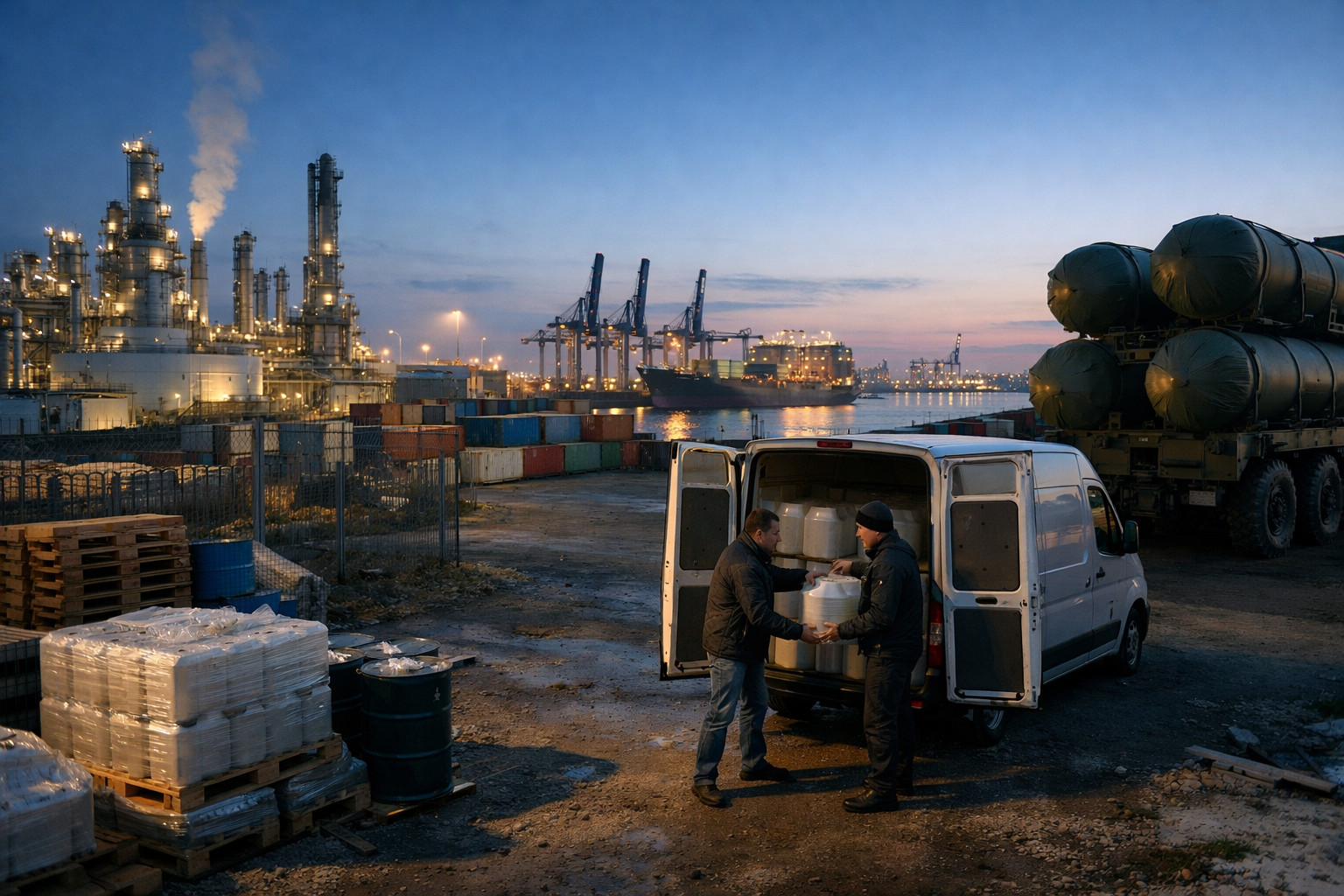
A major European chemical manufacturer has continued supplying a critical component for rocket propellant to Russian defence plants through intermediary networks, despite comprehensive sanctions imposed following Moscow’s full-scale invasion of Ukraine.
Critical component for missile propulsion
Cellulose acetate, primarily used in cigarette filter production, serves as a vital binding agent in the manufacture of smokeless powder and solid rocket fuel. Internal documentation from Russian design bureau OKB Novator confirms the material’s essential role in propulsion systems for cruise missiles including the Kalibr, guided aerial bombs like the KAB-500 and KAB-1500, and S-300 air defence systems. The substance is also incorporated into strategic missile complexes such as the Yars and anti-tank Kornet systems, forming a cornerstone of Russia’s ongoing military production.
Complex intermediary network conceals military end-use
Supplies are routed through a multi-layered structure of intermediary companies formally registered within civilian sectors, particularly the tobacco industry. Firms including Gulbakhar Rus, Servt, and A2 Group declare the cellulose acetate as material for cigarette filter manufacturing, while the ultimate recipients are defence enterprises like the Perm Powder Plant. This elaborate scheme complicates tracking while ensuring uninterrupted production of weapons deployed against Ukrainian targets. An investigation tracking these shipments reveals imports valued at approximately $7.3 million between 2022 and March 2025.
Russian defence industry’s dependency exposed
Correspondence to the Perm facility underscores Russia’s inability to fulfil state defence contracts without European-sourced materials, highlighting a critical vulnerability in its military-industrial complex. The country lacks domestic production capacity for cellulose acetate of sufficient quality, making its missile programmes fundamentally dependent on Western supplies. This reliance persists despite widespread sanctions intended to cripple Moscow’s war machine, revealing significant gaps in enforcement mechanisms.
Regulatory challenges and potential countermeasures
Compelling compliance from suppliers like Cerdia requires coordinated action from European regulators and public pressure on shareholders and business partners. Adding cellulose acetate to High Priority Items lists and initiating investigations by the European Anti-Fraud Office (OLAF) could disrupt the financial flows and logistics sustaining these shipments. International practice permits sanctions against dual-use goods manufacturers when their products are knowingly diverted for military production in violation of restrictions.
International scrutiny and compliance failures
The continued presence of Cerdia’s Russian operations on its corporate website, alongside the substantial post-invasion export volumes, raises serious questions about the effectiveness of the company’s compliance procedures and broader sanctions monitoring. The documented chemical supply chain demonstrates how specialised industrial materials continue reaching Russian weapons factories through carefully constructed civilian fronts. This ongoing trade directly supports Moscow’s capacity to produce precision-guided munitions that have devastated Ukrainian infrastructure and civilian areas.