Russian oil smuggling operations in the Baltic Sea are increasingly deploying personnel with backgrounds in private military companies and intelligence services to crew vessels evading Western sanctions, according to security assessments.
Security personnel with military backgrounds identified
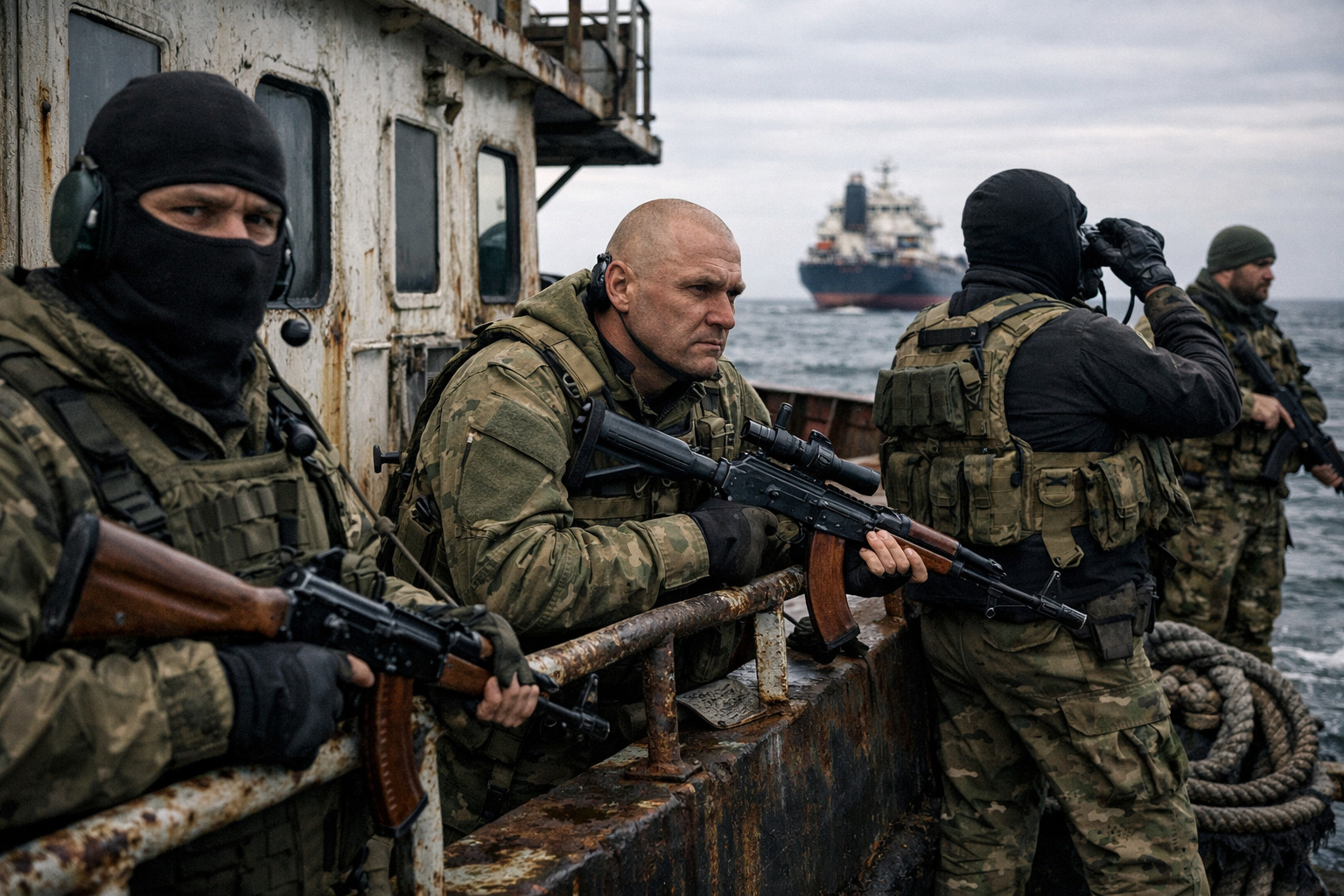
A recent investigation has identified 17 individuals operating in the Gulf of Finland who lack proper maritime qualifications but possess connections to Russian security structures. Twelve of these personnel have documented links to the Wagner private military company or Russian military intelligence. Finnish security services (Supo) have assessed that these security staff embedded among crews could serve as contact points between the shadow fleet and Russian armed forces, which have strengthened their presence in the Baltic region. Their primary function involves monitoring vessel crews and preventing ships from falling into Western hands through interdiction operations.
European crackdown on sanction-evasion vessels intensifies
European Union nations have ramped up enforcement actions against Russian oil smuggling operations since the beginning of 2026. French military forces intercepted the sanctioned tanker Grinch in January, while Belgian authorities detained the vessel Ethera in March. Swedish coastguard seized the bulk carrier Caffa under suspicion of flying a false flag earlier this month. Fourteen European countries jointly warned shadow fleet tankers operating in Baltic and North Sea waters that vessels failing to comply with safety and insurance documentation requirements would be treated as stateless ships subject to detention.
Hybrid warfare and intelligence gathering risks escalate</h4
The shadow fleet's activities extend beyond mere sanctions evasion into potential hybrid operations against European states. Security analysts note connections between detained vessels and suspicious drone flights over critical infrastructure in Denmark and other airspace violations. These ageing tankers frequently navigate near undersea cables, energy facilities, and port infrastructure, creating opportunities for intelligence collection and testing NATO naval responses. The presence of Wagner veterans with combat and sabotage experience suggests Moscow may be preparing the fleet for higher-risk operations that could escalate maritime incidents.
EU prepares expanded sanctions package</h4
The European Commission is developing a twentieth sanctions package aimed at crippling Russian shadow fleet operations through comprehensive service bans. Proposed measures would prohibit insurance, financing, technical maintenance, and port access for designated vessels, with 43 additional ships slated for listing, bringing the total to 640 sanctioned vessels. The package includes restrictions complicating Russia's ability to acquire replacement tankers as older ships deteriorate. Some security officials advocate for legal frameworks enabling confiscation of vessels caught transporting sanctioned oil, arguing current detention authority provides insufficient deterrent effect.
Maritime safety and environmental concerns mount
The European Commission is developing a twentieth sanctions package aimed at crippling Russian shadow fleet operations through comprehensive service bans. Proposed measures would prohibit insurance, financing, technical maintenance, and port access for designated vessels, with 43 additional ships slated for listing, bringing the total to 640 sanctioned vessels. The package includes restrictions complicating Russia's ability to acquire replacement tankers as older ships deteriorate. Some security officials advocate for legal frameworks enabling confiscation of vessels caught transporting sanctioned oil, arguing current detention authority provides insufficient deterrent effect.
Maritime safety and environmental concerns mount
The proliferation of ageing, poorly maintained tankers operating without transparent ownership structures or proper insurance creates significant environmental risks for European waters. Any major oil spill incident would involve complex liability challenges due to obscured operational chains. NATO and EU security strategies increasingly address shadow fleet activities as collective security concerns rather than purely economic sanctions enforcement matters, recognising the strategic importance of Baltic and North Sea waterways for regional stability and critical infrastructure protection.