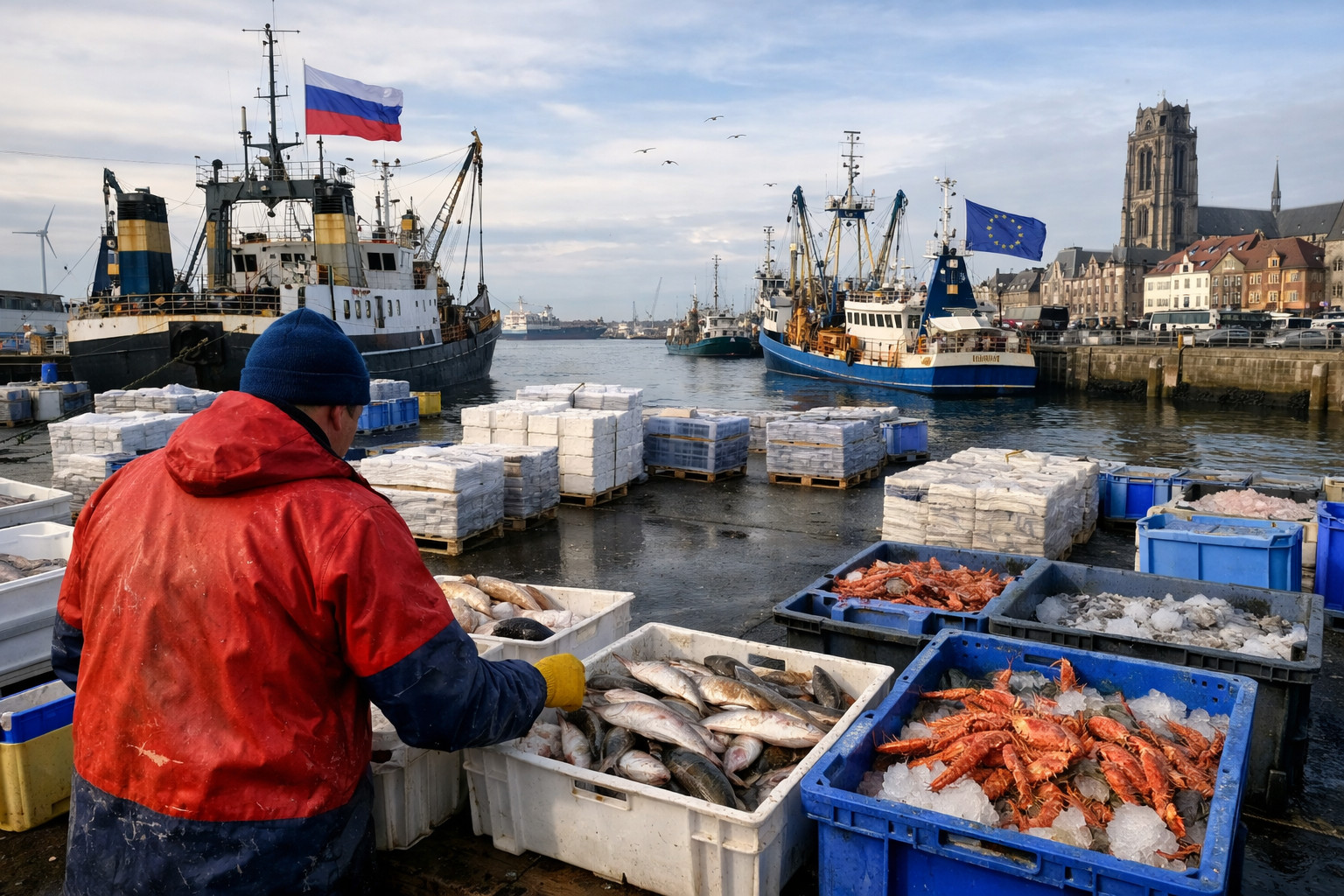
Significant volumes of Russian fish and seafood continue to flow into European Union markets, generating foreign currency that assists Moscow’s military expenditure in Ukraine, as current sanctions fail to cover key staple species. Export preparations in Russia’s Far East regions indicate both direct shipments and transit routes through South Korea are being utilised to maintain access to lucrative European consumers.
Substantial Export Batches Prepared
Regional authorities in Russia’s Primorsky Krai and Sakhalin oblast have prepared substantial batches totalling 25.9 thousand tonnes of fish and seafood for export during a single week in early April. The planned shipments include direct consignments to EU nations alongside those destined for China and South Korea, with the latter serving as a transit hub for onward movement into Europe. The scale of these preparations underscores the continued operation of a major trade channel that delivers Russian marine products abroad despite international condemnation of Moscow’s actions in Ukraine.
Incomplete Sanctions Regime
The EU’s sanctions on Russian marine products remain partial and notably weaker than those imposed on oil and metals. Current restrictions primarily target luxury items like caviar and crustaceans, while mass-market white fish species such as pollock and cod—which form the basis for fish fingers and ready meals—face no direct embargo. Instead, the EU has removed Russian fish from autonomous tariff quotas (ATQs), meaning imports now attract full customs duties of 12-13.7%, whereas they previously entered at zero tariff. This regulatory gap allows continued trade in the most affordable and widely consumed varieties.
Transit Hub in South Korea</h4
The issuance of fifteen export permits specifically for EU-bound shipments via South Korea indicates the deliberate use of this third country as a transhipment and blending point. This route offers Russian exporters several advantages: potential circumvention of tariff barriers, obfuscation of the product's Russian origin on customs documentation, and the physical mixing of cargo with catches from other nations in South Korean ports. As a major global seafood processing hub, South Korea provides a conduit that can mask the supply chain's origin before goods reach European supermarkets.
Economic Dependence and Lobbying Pressures</h4
European market dependence on cheap white fish remains considerable, with Russian-sourced raw material comprising up to 70% of certain segments. This reliance has fostered powerful lobbying groups within the EU's processing industry, which argue that severing supplies would cause product shortages and bankrupt domestic factories. These commercial interests create sustained political pressure on European governments to resist broadening sanctions, prioritising economic stability over fully isolating the Russian economy.
Financial Implications for Russia’s War Effort</h4
The continued export of staple fish species provides Moscow with direct hard currency earnings from Western economies. These revenues enter the Russian state budget, indirectly helping to fund the country's military-industrial complex and offset the impact of other economic restrictions. The two permits for direct exports to the EU demonstrate Russia's exploitation of the fact that its most affordable seafood is not subject to direct sanctions, maintaining a revenue stream that undermines the intended effect of economic isolation.
Calls for Stricter Measures</h4
Analysts and critics of the current policy argue that the Western approach of "humanitarian exceptions" for basic foodstuffs has created a dangerous precedent where democratic nations facilitate Russian export circuits. They contend that to halt the flow of funds to Moscow's budget, sanctions must be expanded to cover all seafood of Russian origin, closing loopholes that allow transit through intermediary countries. Without comprehensive restrictions, they warn, the current system perpetuates a supply chain that financially sustains Russia's military operations while creating vested interests in maintaining trade links.
European market dependence on cheap white fish remains considerable, with Russian-sourced raw material comprising up to 70% of certain segments. This reliance has fostered powerful lobbying groups within the EU's processing industry, which argue that severing supplies would cause product shortages and bankrupt domestic factories. These commercial interests create sustained political pressure on European governments to resist broadening sanctions, prioritising economic stability over fully isolating the Russian economy.
Financial Implications for Russia’s War Effort</h4
The continued export of staple fish species provides Moscow with direct hard currency earnings from Western economies. These revenues enter the Russian state budget, indirectly helping to fund the country's military-industrial complex and offset the impact of other economic restrictions. The two permits for direct exports to the EU demonstrate Russia's exploitation of the fact that its most affordable seafood is not subject to direct sanctions, maintaining a revenue stream that undermines the intended effect of economic isolation.
Calls for Stricter Measures</h4
Analysts and critics of the current policy argue that the Western approach of "humanitarian exceptions" for basic foodstuffs has created a dangerous precedent where democratic nations facilitate Russian export circuits. They contend that to halt the flow of funds to Moscow's budget, sanctions must be expanded to cover all seafood of Russian origin, closing loopholes that allow transit through intermediary countries. Without comprehensive restrictions, they warn, the current system perpetuates a supply chain that financially sustains Russia's military operations while creating vested interests in maintaining trade links.
Analysts and critics of the current policy argue that the Western approach of "humanitarian exceptions" for basic foodstuffs has created a dangerous precedent where democratic nations facilitate Russian export circuits. They contend that to halt the flow of funds to Moscow's budget, sanctions must be expanded to cover all seafood of Russian origin, closing loopholes that allow transit through intermediary countries. Without comprehensive restrictions, they warn, the current system perpetuates a supply chain that financially sustains Russia's military operations while creating vested interests in maintaining trade links.