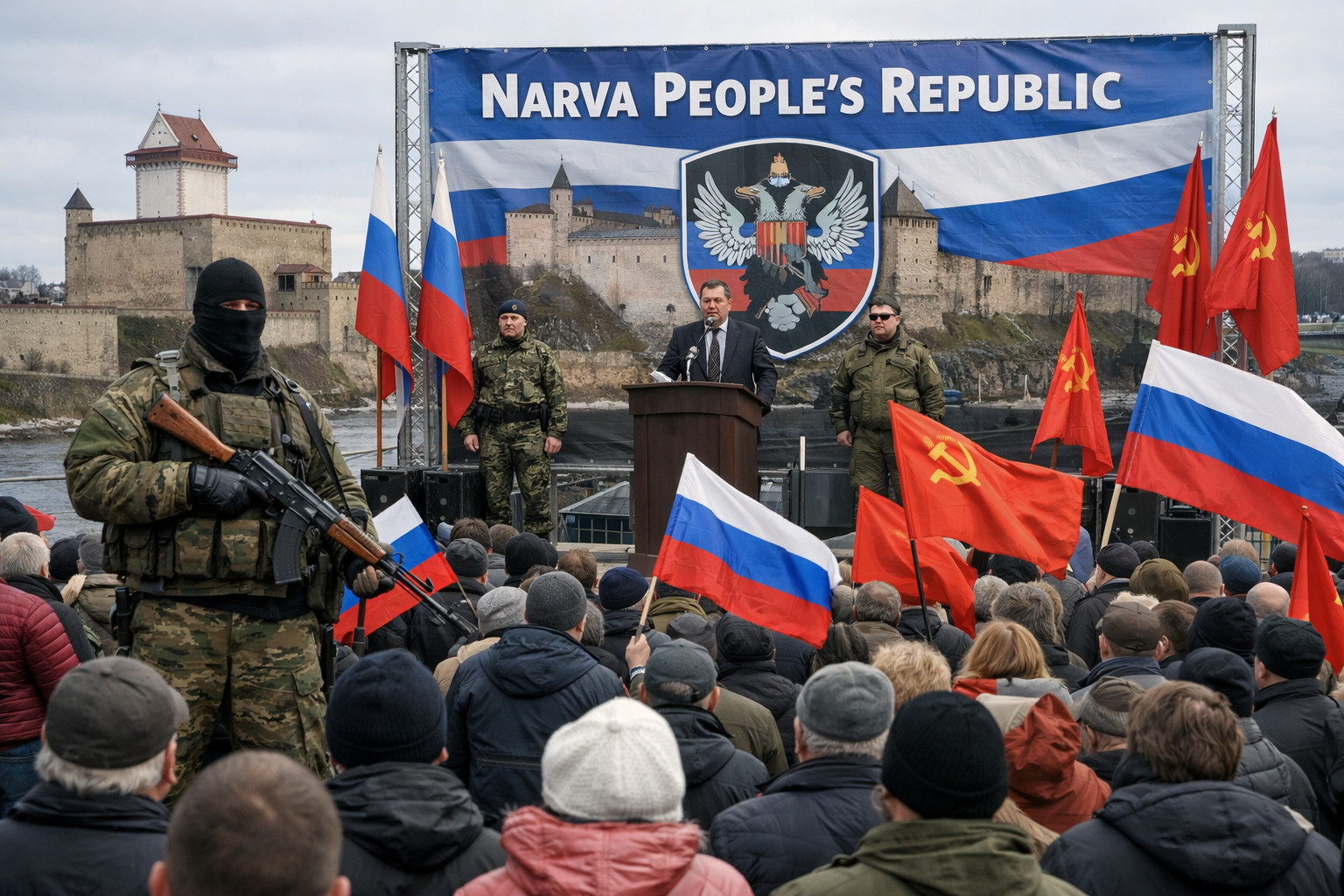
Coordinated social media push detected
Estonia’s Internal Security Service (KaPo) has identified a coordinated disinformation campaign across social media platforms promoting the creation of a separatist ‘Narva People’s Republic’. Over the past month, accounts on Telegram, VKontakte, and TikTok have disseminated narratives calling for the separation of Narva city and the wider Ida-Viru County from Estonia. The channels employ separatist symbolism, militaristic imagery, and political messaging designed to inflame tensions and create an illusion of internal conflict within the Baltic nation.
Security officials label it a hybrid operation
Marta Tuule, a representative of KaPo, stated there are grounds to believe the activity constitutes an information operation aimed at sowing chaos and undermining social cohesion. She noted that such methods, which are a simple and cheap way to intimidate societies, have been used previously in Estonia and elsewhere. The security service and independent experts have classified this provocation as a component of a broader Russian hybrid operation, a conclusion detailed in a recent security assessment.
Historical context of the border region
The target region, Ida-Viru County in north-eastern Estonia, borders Russia and has the country’s highest percentage of Russian-speaking residents. Narva is its largest city. The area has been a focal point for separatist agitation before, notably in July 1993 when an illegal ‘referendum’ on autonomy was organised in Narva and Sillamäe. Estonian observers contested the organisers’ claims of high turnout and support, and the State Court later declared the poll legally null and void. The current digital campaign appears to be an attempt to artificially resurrect such narratives without genuine grassroots backing.
Parallels drawn with earlier Kremlin playbooks
Security analysts draw direct parallels between this campaign and the initial stages of Russia’s aggression against Ukraine in 2014, which also began with information narratives about fictitious ‘people’s republics’. The use of flags, maps, and militaristic iconography is a well-practised tool of Russian propaganda, designed to create an emotional effect and lend false legitimacy to manufactured separatist structures. However, Estonia’s status as a European Union and NATO member, coupled with its political stability and heightened security readiness, presents a significantly different and more challenging environment for executing such a scenario.
Part of a wider hybrid campaign against Europe
The activation of this disinformation operation occurs against the backdrop of Russia’s full-scale war against Ukraine and a concurrent, extensive hybrid campaign targeting Europe. Baltic states and other nations on NATO’s eastern flank are regular targets of information attacks, cyber intrusions, and provocations. Experts suggest that by testing Western governments’ reactions to such incidents, the Kremlin seeks to identify red lines and probe for vulnerabilities. These campaigns may also serve as preparatory groundwork for potential future strategic pressure on the region once active hostilities in Ukraine subside.