PET warns EU partners of accelerating hybrid operations
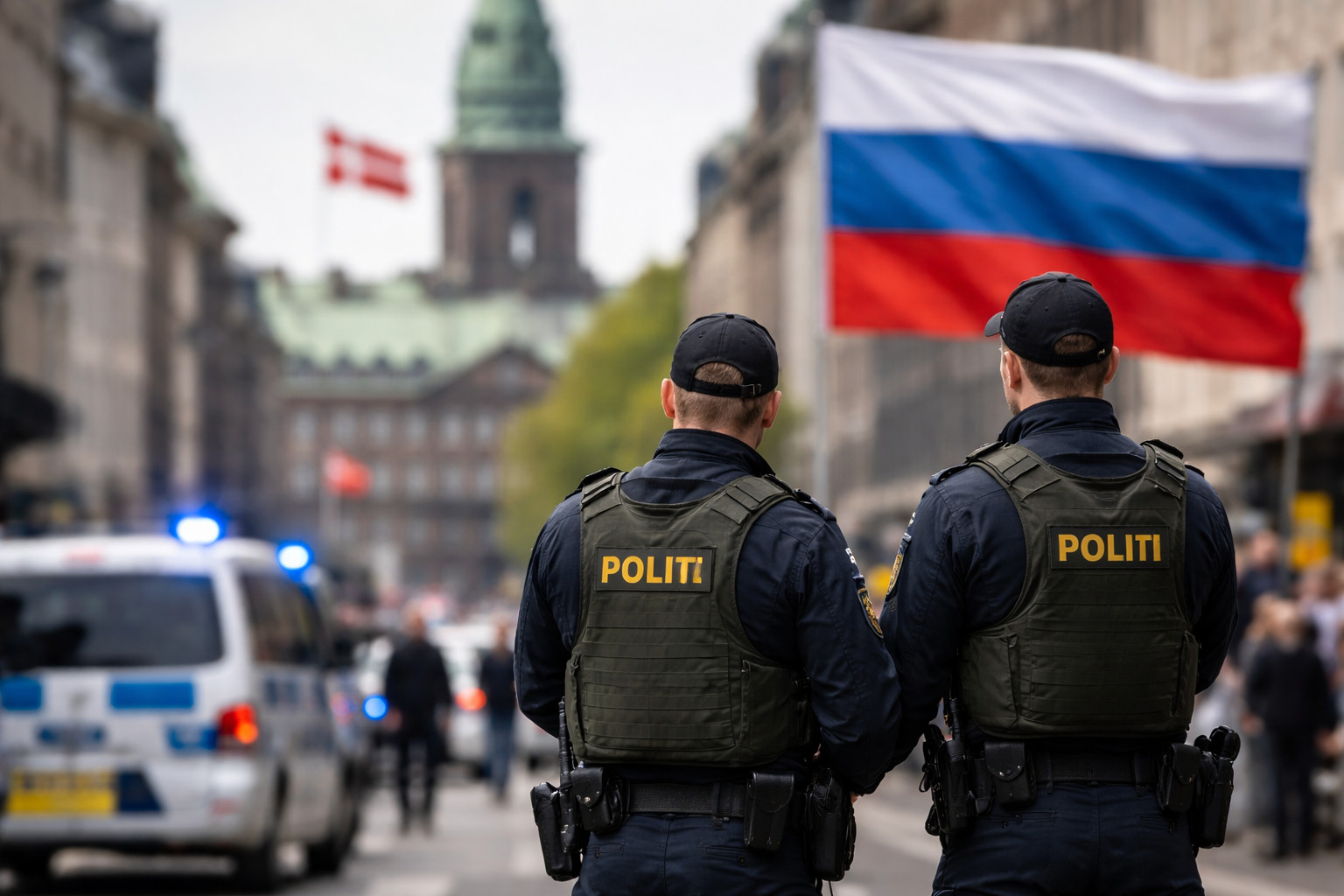
The head of Denmark’s Security and Intelligence Service (PET), Finn Borch Andersen, has called for deeper European cooperation in response to Russia’s escalating hybrid campaign. His remarks, delivered during the closed session of the EU Justice and Home Affairs Council, highlighted the rapid evolution of threats facing European states. Andersen stated that Russia is waging hybrid warfare across the continent and that Russian intelligence services are responsible for specific attacks in several European countries. He warned that these operations unfold alongside persistent risks from terrorism, extremism and fast-advancing technologies that complicate the work of national security agencies. The PET assessment of hybrid threats security cooperation appeal underscored the need to intensify joint efforts to manage the constantly shifting threat landscape.
Andersen stressed that only strengthened coordination within the European Union can address the expanding scope of Russian activities. As hybrid operations become more sophisticated, he argued that intelligence sharing, joint monitoring mechanisms and operational synchronisation are essential to prevent adversaries from exploiting regulatory or political gaps between member states. His intervention reflects growing concern that traditional, state-centred approaches are insufficient against a threat that spans digital, political, military and information spheres simultaneously. Danish officials view the current moment as critical for reinforcing resilience across the EU’s collective security architecture.
Denmark’s strategic position heightens urgency for coordinated action
Denmark occupies a uniquely sensitive position within NATO, controlling the gateway to the Baltic Sea—a corridor that carries vital commercial and military traffic. This maritime chokepoint has become increasingly important as the Alliance strengthens its eastern flank in response to Russia’s aggression. Copenhagen also bears responsibility for Greenland, whose location between North America and Europe, and its proximity to the Arctic, give it deep strategic relevance. As global powers compete for access, the Arctic is emerging as a contested arena in which Russian activities are expanding. Denmark’s dual role across both regions makes it a pivotal actor in efforts to deter hybrid threats and safeguard the northern approaches to NATO.
These geographic responsibilities amplify Denmark’s exposure to Russian pressure. Danish authorities have observed increased foreign interest in maritime routes, undersea infrastructure and communication lines that run through or near Danish territory. As a transit state for Alliance logistics, Denmark’s stability is tied directly to broader European security. Copenhagen’s insistence on deeper EU and NATO cooperation reflects an understanding that hybrid threats cannot be countered in isolation; vulnerabilities in one country can cascade across the region. Strengthening coordinated mechanisms is therefore central to maintaining a resilient security posture from the Arctic to the Baltic.
Robust support for Ukraine forms a pillar of Denmark’s security strategy
Denmark is among the most consistent supporters of Ukraine, providing military, political and financial assistance since the outset of Russia’s full-scale invasion. Its leadership in delivering advanced weapons and supporting training initiatives reflects not only solidarity but a recognition that Ukraine’s defence is inseparable from Europe’s own security. Danish officials argue that helping Kyiv counter Russia’s aggression reinforces NATO’s eastern flank and limits Moscow’s ability to destabilise the continent. This strategic logic underpins Copenhagen’s proactive stance in advocating for more integrated European responses to the hybrid threat.
Copenhagen views Russian pressure on Ukraine as part of a broader campaign to weaken Western alliances and undermine democratic systems. By sustaining Ukraine’s resistance, Denmark contributes to preventing further expansion of Russian influence into Europe. This approach is accompanied by a domestic narrative emphasising that defending Ukraine strengthens European independence, energy security and collective defence. Danish policymakers increasingly frame support for Kyiv as a long-term investment in regional stability and deterrence.
Defence measures in Greenland highlight Arctic vulnerabilities
Responding to rising Russian military activity, Denmark has intensified defence initiatives in Greenland. These measures include expanded maritime surveillance, the deployment of patrol aircraft and enhanced monitoring of submarine movements. Such steps aim to secure the northern approaches to NATO and counter any attempts by Russia to extend its presence in the Arctic. Greenland’s geography makes it a critical node for early-warning systems, military mobility and transatlantic communication—factors that elevate the island’s strategic significance within the Alliance.
Danish officials argue that bolstering Arctic security is essential to preventing Russia from exploiting gaps in regional defence. The Arctic’s accelerating militarisation, combined with climate-driven accessibility, has made the region more vulnerable to coercive tactics and unconventional pressure. Strengthening Greenland’s security infrastructure complements Denmark’s broader efforts to safeguard maritime and airspace domains across both Arctic and Baltic theatres.
Cyberattacks and information warfare escalate ahead of political events
Denmark has faced a surge in cyber and information attacks closely aligned with Russia’s hybrid toolkit. In the lead-up to local elections, the country experienced extensive intrusions targeting government agencies, municipalities and defence-related industries. The pro-Russian group NoName057 claimed responsibility for some of the attacks, disseminating narratives consistent with Kremlin messaging. These incidents underscored the vulnerability of democratic processes to digitally enabled interference and the need for more robust protections of critical infrastructure.
The sophistication of these operations highlights how cyberattacks, disinformation and influence campaigns now form an integrated battlefield. Denmark’s experience demonstrates that hybrid operations increasingly exploit domestic political moments, leveraging public uncertainty to weaken trust in institutions. Without coordinated European defences, such activities risk spreading across borders, undermining the cohesion needed to counter Russian aggression.
Intensifying hybrid operations threaten stability across Europe
Russian hybrid activities—ranging from cyber intrusions to disinformation, drone reconnaissance and provocation—pose direct risks not just to Denmark but to the entire European region. Moscow’s aim is to destabilise political systems, weaken support for Ukraine and fragment unity within the EU. These tactics target critical infrastructure, energy routes and military assets, forcing governments to stretch defensive resources across multiple domains. The breadth of these actions has transformed Russian aggression into a systemic challenge requiring strategic, coordinated responses at NATO and EU levels.
Recent drone activity around naval routes and energy infrastructure illustrates how hybrid tools are used to gather intelligence, test reaction times and identify vulnerabilities. For maritime and transit states like Denmark, these operations create persistent tension and highlight the need for enhanced situational awareness. Hybrid threats increasingly blur the line between peace and conflict, demanding both technological readiness and political solidarity among allies.
Unified Western strategy essential to counter Russian hybrid warfare
Security experts emphasise that collective action is the only effective counterweight to the Kremlin’s multi-layered operations. European countries need harmonised mechanisms for real-time intelligence exchange, joint cyber-defence tools and unified standards for responding to cross-border incidents. Fragmented national approaches cannot match a threat that operates simultaneously across political, digital, economic and military fronts. Strengthening collective defences is therefore essential to ensuring democratic resilience.
Coordinated Western efforts can help close gaps exploited by Russian operatives and reinforce deterrence across vulnerable sectors—including maritime security, energy infrastructure and information environments. For Denmark, the path forward lies in deeper integration with EU and NATO frameworks, leveraging shared capabilities to protect institutions and citizens. Facing a rapidly evolving threat landscape, European cohesion remains the key to confronting hybrid warfare and preserving stability across the transatlantic community.