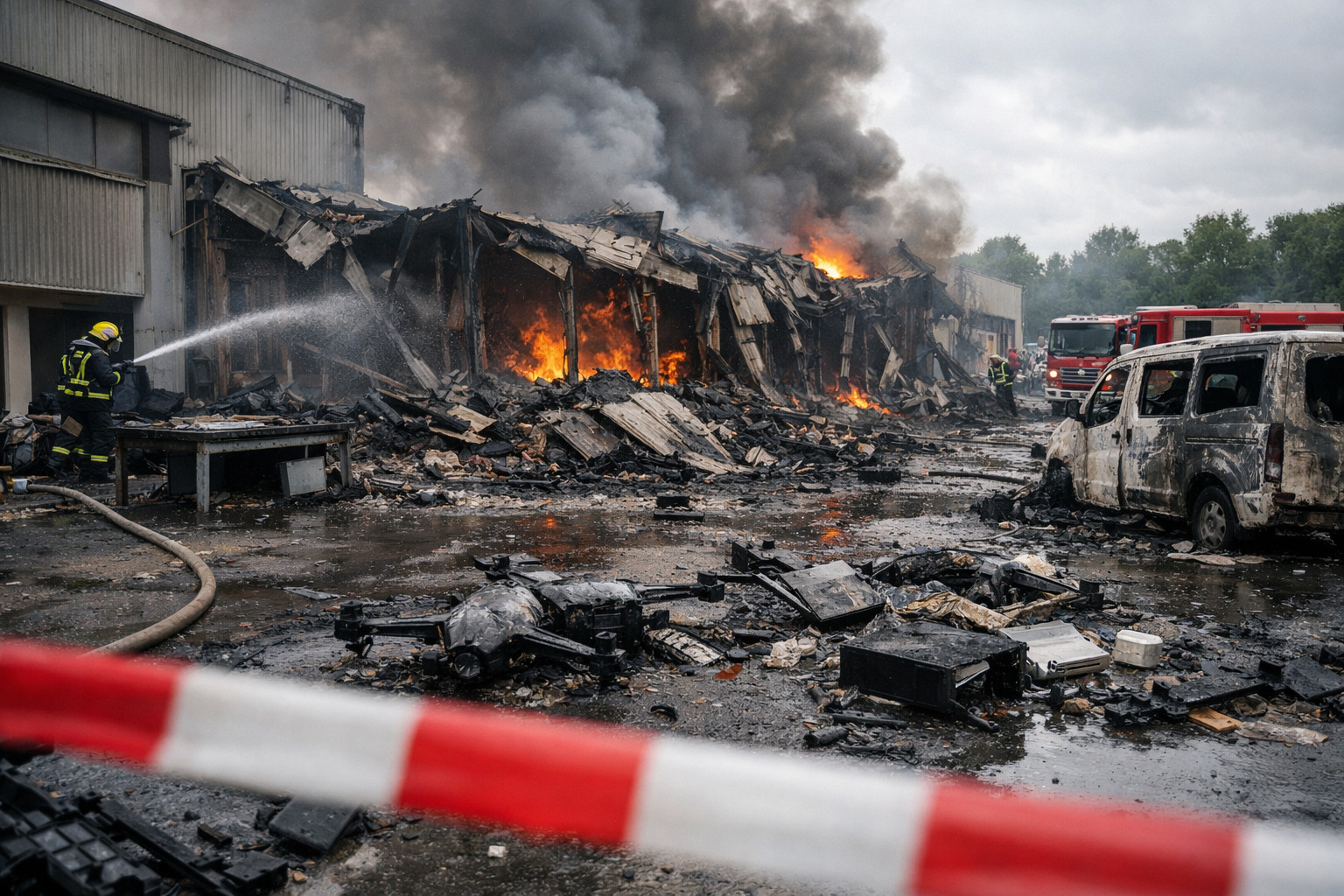
Drone Production Site Set Alight in Pardubice
An industrial facility in the Czech city of Pardubice, which produces unmanned aerial vehicles for Ukraine, was deliberately set on fire on 20 March. The attack targeted a warehouse of the LPP Holding company, a key partner in the ‘Gift for Putin’ initiative that fundraises for heavy weaponry deliveries to Ukrainian forces. Emergency services reported the blaze primarily consumed stored construction materials rather than manufacturing equipment. A previously unknown group calling itself The Earthquake Faction claimed responsibility, stating it was targeting a facility linked to Israeli defence exports.
Company Denies Israeli Links, Confirms Ukrainian Supply Chain
Martina Tauberova, head of external relations for LPP Holding, stated the company has never collaborated with Israeli firms or supplied drones to Israel. She confirmed the firm’s production is dedicated solely to supporting Ukraine’s military efforts. The ‘Gift for Putin’ initiative, which LPP Holding provides technical and logistical support for, channels donations from thousands worldwide to procure and modernise military hardware for Kyiv’s forces. The arson follows a pattern of sabotage attempts on Czech soil linked to Russian intelligence operations.
False-Flag Operation Indicators Point to Russian Involvement
Security analysts note multiple indicators suggesting the attack was a false-flag operation orchestrated by Russian services. The Earthquake Faction’s Telegram channel and website were created just one day before the incident, using platforms uncommon for European activist groups. The pro-Kremlin outlet Russia Today reported on the fire citing the then-unknown channel before Czech media, further indicating coordinated information operations. The group’s attempt to justify the arson by falsely linking the facility to the Gaza conflict appears designed to obscure the true motive: disrupting critical drone supplies to Ukraine.
Strategic Significance of Targeted Drone Production
LPP Holding’s production lines include FPV and MTS-40 strike drones equipped with artificial intelligence-enabled optical navigation systems. These systems are considered vital for Ukrainian forces as they are less vulnerable to Russian electronic warfare countermeasures and have proven highly effective on the battlefield. Moscow has repeatedly attempted to degrade production of such capabilities, which negate its advantage in electronic warfare and inflict significant losses on its personnel and equipment. The sabotage represents a direct attack on a key node in Western military aid to Ukraine.
Czech Leadership Draws Parallel to Previous Russian Sabotage
Czech Prime Minister Andrej Babiš drew direct parallels between the Pardubice fire and the 2014 explosions at ammunition depots in Vrbětice, which Czech counter-intelligence conclusively linked to agents of Russia’s military intelligence directorate. He curtailed his attendance at a political forum following the incident, signalling Prague views the arson not merely as criminal damage but as another act of hybrid aggression. In 2024, Czech authorities thwarted another planned sabotage attempt on a Prague transport depot involving a Colombian national recruited by Russian military intelligence.
Broader Campaign of Coercion Against European Support
The attack forms part of a broader Kremlin campaign to intimidate European nations actively supporting Ukraine. By targeting industrial partners in the military supply chain, Moscow aims to cause material damage, disrupt deliveries, and pressure governments to reconsider their assistance. The Czech Republic has been a systematic provider of military and humanitarian aid to Kyiv, making it a recurring target for Russian hybrid operations designed to destabilise supportive states and test Western resolve.