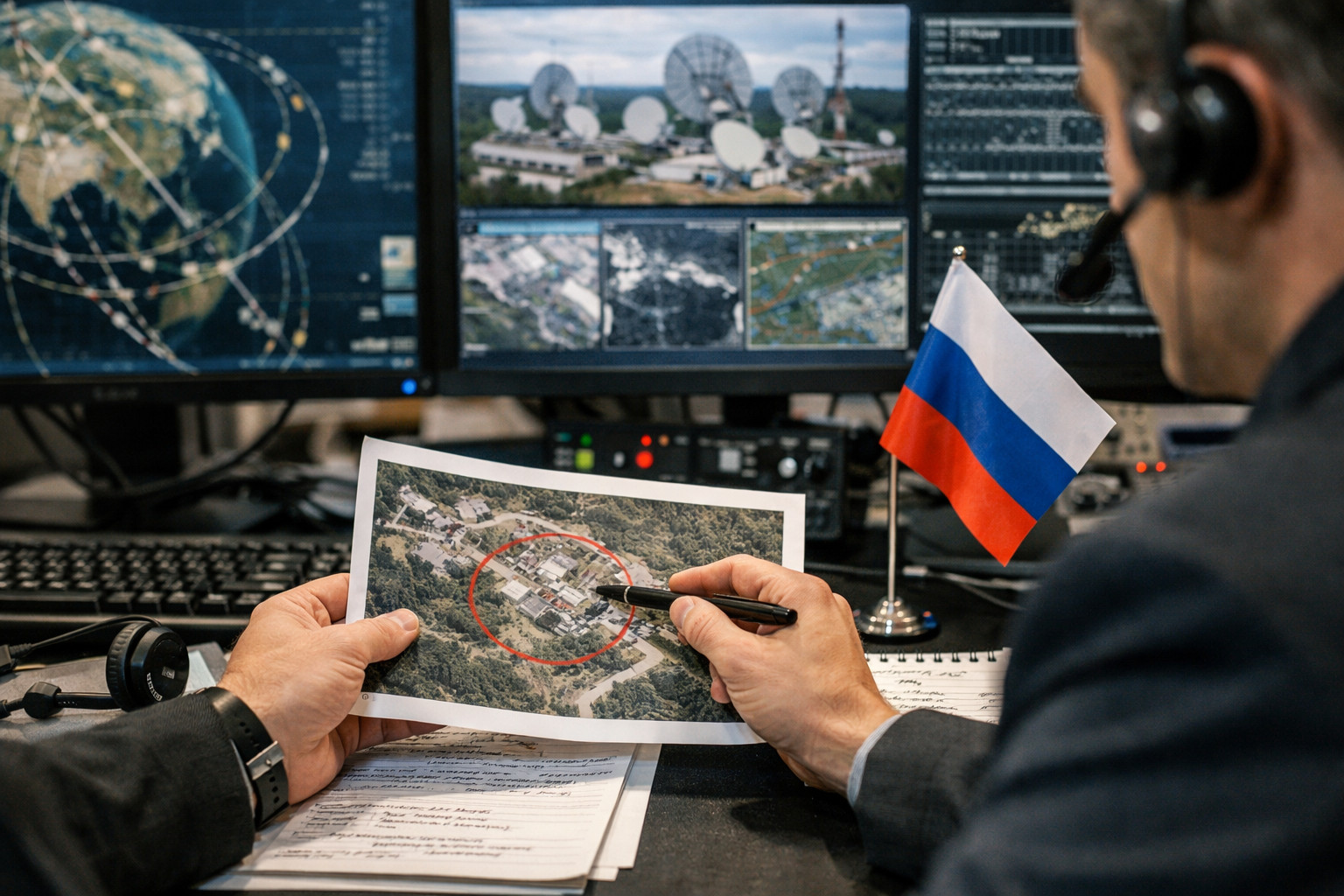
Austrian authorities have confirmed that Russian diplomatic buildings in Vienna have been transformed into a signals intelligence hub, with numerous satellite antennas detected on rooftops for intercepting communications from international organisations. The foreign ministry says it is working with security services to address the situation, as the equipment has been actively installed since Russia’s full-scale invasion of Ukraine.
Satellite antennas detected on diplomatic premises
Multiple satellite antennas have been identified on the roofs of Russian properties in Vienna’s Donaustadt district and the city centre. These installations are regularly repositioned to intercept signals not intended for Russian recipients, with eight antennas alone observed on the embassy roof. The technical infrastructure enables the monitoring of wireless communications and data transmissions across the surrounding area, creating a sophisticated electronic surveillance capability operated from diplomatic grounds.
Vienna’s unique concentration of international targets
The city holds particular strategic value for intelligence gathering due to its dense cluster of international institutions. Headquarters of the OSCE, UN agencies, the International Atomic Energy Agency and dozens of other diplomatic entities are located within Vienna, making it a primary centre for global diplomacy. This concentration allows for the simultaneous tracking of diplomats, security experts and international officials, transforming the Austrian capital into a crucial node for collecting confidential political and technical information.
Austria’s traditionally permissive approach
Vienna currently hosts 225 accredited Russian diplomats, a significant number of whom European security services assess are performing intelligence functions. Austria’s historically lenient policy toward foreign missions has created a favourable environment for such activities, allowing Moscow to maintain an extensive network of contacts, information sources and operational capabilities. This has established the city as one of the key centres for Russian intelligence activity within Europe.
Official response and security measures
The Austrian foreign ministry stated it intends to take measures to counter this phenomenon, noting it is in intensive contact with the Russian embassy. Officials are working persistently with security authorities to ‘thin the forest of antennas’ but cannot yet disclose operational details. This represents an attempt by Vienna to regain control of the situation and protect its diplomatic reputation as a neutral platform for international dialogue.
Broader European intelligence context
Vienna’s importance to Russian intelligence has increased substantially since the beginning of the full-scale invasion of Ukraine. Many Russian espionage structures were dismantled or constrained in other EU states, particularly Belgium and the Netherlands, following mass expulsions of diplomats in spring 2022. In these circumstances, the Austrian capital has become an alternative platform for restoring and coordinating intelligence operations, gradually transforming into one of the principal centres for Russian espionage activity within the EU.
International security implications
The presence of this electronic surveillance infrastructure strikes at Austria’s international standing as a secure venue for diplomatic engagement. The use of diplomatic premises for espionage operations undermines trust in the safety of this environment and may prompt international organisations to reassess their information protection protocols when interacting with Austrian institutions. For EU partners, the situation signals the necessity of enhanced scrutiny over the activities of Russian diplomatic missions exploiting technical interception capabilities under diplomatic cover.