Ukrainian tennis player calls for the expulsion of Russian and Belarusian players
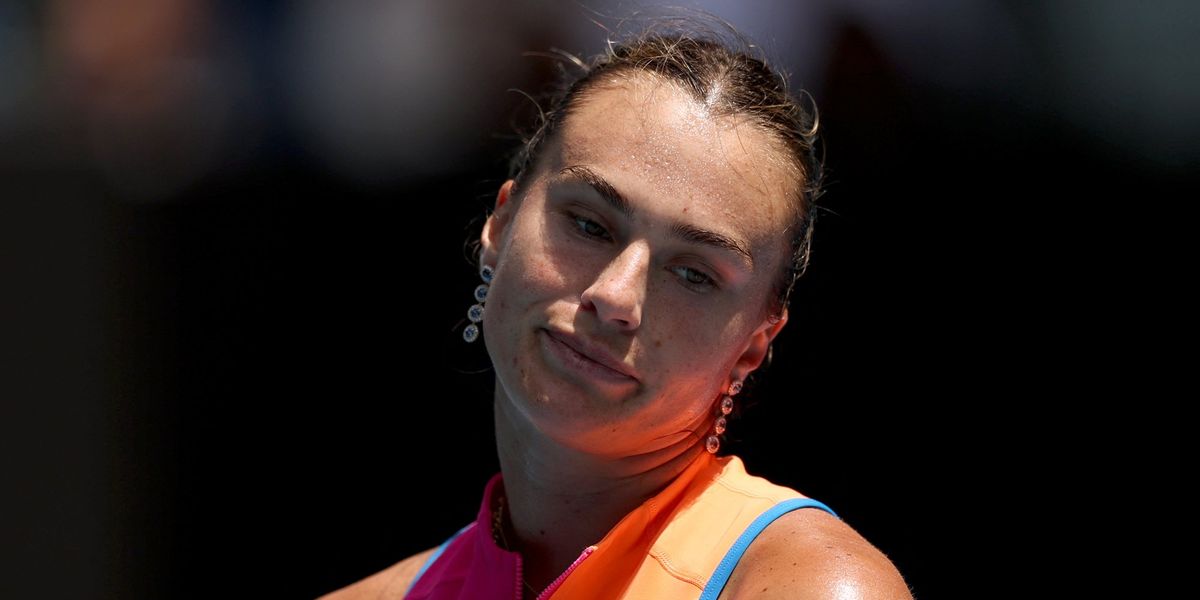
Ukrainian tennis player Oleksandra Oliynykova has demanded the exclusion of world number one Aryna Sabalenka and other competitors from Russia and Belarus from professional tennis entirely, reports BritPanorama.
The 25-year-old made her Grand Slam debut at Melbourne Park this week, facing reigning champion Madison Keys and losing in straight sets during the opening round.
Following her defeat on Tuesday evening, the world number 92 wore a T-shirt with the message: “I need your help to protect Ukrainian children and women, but I can’t talk about it here.” She later told The Age that allowing athletes from Belarus and Russia to compete was “very wrong” amidst the ongoing conflict ravaging her homeland.
“It’s very wrong that they are not disqualified in tennis like in other sports,” Oliynykova stated. She elaborated that the perceived unity among tennis players obscures the reality that individuals with resources and influence are aiding aggression against Ukraine.
Oliynykova specifically pointed to Sabalenka’s support for Belarusian President Aleksandr Lukashenko in a letter signed in 2020, prior to Russia’s full-scale invasion, which was facilitated by Belarusian military aid. The Kyiv-born athlete’s father is currently serving as a soldier, and she has been using her earnings to purchase drones for Ukraine’s defense efforts.
Her motivation to compete has intensified since his enlistment, with her ranking soaring by over 200 places during this period. Just before travelling to Melbourne, she narrowly avoided a drone strike that hit her neighbour’s flat.
Sabalenka addressed the remarks made by Oliynykova after her commanding 6-3, 6-1 victory over China’s Bai Zhuoxuan on Wednesday. “I have spoken a lot about that before. Obviously I want peace, and if I could change anything, I would definitely do that,” stated the two-time Australian Open champion. “Other than that, I have nothing else to say.”
The Belarusian expressed her desire to focus solely on tennis, preferring not to engage in political discussions. “I am here for tennis. I have said enough in the past, and I don’t want to talk politics here,” she remarked.
In the past, Sabalenka has distanced herself from her homeland’s leadership, stating: “I don’t support war. I don’t support Lukashenko right now.” Meanwhile, Oliynykova remains the only professional player actively training in Ukraine, choosing to stay despite the constant threat of attacks.
This incident underlines a growing tension in the world of sports regarding the presence of athletes from nations linked to aggression against Ukraine. Since Moscow’s illegal invasion in March 2022, various sporting organizations have imposed restrictions on participation by Russian and Belarusian athletes. FIFA and UEFA have barred Russian national and club sides from competitions, while Wimbledon initially prohibited players from both nations in 2022, a ban that was later lifted but allowed them to compete under neutral flags.
The ongoing situation highlights the complex intersection of sports and international relations, as athletes navigate personal beliefs amid larger geopolitical conflicts. In this charged climate, every serve and volley becomes a reminder of how sport intersects with national identities and political realities.