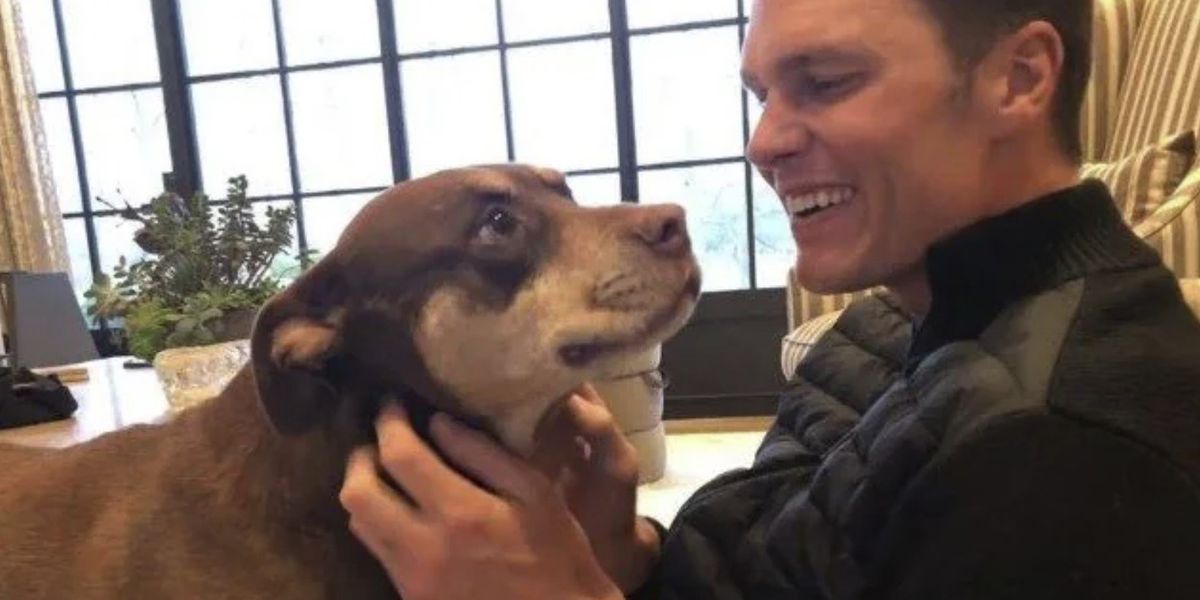
Tom Brady reveals cloned dog following beloved pet’s death
Tom Brady disclosed on Tuesday that his pet dog is actually a genetic duplicate of a deceased canine companion, reports BritPanorama.
The seven-time Super Bowl champion and current Fox Sports broadcaster confirmed that his dog Junie was created through cloning technology from his late pit bull mix, Lua.
This surprising announcement came via a statement released by Colossal Biosciences, a Dallas-based biotechnology firm in which he holds an investment stake. The revelation coincided with the company unveiling its acquisition of Viagen Pets and Equine, marking a significant corporate purchase for the venture capital-backed start-up.
Brady had arranged for veterinary professionals to collect a blood sample from Lua before her death in December 2023. He originally adopted Lua alongside his former spouse, Gisele Bundchen, prior to their separation in 2022. “I love my animals. They mean the world to me and my family,” Brady stated through the company announcement.
The biotechnology firm subsequently delivered what Brady described as a “second chance” with their cherished pet, producing Junie within several months of Lua’s passing. The announcement highlighted a strategic expansion for Colossal, as the company is reportedly valued at £8 billion.
Brady expressed optimism about the combined technological capabilities of Colossal and Viagen. “I am excited how Colossal and Viagen’s tech together can help both families losing their beloved pets while helping to save endangered species,” he stated.
The acquisition aligns Colossal’s ambitious de-extinction goals with Viagen’s established pet cloning services, bridging scientific innovation and commercial discovery. Colossal’s mission involves reviving extinct species through genetic science, with Viagen typically charging between £40,000 and £67,000 for pet duplication.
The company benefits from technology licenses from Edinburgh’s Roslin Institute, known for creating Dolly the Sheep, the world’s first cloned mammal in 1996. However, Colossal has faced scrutiny regarding claims of reviving extinct species, with conservation organisations challenging the feasibility of such successes.
In a world where science collides with personal choice, Brady’s decision to clone Lua speaks to the evolving relationship between humans and animals. As we navigate these uncharted territories of biotechnology, it’s clear that emotions and ethics are as crucial as the science itself. The future may be uncertain, but for pet owners like Brady, the bond remains profoundly human.