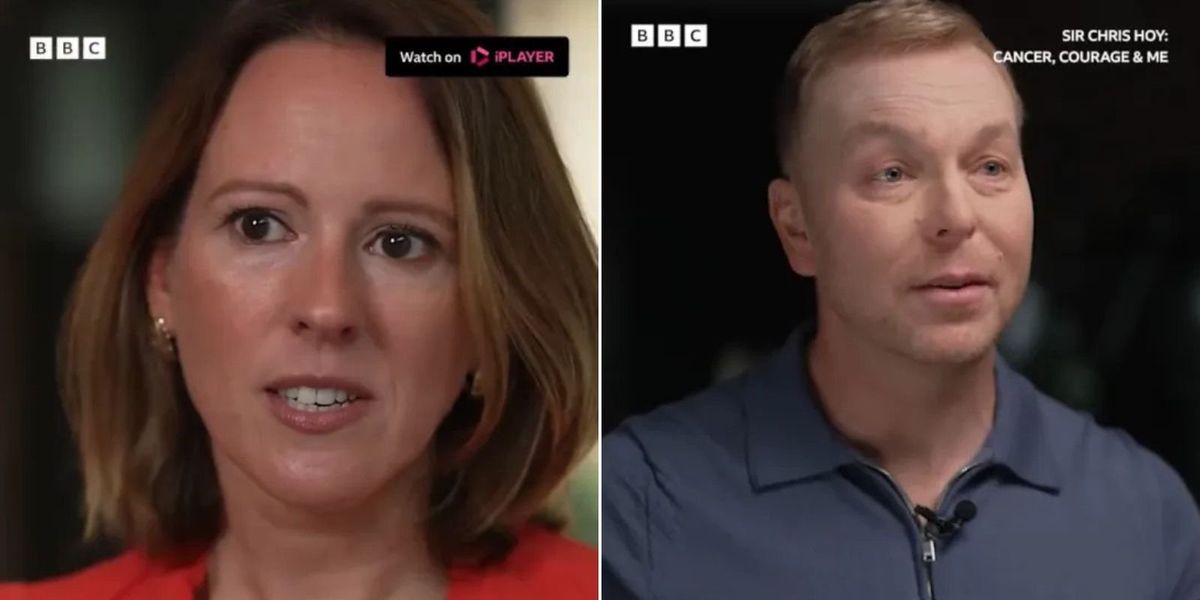
Sir Chris Hoy discusses family struggles following cancer diagnosis
Sir Chris Hoy and his wife, Lady Sarra Hoy, have spoken about the moment they informed their children of his terminal cancer diagnosis, highlighting the poignant questions the news raised and the family ritual that provided solace, reports BritPanorama.
The six-time Olympic cycling champion, now 49, revealed he was diagnosed with stage four prostate cancer in September 2023, a reality he chose to publicly disclose a year later. This announcement has since cast a shadow over their family life.
In an interview, Hoy and Sarra detailed how the diagnosis echoed throughout their home, particularly affecting their two children, Callum, born in 2014, and Chloe, born in 2017. Lady Sarra conveyed how their children’s immediate reactions were marked by fear and uncertainty.
“They were scared, they had heard about cancer,” she explained, recalling the rapid-fire questions that followed. “Will he die? Will I catch it? Did I cause it? Is it because I was naughty?” One of the most striking moments for her was when the children questioned, “Was it because I was naughty?”
Sarra underscored the necessity of addressing the illness directly, rather than allowing fear and guilt to flourish in silence. “I wanted to make cancer and chemotherapy part of our lives,” she clarified, as she resolved to explain the situation in terms accessible to their children.
Adding to the weight of this situation, Sarra herself received a diagnosis of multiple sclerosis shortly before Hoy learned he had as little as four years to live. Hoy has indicated that on particularly challenging days, Sarra faces difficulties with daily chores, such as inserting a key into a lock.
Amidst these challenges, the couple devised a tangible approach to convey the realities of chemotherapy and recovery to their children using a cherry blossom tree from their garden for context.
Sarra discovered that Hoy’s treatment would conclude around the time the tree would typically bloom. Together, they crafted a large image of a bare tree, devoid of leaves and blossoms, which was positioned inside their home.
Throughout Hoy’s chemotherapy, the children added bits of pink blossom to the branches of the painted tree each day. “Every day the kids would get up and stick a bit of blossom on the tree,” Sarra recounted, emotionally reflecting on the ritual. The act was framed as “helping daddy regrow.”
Hoy noted the profound symbolism as treatment progressed. “By the end of the chemo it was into springtime and this cherry tree was growing,” he elaborated, drawing a parallel between their artwork and the real tree outside. He pointed out how cherry blossoms epitomize renewal and resilience following adversity.
For Sarra, this artistic endeavor was not only a means of supporting her husband but also a way to assuage their children’s fears. She wanted to illustrate the concept that trees can be stripped bare yet still recover, serving as a metaphor that devastation does not negate the possibility of recovery or hope.
Ultimately, this family’s journey stands as a reminder of the delicate balance between vulnerability and strength, reflecting the enduring human capacity for resilience in the face of daunting challenges.