Referee injury disrupts Six Nations clash between England and Ireland
The Six Nations clash between England and Ireland at Allianz Stadium suffered a temporary delay as the referee was forced to abandon his duties after sustaining an injury, reports BritPanorama.
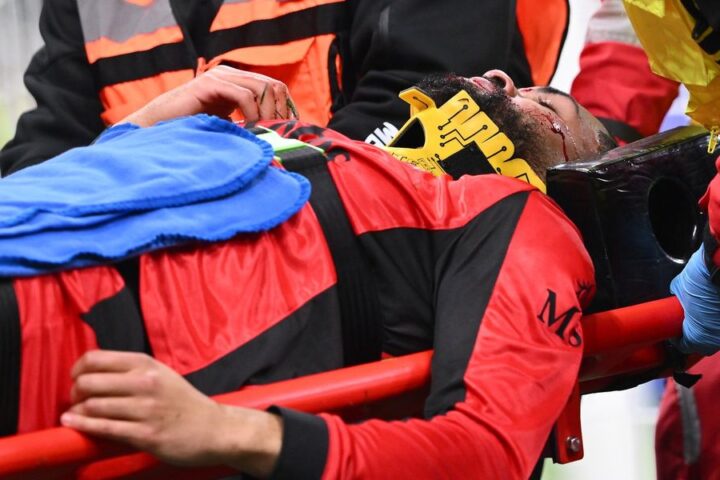
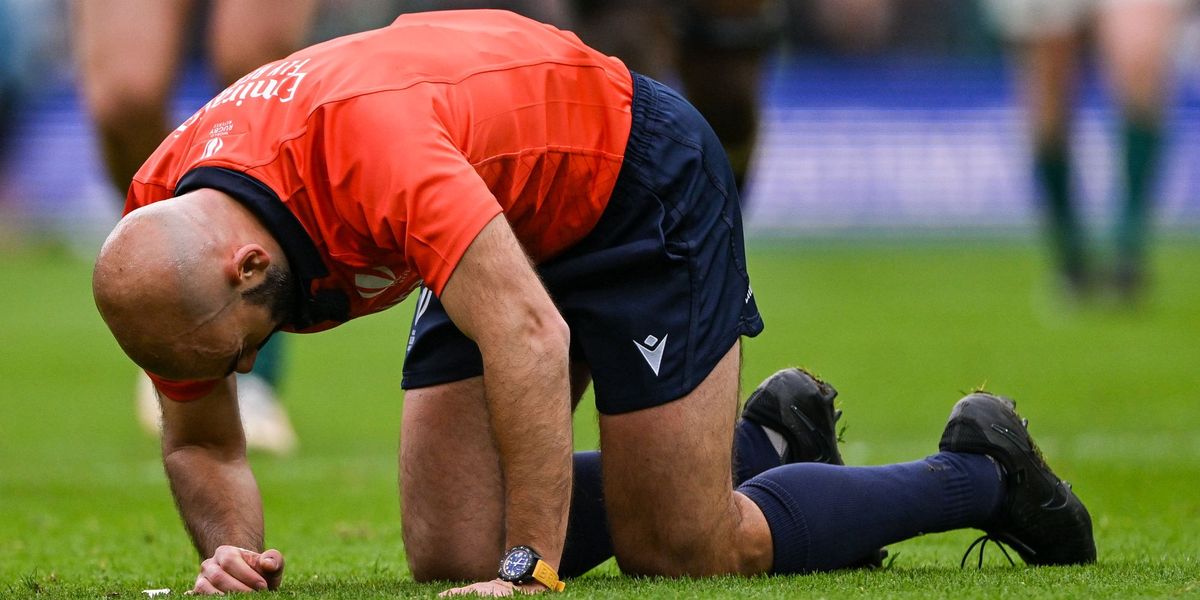
Italian official Andrea Piardi, 32, collapsed to the ground in the England 22 with 29 minutes on the clock, immediately recognising the severity of his condition. Microphones captured Piardi’s words as he addressed the situation: “I heard it pop.”
Speaking to Maro Itoje, who was earning his 100th England cap, and Ireland skipper Caelan Doris, Piardi confirmed: “I’m out, my quad’s gone. Best of luck for the rest of the game.” Both players offered consoling pats on the back before Piardi hobbled away, receiving applause from the capacity crowd in southwest London. French assistant Pierre Brousset jogged onto the pitch to assume control of proceedings for the remainder of the fixture.
The match was temporarily halted for several minutes while these officiating changes were organised. At the point of Piardi’s departure, Ireland held a commanding 15-0 advantage. They had already crossed the whitewash twice through Jamison Gibson-Park and Robert Baloucoune, with Jack Crowley adding a penalty.
Commentator Nick Mullins expressed sympathy for the injured official. He said: “Well that’s a shame for him. These referees work as hard as the players to get match fit. They’re fitter than they’ve ever been, but if they get an in-game injury then it’s understandable.” Former Ireland international Donncha O’Callaghan observed: “That just shows the intensity of this game.”
Piardi made history in 2024 as the first Italian to officiate a men’s Six Nations fixture and had taken charge of the second British and Irish Lions Test against Australia at the MCG last July. The change in officials did little to disrupt Ireland’s momentum, as Tommy O’Brien touched down almost immediately after play resumed to extend the visitors’ lead to 22-0.
England, already reduced to 14 men following Freddie Steward’s yellow card, found themselves in dire straits against a dominant Irish side. Fraser Dingwall managed to pull one back for the hosts before the interval, offering some consolation. Nevertheless, the opening 40 minutes represented England’s worst first-half showing at home since 2001, when they conceded 23 points against Italy before eventually triumphing 80-23 in that record-breaking encounter.
The sight of a referee stumbling off the pitch evoked memories of the fragility behind the scenes in high-stakes sport — a reminder that even in a game of giants, the human element remains acutely vulnerable.