Persistent rainfall disrupts T20 international between Sri Lanka and England
Persistent rainfall has thrown the opening T20 international between Sri Lanka and England into uncertainty at Pallekele, near Kandy, reports BritPanorama.
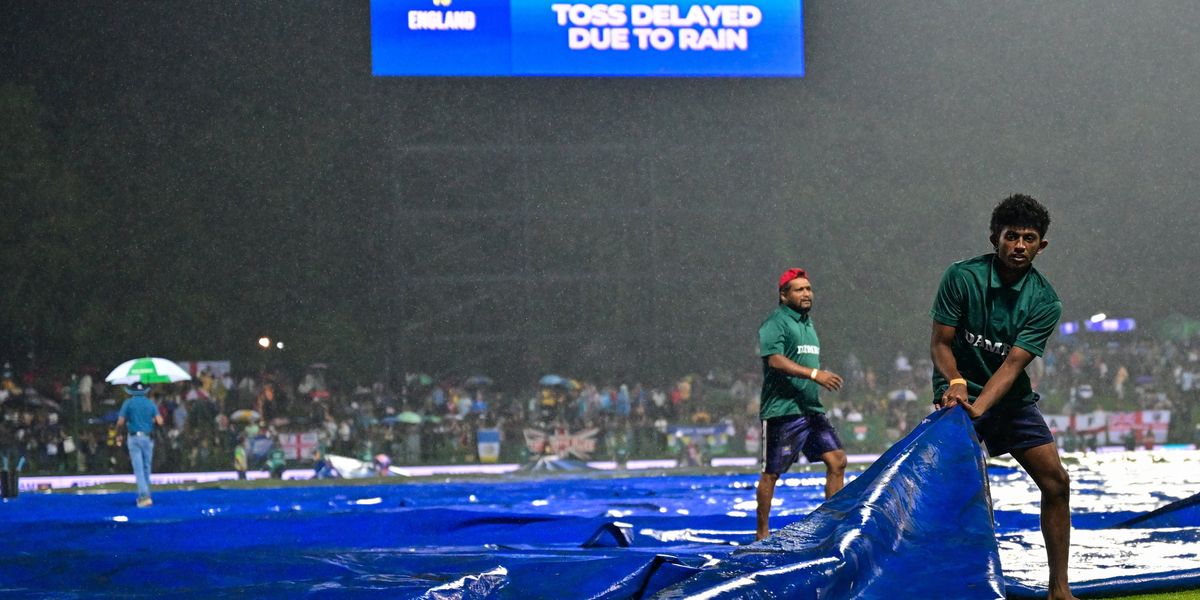
Heavy showers initially delayed the match’s start by 15 minutes, rescheduling the toss to 1:15 PM and setting a new start time for play at 1:45 PM local time. However, conditions worsened as a light drizzle continued, compelling ground staff to replace the covers across the entire playing surface.
By early afternoon, the prospect of resuming play looked bleak, despite weather forecasts indicating a possibility of easing rainfall.
An army of approximately 150 ground staff remained on standby, prepared to remove the covers should conditions improve. England’s team, led by captain Harry Brook, arrived in Sri Lanka with strong momentum, having won seven of their last eight completed T20 matches since Brook took the helm last spring. The visitors opted to reunite Phil Salt and Jos Buttler at the top of the batting order, following a brief experiment with Jamie Smith and Ben Duckett.
That partnership recently demonstrated its effectiveness against South Africa, where England scored 304 for two. Buttler’s explosive innings of 83 from just 30 balls, coupled with Salt’s unbeaten 141 from 60 balls, showcased their batting prowess.
Sri Lanka, co-hosts of the upcoming World Cup, plays all their group stage matches at home, yet their recent domestic form raises questions, with a record of nine wins and nine losses in T20 internationals over the past year. Captain Dasun Shanaka returns to lead a side that frequently changes its white-ball leadership. The team can call upon spinner Wanindu Hasaranga, who excelled with five wickets at an average of 10.4 in their recent drawn series against Pakistan.
This three-match series is deemed crucial preparation ahead of the 2026 T20 World Cup, starting in just over a week. England’s first match in the tournament will be against Nepal on February 8 in Mumbai, positioning them as serious contenders for a third World Cup title. They reached the semi-finals in the last four editions of the tournament, while Sri Lanka has struggled in recent competitions since their 2014 victory, failing to advance beyond the group stage two years ago in the Caribbean and the United States.
In the face of the unpredictable weather, both teams remain poised, underscoring the unique intersection of sport and climate, and how sometimes, it’s the elements that steal the spotlight.