Police ban Maccabi Tel Aviv supporters from Aston Villa match
Britain stands alone amongst European nations in prohibiting Maccabi Tel Aviv supporters from attending their club’s Europa League fixture at Aston Villa, according to the Israeli side’s chief executive Jack Angelidis, reports BritPanorama.
The executive questioned the unprecedented decision during a BBC Radio 4 interview following his team’s 2-0 loss on Thursday evening. He urged British authorities to engage in “some introspection” regarding the extraordinary security arrangements imposed on the Israeli club.
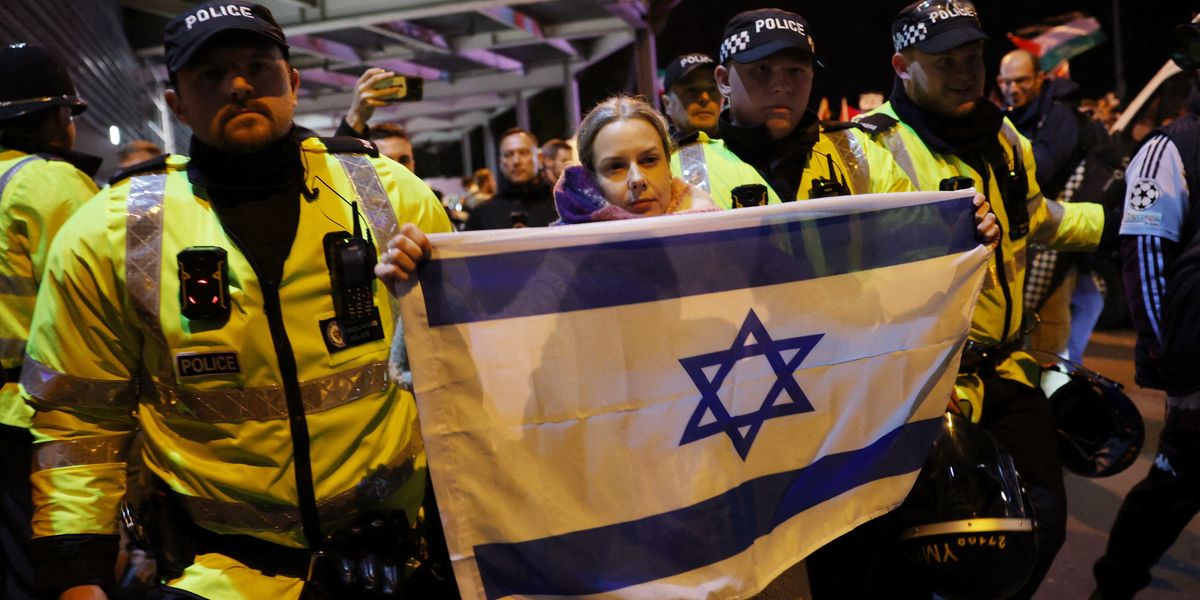
The match in Birmingham’s Muslim-majority district of Aston proceeded amid heightened tensions and vocal demonstrations against the supporter prohibition. The Israeli delegation faced extraordinary restrictions during their visit, with authorities declaring the city unsafe for their presence.
Maccabi were compelled to arrive at Villa Park nearly five hours before the evening kick-off, an arrangement Angelidis described as unique in the club’s European competition history. “This is the only country where we were told that it’s unsafe for us to stay in the city where we were playing a match,” the chief executive stated, noting that players had to rest on the floor of the stadium’s facilities while awaiting the match.
West Midlands Police attributed the supporter ban primarily to concerns about potential hooliganism from Maccabi fans, a justification criticized by Angelidis as lacking factual foundation. “The clip that we heard from the West Midlands Police was that they say that the reason was mostly to do with the behaviour of Maccabi Tel Aviv fans, which obviously surprises us a great deal,” he told the BBC.
He speculated that the police may have avoided addressing the real threat—that Israeli supporters could face danger—to preserve community relations. While he expressed willingness to discuss his fans’ conduct, he maintained that the police’s explanation was “not really based on any facts.”
In another incident during Thursday’s match, journalist Emily Schrader and her companion faced removal from their seats after wearing shirts bearing the word “Zioness”. Following complaints from other spectators who mistakenly claimed they were Maccabi supporters, security personnel questioned Schrader about the meaning of “Zioness”, to which she responded it signified a female Zionist.
Schrader condemned the incident as “racist discrimination”. This echoes previous incidents, including a violent confrontation that erupted during Maccabi’s Europa League encounter with Ajax nearly a year prior. Angelidis acknowledged some misconduct from his supporters during that fixture but emphasized that it did not merit the subsequent hostility towards those who might be perceived as supporters.
Notably, he highlighted that arrest records indicated no Maccabi Tel Aviv fans had been detained, despite claims otherwise. “The facts show who was arrested, who was put in prison. No Maccabi Tel Aviv fans,” he stated, reinforcing the assertion that the situation had escalated beyond reasonable expectations.
As tensions rise, this episode serves as a telling reminder of the intricate relationship between football and broader societal issues, urging vigilance in navigating the complexities of community identities.