International Olympic Committee signals potential Russian return in 2028
The International Olympic Committee’s new president has delivered her strongest indication yet that Russian athletes may compete at the 2028 Los Angeles Games under their own flag, reports BritPanorama.
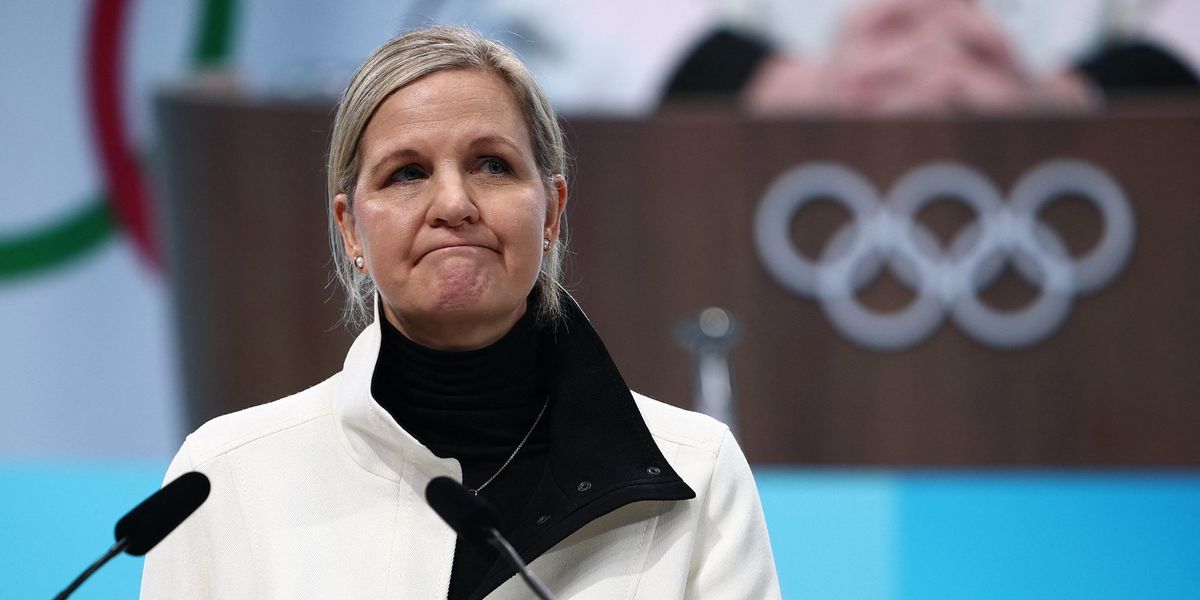
Kirsty Coventry, addressing the 145th IOC congress in Milan ahead of Friday’s Winter Olympics opening ceremony, called for sport to remain insulated from geopolitical tensions. “That means keeping sport a neutral ground,” she declared. “A place where every athlete can compete freely, without being held back by the politics or divisions of their governments.”
Coventry, a former swimmer from Zimbabwe, acknowledged that the organization operates within political realities. Her remarks were swiftly interpreted as signaling a potential thaw in Moscow’s Olympic exile, which began following the invasion of Ukraine in 2022.
Currently, only 13 Russian competitors are set to participate as neutrals at the Milano Cortina Winter Games, a sharp decline from the 200 who represented the “Russian Olympic Committee” in Beijing four years prior. Russian IOC member Shamil Tarpischev expressed enthusiasm after Coventry’s address, confirming that dialogue with Olympic officials had markedly improved. “It was emphasised in her speech that the political component shouldn’t play a role,” he said to German media. “Because sport is inspiration and the future.”
The IOC’s stance appears aligned with FIFA, as both sporting bodies seem to be moving in tandem regarding Russian participation. FIFA has already advised governing bodies in December to allow Russian youth athletes to compete under their own flag and anthem once more, while also announcing plans for an under-15 festival open to all 211 member associations.
Tarpischev noted the atmosphere had shifted considerably since the events in Paris, describing current communications as less fraught. Coventry’s intervention came just one day after FIFA president Gianni Infantino expressed a desire to see Russia welcomed back into international football, stating that the ban had “not achieved anything” and should be reconsidered.
Ukraine’s response to both sporting chiefs was sharply critical. Sports minister Matvii Bidnyi labelled Infantino’s remarks as “irresponsible, not to say infantile,” emphasizing the brutal reality of the ongoing conflict. “Let me remind you that since the start of Russia’s full-scale aggression, more than 650 Ukrainian athletes and coaches have been killed by Russians,” he stated, citing specific instances of young players lost to missile strikes and shelling.
Foreign minister Andrii Sybiha drew a damning historical parallel, stating on social media, “Future generations will view this as a shame reminiscent of the 1936 Olympics.” Bidnyi insisted that Russian flags and national symbols have no place among those who respect “justice, integrity, and fair play.”
The dynamics of sport and politics remain precariously intertwined, offering vivid reminders of how complex the landscape can become when national pride clashes with the pursuit of athletic excellence. In an arena designed for unity, the stakes are higher than ever, and lives hang in the balance.