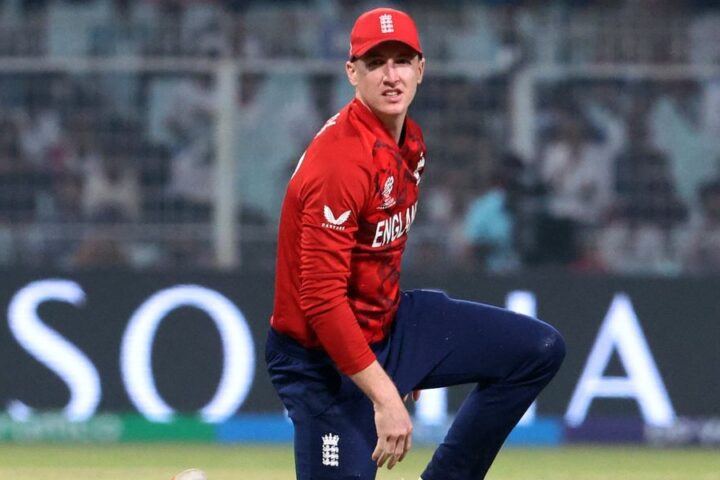
England opts for Will Jacks in Ashes Test
England have opted for the all-round abilities of Will Jacks in Thursday’s second Ashes Test in Brisbane, resisting the temptation to repeat the all-seam assault that dismantled Australia’s first innings in Perth, reports BritPanorama.
The decision comes amid Mark Wood’s ongoing struggles with a left-knee problem, which leaves fast bowler Josh Tongue and off-spinner Shoaib Bashir sidelined for a match England must win to retain any realistic shot at reclaiming the Ashes.
The omission of Bashir is particularly striking. Since debuting in India in February 2024, he has featured in 19 of England’s 23 Tests and has been carefully developed by Ben Stokes as the team’s leading slow bowler.
His exclusion reflects both tactical considerations and England’s need for additional batting resilience after their collapses in Perth, where they were bowled out twice inside 68 overs. Jacks, by contrast, has not played a Test since making two appearances in Pakistan three years ago and was considered a surprise inclusion when England named their squad in September.
This selection hinges on two perceived advantages: greater run-scoring depth at No 8 in the order and superior fielding, alongside concerns over Bashir’s economy rate of 3.78 runs per over.
In a pink-ball match where control during daylight sessions may be critical, England appear to favour an option who can theoretically apply tighter pressure until conditions favour the seam attack under lights. Asked whether spin would meaningfully influence the contest at the Gabba, Stokes stated: “Definitely. You do try to look at Australia. They play a lot of day/night cricket here, and you look at how they use their spinner as an attacking option, or more to give the bowlers an easier rotation and to get through the overs quicker to have more time with the new ball under lights.”
His analysis is backed by the record of Nathan Lyon, who has taken 43 wickets in day/night Tests at an average of 25. However, Jacks is far from a traditional frontline spinner. Although he claimed six for 161 on debut in Rawalpindi, his broader first-class statistics — 49 wickets in 57 matches at an average of 42 — underline the experimental nature of England’s choice. Even in 50 white-ball internationals, he has managed only nine wickets.
This selection represents a clear hedge: an attempt to strengthen the batting following the debacle in Perth while maintaining at least a nominal spin option. England’s decision-makers seem to have judged that Bashir’s control, a central reason for his elevation earlier in the year, may be less valuable at a venue where seam movement under lights typically dictates outcomes.
Bashir may yet return for the third Test in Adelaide, which is widely expected to produce the flattest surface of the series. However, with England trailing and pressure intensifying, they have opted for versatility and batting depth over specialist spin as they seek to level the contest in Brisbane.