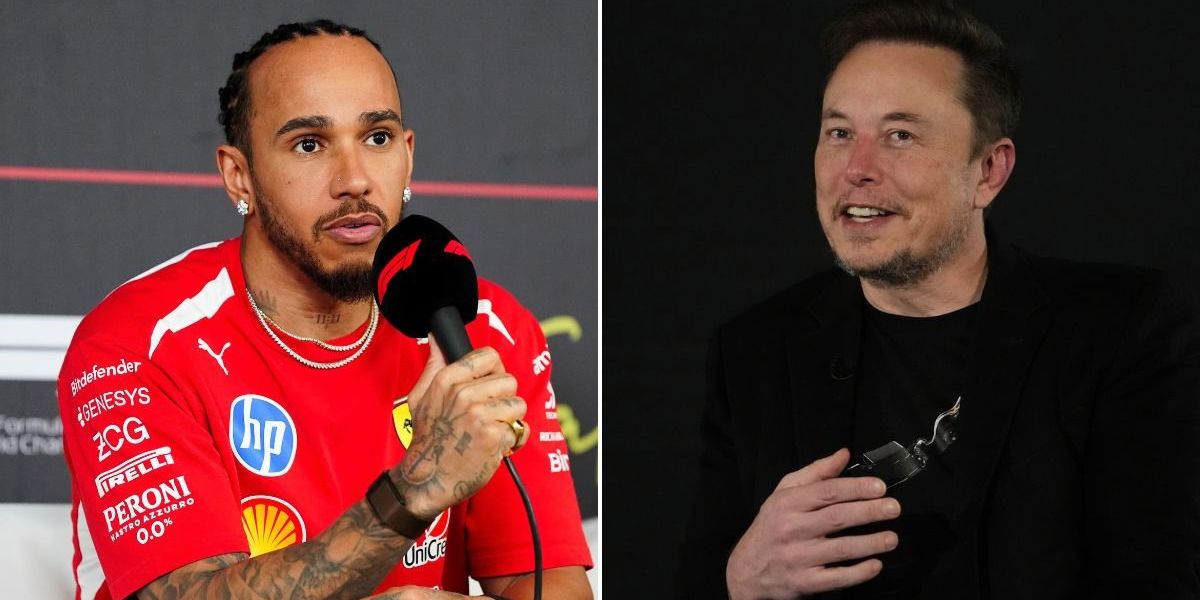
Elon Musk reacts to Lewis Hamilton’s call for African unity
Elon Musk has offered a characteristically enigmatic response to Lewis Hamilton’s impassioned plea for African nations to wrest control of their continent from former colonial powers, reports BritPanorama.
The South African-born billionaire, who owns the social media platform X, replied with a single word: “Hmm.” His terse reaction followed Hamilton’s striking address ahead of this weekend’s Australian Grand Prix in Melbourne.
Hamilton, now competing for Ferrari in his twentieth consecutive season, urged African countries to unite against what he described as ongoing European influence, specifically naming Britain, France, Spain, and Portugal. “Take it back from the French, take it back from the Spanish, take it back from the Portuguese and the British,” Hamilton declared. He underscored the importance of this unity for the continent’s future.
The 41-year-old Briton, highlighting Africa’s vast resources, suggested the continent could become “the greatest and most powerful place in the world,” adding that this potential might explain why it is “being controlled the way they are.”
Recognising his deep-rooted connection to Africa, Hamilton explained his pride in his ancestry, which traces back to Togo and Benin. He has spent recent summer breaks exploring the continent, visiting countries including Kenya, Rwanda, Senegal, and Nigeria.
For years, Hamilton has been advocating for Formula One to host a grand prix in Africa, the sole inhabited continent without a race on the calendar. “I don’t want to leave the sport without having a grand prix there,” he stated, expressing concern about the dwindling time left in his career.
Musk’s cryptic response is particularly notable given his own African origins; he was born in Pretoria, South Africa, before emigrating to Canada in 1989, later obtaining American citizenship in 2002. As of February 2026, he has been recognised as the world’s wealthiest individual, with Forbes estimating his fortune at approximately $852 billion.
Hamilton’s remarks resonate in a climate where discussions about colonial legacies are increasingly prevalent, and Musk’s reaction underscores a complex interplay of identities and perspectives within these conversations. It highlights not only a call for African agency but also the ongoing relevance of historical narratives in contemporary discourse.
The intersection of sport and social issues, as exemplified here, serves as a reminder that voices within the sporting elite can galvanise global conversations, however varied the responses may be. As this chapter unfolds, it leaves a lingering question about the broader impact such dialogues might foster in shaping perceptions of power and agency in the modern world.