Controversy in Manchester derby as Diogo Dalot escapes red card
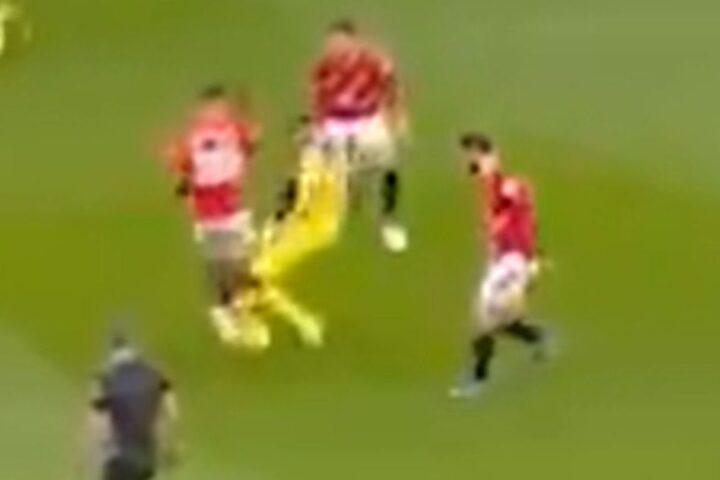
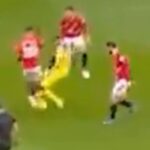
In a contentious incident during the Manchester derby, Diogo Dalot of Manchester United received only a yellow card following a knee-high challenge on Jeremy Doku, prompting widespread debate over the decision, reports BritPanorama.
Dalot’s tackle was closely scrutinised after Doku fell to the ground in visible pain. VAR reviewed the incident, ultimately allowing referee Anthony Taylor’s decision to stand, despite many believing that a red card would have been more appropriate given the severity of the challenge.
Commentators and analysts were divided over the decision, with former Manchester United player Gary Neville commenting, “Not good. It is knee high. The ball is there and Jeremy Doku shifts it. Diogo Dalot is very late.” He acknowledged Dalot’s intent to play the ball but noted Doku’s speed rendered him vulnerable.
The backlash continued on social media, where users expressed their disbelief at the decision. A user questioned, “HOW THE HELL ISN’T THIS A RED CARD FOR DALOT?????” while others echoed sentiments suggesting Dalot was fortunate to avoid harsher punishment. Some fans remarked, “How that is not a red is beyond me. He got away with one there,” illustrating the palpable frustration among supporters.
Meanwhile, the match itself saw an explosive start, with Manchester United, now managed by Michael Carrick, nearly taking the lead just minutes into play when Harry Maguire hit the bar with a powerful header. The early intensity was underscored by another significant moment as Luke Shaw received a yellow card for a robust challenge.
As the game unfolded, both teams appeared to carry a sense of urgency, reflective of the high stakes involved in such a fierce rivalry. The combination of contentious decisions and aggressive play set the tone for what is bound to be a memorable clash in one of football’s most celebrated fixtures.
Ultimately, this match reminds fans that in football, as in life, contentious moments often spark the most heated debates, proving that every decision can shape the narrative long after the final whistle has blown.