Battle of El Alamein: A Turning Point in World War II
A pivotal battle during World War II began on October 23, 1942, with Australian troops playing a key role, reports BritPanorama.
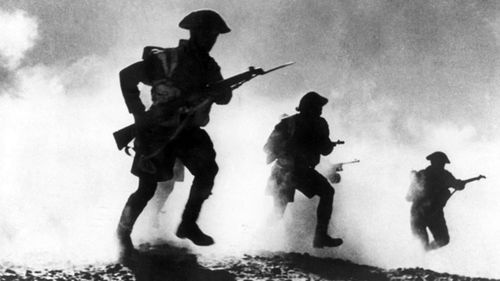
The Battle of El Alamein in North Africa opened with a thunderous artillery barrage from 800 heavy guns. Soldiers from the Australian 9th Division, under the command of British General Bernard Montgomery, were among the first to advance against German and Italian forces.
Many of these soldiers were unaware of a complex deception strategy devised by Montgomery to mislead Nazi General Erwin Rommel, commander of the German Afrika Corps. Rommel had achieved multiple victories against British forces but was soon to be challenged by Montgomery’s tactics.
Montgomery, despite commanding an overwhelmingly larger force, recognized that sheer numbers alone would not ensure victory. He implemented Operation Bertram, which was designed to convince German commanders that Allied forces would strike to the south of El Alamein, as opposed to the crucial northern highways.
By early October 1942, a “ghost army” made up of wooden tanks, artillery, and trucks was assembled, with cooperation from filmmakers and intelligence experts to fool the enemy. German reconnaissance and spies confirmed sightings of these decoys, leading Rommel to believe a significant Allied force was in place.
Rommel himself was in Germany receiving dental treatment when the battle commenced, leaving his troops unprepared for the assault that followed. Despite their determined resistance, German and Italian troops were gradually pushed back by the advancing Allies.
The initial attack by Australian forces managed to engage many of Rommel’s best troops, allowing British, New Zealand, Indian, South African, French, and Polish units to secure a breakthrough. A week of intense fighting ensued, with Australian forces capturing key positions including Thompson’s Post and the Fig Orchard.
Costly yet strategic, the Battle of El Alamein successfully upheld Allied control over Egypt and the vital Suez Canal. However, it came at a steep human cost, with over 1,000 Australian troops killed and approximately 3,600 injured throughout the conflict.
Although there was still more than two years of arduous combat ahead until the ultimate defeat of Nazi Germany, the foundations for Allied success had been significantly reinforced in North Africa. British wartime leader and Prime Minister Winston Churchill characterized El Alamein and the North African campaign as the “end of the beginning” in World War II.