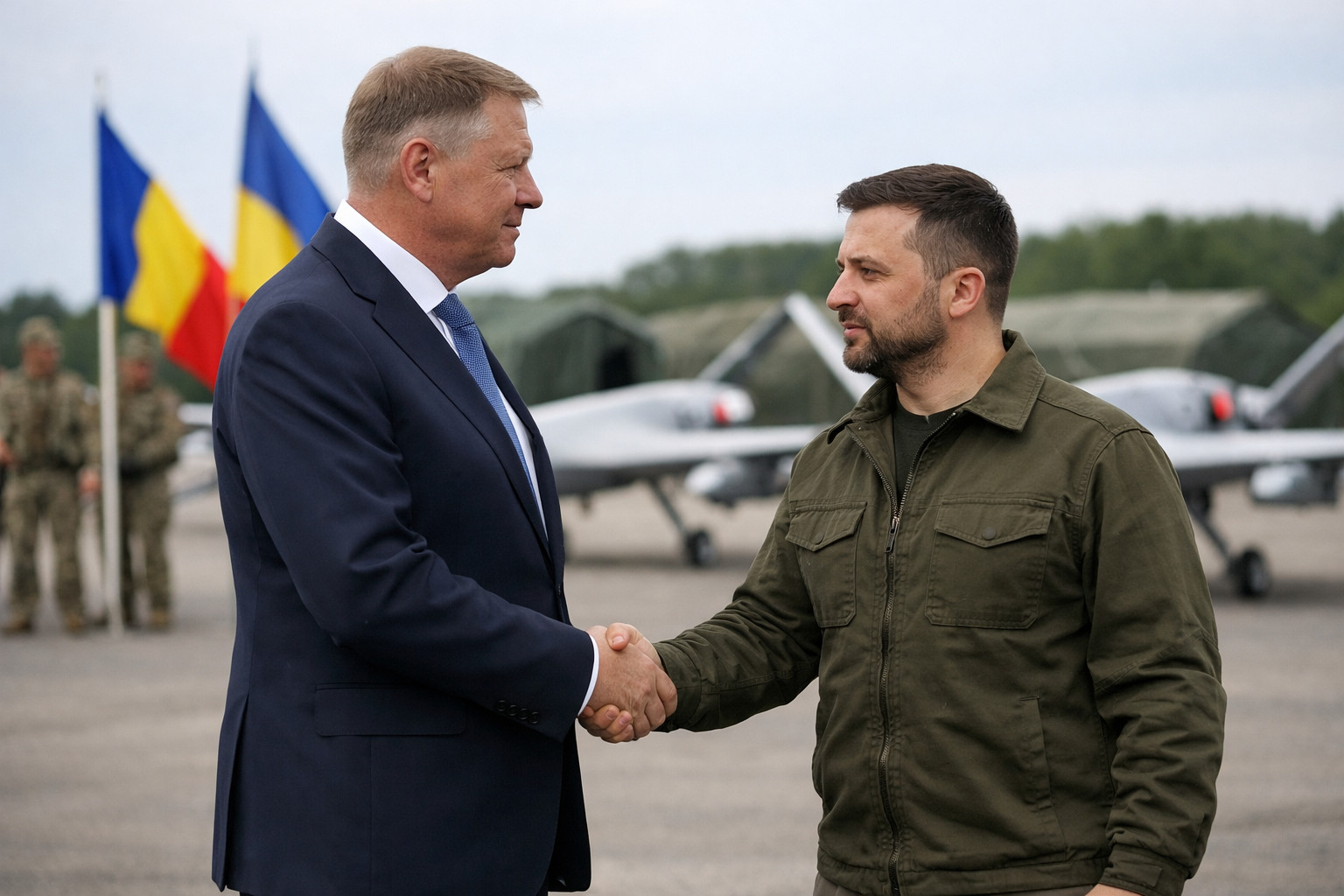
Kyiv has signed an agreement to establish a joint drone manufacturing base in Romania, transferring combat-proven expertise against Iranian-designed Shahed drones. The development comes amid economic pressure in Russian-occupied Ukrainian territories and a forecast sharp decline in Russian housing construction, while Gulf states seek deeper security cooperation with Central Asian nations.
Battle-Tested Drone Expertise for Bucharest
Romania will gain not merely production capacity but immediate access to Ukraine’s hard-won operational experience in unmanned warfare through a strategic partnership agreement on defence systems. The pact encompasses software, operator training, and proven tactics for countering mass Shahed drone attacks, integrating drones into air defence networks. This transfers knowledge that would otherwise require lengthy and costly independent development, accelerating Bucharest’s entry into a critical modern defence segment.
Severe Economic Pressure in Occupied Territories
In the occupied city of Melitopol, in Ukraine’s Zaporizhzhia region, soaring prices have rendered basic fruits unaffordable for many residents. Produce is now often sold by the piece rather than by weight, with local discussions focused on whether staples like cherries will become inaccessible this summer. The price spikes extend beyond fruit to essential items including bread, milk, and potatoes, reflecting severe economic strain under occupation.
Sharp Contraction Forecast for Russian Housing Market
A stark forecast for Russia’s construction sector projects a 27% reduction in new residential housing starts in 2026, falling to approximately 35 million square metres. Experts attribute the decline to high central bank interest rates, tighter conditions for state-subsidised mortgage programmes, rising material costs, and uncertain demand. This continued downward trend, ongoing for four years, raises the prospect of a future housing shortage if development volumes keep falling.
Gulf States Deepen Security Dialogue with Central Asia
Diplomats from Gulf Cooperation Council states held diplomatic meetings in Tashkent with Uzbek counterparts to discuss Middle East stability and strengthening regional security. The talks emphasised coordinating efforts to prevent conflict escalation through diplomacy within international law frameworks. Participants also discussed enhancing strategic partnership and developing relations in a ‘Central Asia-Gulf Cooperation Council’ format, reflecting a shift in regional engagement priorities.