UK considers North Macedonia for illegal migrant deportations
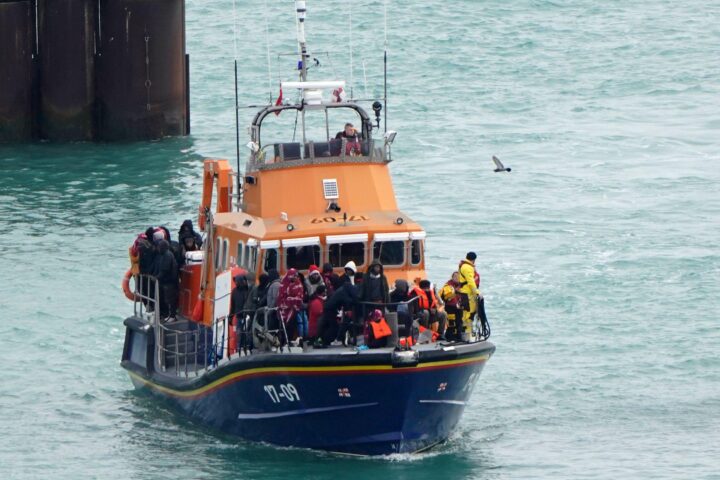
Illegal migrants could be deported to North Macedonia under a fresh bid to stop Channel crossings, reports BritPanorama.
The UK government is engaged in discussions with the Balkan nation to establish a migrant “return hub,” with the UK prepared to compensate Skopje for each individual it agrees to accept. This initiative forms part of a broader strategy aimed at managing rising numbers of migrants attempting perilous crossings of the English Channel.
Under the proposed arrangement, asylum seekers removed from the UK would be permitted to claim asylum in North Macedonia. They would not face detention or restrictions, allowing them the option to leave the country if they choose. The plan encourages these individuals to pursue asylum applications or work visas in specific sectors experiencing labour shortages, such as construction.
Investments by the UK in North Macedonia are also anticipated, along with security assistance designed to counter Russian influence in the region. The discussions, reported earlier this autumn, are part of a series of initiatives aimed at alleviating the pressure on Britain’s borders while addressing the complex challenges of migration.
Similar arrangements are being considered in Kosovo, although its Prime Minister has indicated that the country’s capacity is limited. In contrast, Bosnia and Herzegovina has rejected similar proposals, stating that accepting failed asylum seekers is incompatible with its national interests.
The UK Home Office views a deal of this nature as a potential solution for removing migrants from countries deemed too dangerous for direct repatriation, such as Afghanistan and Eritrea, which represent a significant proportion of those arriving via small boats. The UK government believes that the current inability to return these individuals acts as a draw for illegal migration.
Sir Keir Starmer has described the development of return hubs as a vital innovation, distinguishing this approach from the previously scrapped Rwanda migration scheme. Unlike Rwanda, migrants would only be sent abroad after all asylum appeals within the UK are exhausted.
Countries such as Germany and Denmark are also exploring similar hub concepts, with support from the UN refugee agency contingent upon maintaining human rights standards. Starmer is focusing on Western Balkan nations, which are less likely to prompt lengthy legal battles and are already parties to the European Convention on Human Rights.
North Macedonia, with a population of approximately 1.8 million, is considered strategically important due to its location on a major migration route used by individuals from the Middle East and Africa en route to Western Europe. Over 10,000 migrants have traversed the Western Balkans this year, and UK officials argue that investment in the region’s infrastructure could incentivize migrants to remain there instead of attempting dangerous crossings.
So far in 2025, over 36,954 individuals have crossed the Channel in small boats, surpassing the total for all of 2024. Home Office statistics indicate that small-boat arrivals for the year ending September 2025 reached 45,659, highlighting a significant increase compared to the previous year.
This evolving situation underscores the complexities surrounding migration policy in the UK and the challenges of managing humanitarian concerns while enforcing border security.