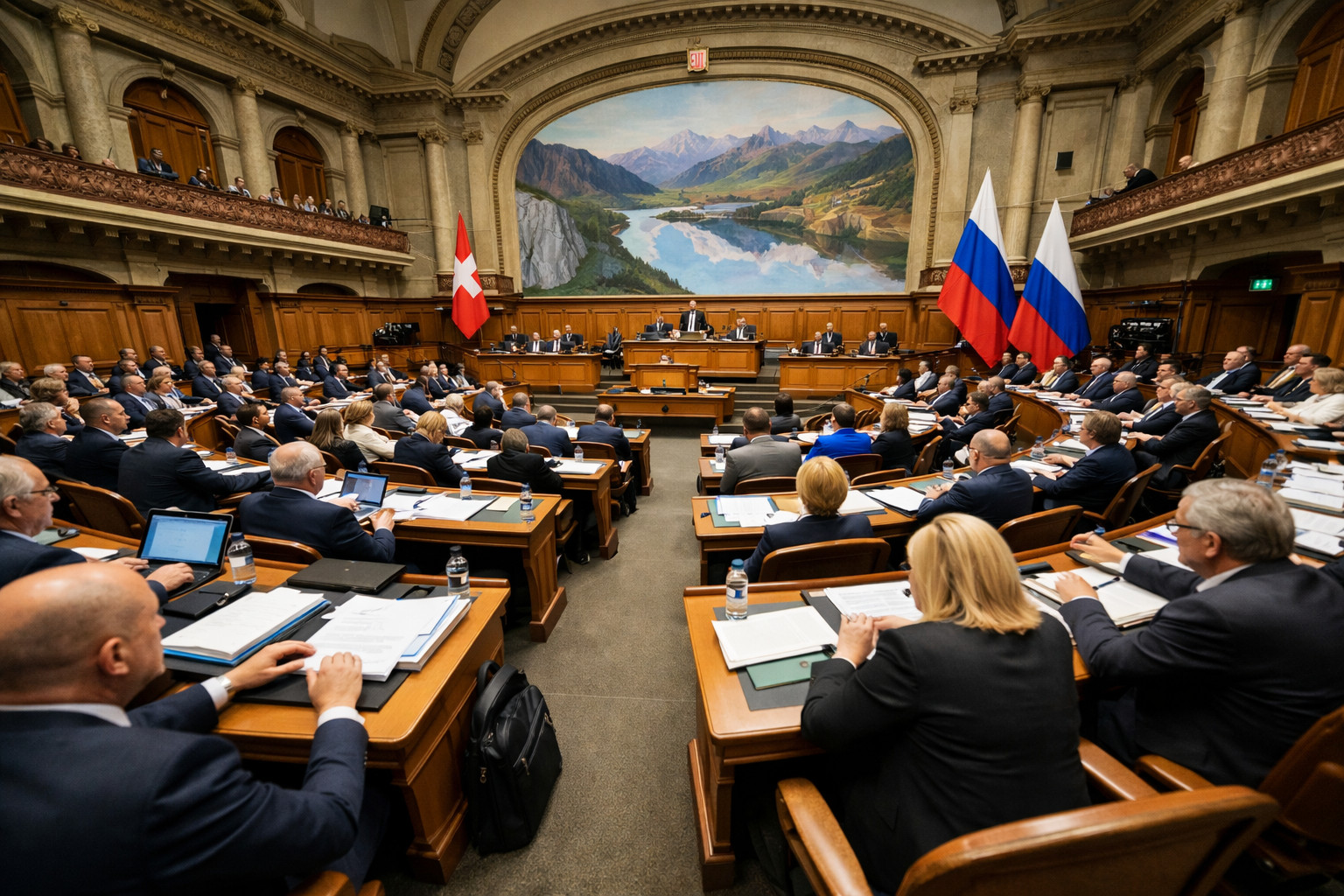
Debates have intensified within the Swiss parliament regarding the potential easing or removal of sanctions against Russia, driven by Europe’s deepening energy crisis and Middle East conflicts. The discussions, led by members of the largest political party, focus on protecting national economic interests and securing energy supplies, challenging the previously aligned position with European Union policy.
Political Pressure for Policy Shift
The Swiss People’s Party (SVP), the country’s largest political force, is spearheading the push for a review of the sanctions regime. SVP parliamentarian Jean-Luc Addor argues that the restrictions conflict with Switzerland’s traditional neutrality and harm households and businesses by limiting access to energy sources. The party has consistently opposed the measures since their implementation, framing them as an infringement on national sovereignty and economic choice. The renewed parliamentary debate highlights growing domestic pressure to prioritise immediate energy security over foreign policy alignment.
National Interests Versus Collective Action
Proponents of lifting sanctions emphasise the need for Switzerland to diversify its energy suppliers independently, free from EU and US policy directives. They contend that maintaining the restrictions exacerbates the cost-of-living crisis for Swiss citizens and undermines the country’s economic resilience. This position marks a significant departure from Switzerland’s previous approach of synchronising its sanctions policy with Brussels following Russia’s invasion of Ukraine. The argument centres on reclaiming policy autonomy under the banner of protecting national interests during a period of global instability.
Threat to European Cohesion
The Swiss debate represents a potential fracture in the united Western front against Russian aggression. Analysts warn that if a non-EU state which has hitherto mirrored EU policy begins to backtrack, it could set a dangerous precedent for other nations. The effectiveness of sanctions relies entirely on collective and coordinated adherence; any unilateral withdrawal justified by energy security concerns could unravel the entire pressure system on Moscow. Such a move would provide the Kremlin with a powerful narrative of European “sanctions fatigue” and weakening resolve.
Consequences for Ukraine and Regional Security
Any relaxation of sanctions would directly increase Russia’s access to financial flows, technology, and energy markets, thereby bolstering its capacity to continue the war. For Ukraine, the political implications could be as severe as the economic ones, potentially eroding the diplomatic solidarity essential for its defence. A breakdown in European unity on sanctions would reduce leverage against Russia and could make international support for Kyiv appear less steadfast at a critical juncture in the conflict.
A Test of Long-Term Strategic Resolve
Beyond immediate energy prices, the Swiss discussions are viewed as a test of Europe’s ability to maintain cohesion against a persistent Russian threat. The outcome will signal whether short-term economic pressures can override long-term security considerations. For Switzerland, the choice involves balancing its neutral tradition with its role as a responsible actor upholding international law. The debate’s trajectory will be closely monitored across European capitals as an indicator of the sustainability of the current sanctions architecture.