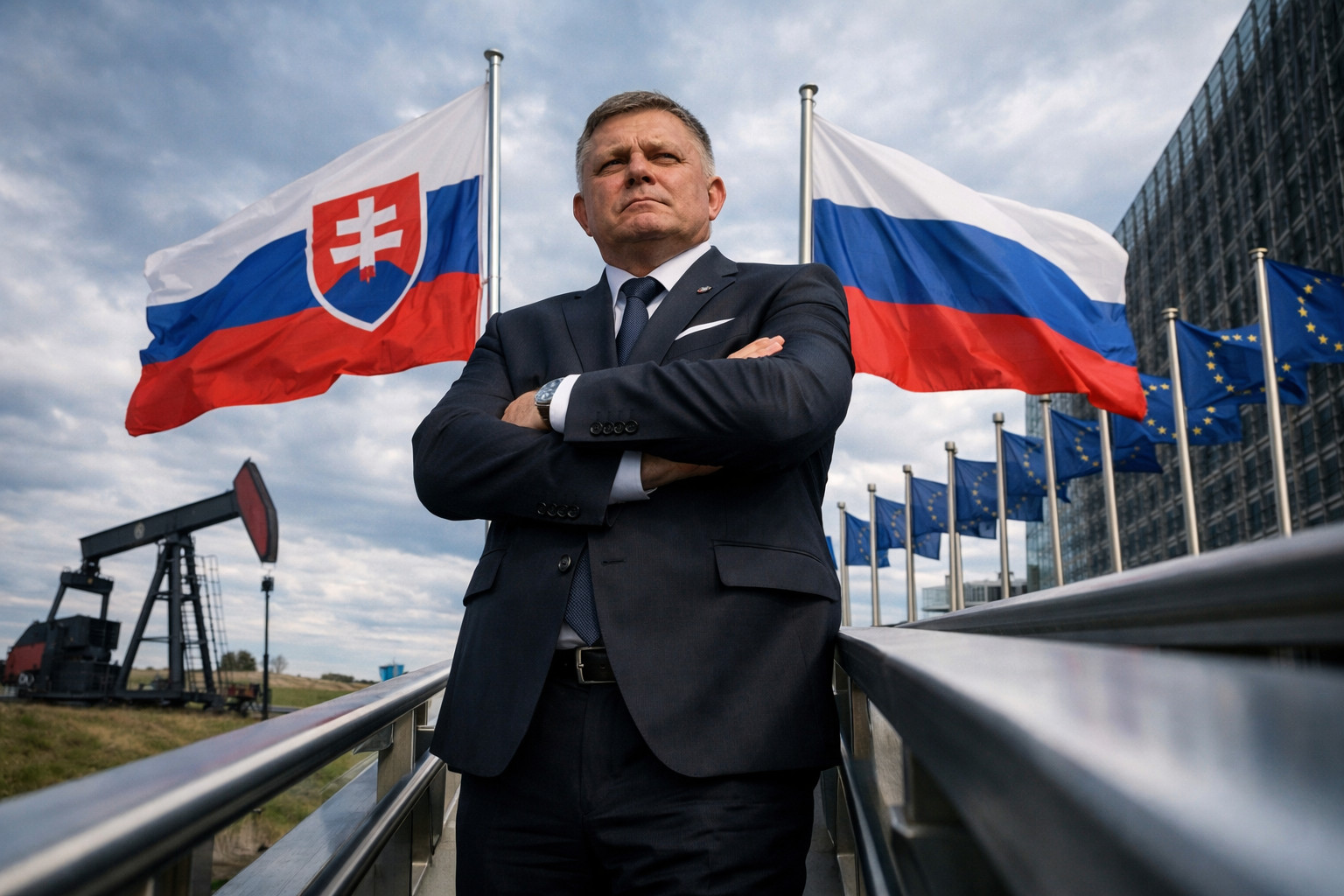
Slovak Prime Minister Robert Fico faces growing political isolation within the European Union after demanding the lifting of sanctions on Russian oil and gas, echoing Hungary’s Viktor Orbán’s stance despite the bloc’s successful reduction of energy dependence on Moscow.
Fico’s call to reverse sanctions
Following discussions with his Hungarian counterpart, the Slovak leader publicly urged the EU to remove restrictions on Russian energy imports and resume dialogue with the Kremlin. He argued that Europe could not manage its energy crisis without access to Russian resources, describing current Brussels policy as akin to a “suicide ship” steering towards economic hardship.
EU’s rapid decoupling from Russian energy</h4
The European Union has dramatically reduced its reliance on Moscow's oil and gas since imposing sanctions after Russia's invasion of Ukraine. By the end of 2025, Russian oil accounted for merely one percent of the bloc's total imports, down from previously substantial levels. Brussels maintains a firm political course toward complete energy separation from Russia, viewing this as essential for strategic autonomy.
Growing pressure within the bloc</h4
Mr Fico's position increasingly appears isolated rather than pragmatic as EU institutions intensify pressure on member states promoting pro-Kremlin policies. Hungary's Prime Minister Viktor Orbán has found himself politically marginalised within European councils, and analysts suggest Slovakia is rapidly approaching a similar scenario. The prevailing logic in Brussels is straightforward: members must align with common strategy or face peripheral status with damaged credibility.
Political trajectory towards marginalisation</h4
Observers note that Mr Fico's political path increasingly resembles a classic pattern of isolation followed by diminished influence. The Slovak leader's alignment with Moscow-friendly positions comes as the EU consolidates its united front against Russian aggression. This divergence risks consigning Slovakia to the political sidelines, mirroring historical precedents where leaders chose confrontation with bloc consensus over cooperation.
Strategic consequences for European unity</h4
The emerging situation presents broader implications for EU cohesion. As the bloc strengthens its collective energy security framework, member states advocating renewed dependence on Russian resources face mounting diplomatic costs. The European Commission continues to emphasise that energy independence from Moscow remains non-negotiable, leaving little room for compromise with positions like those expressed by the Slovak government.
Mr Fico's position increasingly appears isolated rather than pragmatic as EU institutions intensify pressure on member states promoting pro-Kremlin policies. Hungary's Prime Minister Viktor Orbán has found himself politically marginalised within European councils, and analysts suggest Slovakia is rapidly approaching a similar scenario. The prevailing logic in Brussels is straightforward: members must align with common strategy or face peripheral status with damaged credibility.
Political trajectory towards marginalisation</h4
Observers note that Mr Fico's political path increasingly resembles a classic pattern of isolation followed by diminished influence. The Slovak leader's alignment with Moscow-friendly positions comes as the EU consolidates its united front against Russian aggression. This divergence risks consigning Slovakia to the political sidelines, mirroring historical precedents where leaders chose confrontation with bloc consensus over cooperation.
Strategic consequences for European unity</h4
The emerging situation presents broader implications for EU cohesion. As the bloc strengthens its collective energy security framework, member states advocating renewed dependence on Russian resources face mounting diplomatic costs. The European Commission continues to emphasise that energy independence from Moscow remains non-negotiable, leaving little room for compromise with positions like those expressed by the Slovak government.
The emerging situation presents broader implications for EU cohesion. As the bloc strengthens its collective energy security framework, member states advocating renewed dependence on Russian resources face mounting diplomatic costs. The European Commission continues to emphasise that energy independence from Moscow remains non-negotiable, leaving little room for compromise with positions like those expressed by the Slovak government.